Note: If you wish to receive, via e-mail, (1) my weekly newsletter or (2) daily copies of these posts, write to me at rrbates1951@gmail.com. Comments may also be sent to this address. I promise not to share your e-mail with anyone. To unsubscribe, write here as well.
Friday
Going through the many boxes of correspondence that my mother kept, Julia came across the love letters from my father in the summer of 1946. This was the summer when my mother, who had been going steady with my father for a semester, decided that she really should try out other options. What one sees in the letters is my father’s heart breaking, which he hides under a barrage of self-deprecating humor, thinly disguised jealousy, and poetry. I focus on the poetry in today’s post.
When Phoebe Strehlow from Peoria, Illinois attended the first day of her Carleton College English class in the spring of 1946, she noted a new male student—men had been in short supply during the war years—and went and sat next to him. Scott Bates from Evanston, Illinois fell in love instantly (my mother was a gorgeous woman) and they started dating. Scott, knowing instantly that she was the love of his life, started thinking marriage.
What did the two see in each other? Phoebe, I suspect, was impressed by my father’s life experiences—he was two years older and had been in Normandy, liberated Paris, and Munich—as well as by his poetry, his sense of humor, his lively intelligence, and (as she always said) his smile. He meanwhile was drawn to her beauty, her own considerable intelligence, and above all her innocence, which he clung to after witnessing the horrors of Dachau.
But I imagine that my mother, who had had an upper-class upbringing in Peoria, was also somewhat overwhelmed by this restless and imaginative man, which is why she retreated to more conventional dates over the summer and following fall, including the heir of a major watch company and someone who would later ascend to the upper echelons of the American Boy Scouts administration. These men looked like the kind of man she was supposed to marry once she got what was often called the M.R.S. degree.
She discovered, however, that no one fascinated her anywhere near as much as this poet. So when my father told her at the end of their senior fall semester that he was finally over her—and she, realizing she was in danger of losing him and his wonderful smile, responded by inviting him to a smorgasbord in Minneapolis—and he accepted—the relationship was on again. They wanted to get married following graduation, as Julia and I did, but her parents persuaded her to wait a year.
Their marriage involved a very different life than the one Peoria would have given her. After all, professors didn’t make much in those days. Rather than being a Peoria socialite, she found herself first scraping by as a grad school wife, then becoming fluent in French thanks to a two-year Fulbright, then plunged into the civil rights movement, and all the while having a front row seat to my father’s battles with the Sewanee administration over integration, the admission of women, LGBTQ+ rights, and his erotic film series. Their marriage lasted 65 years, with my father dying at 90. My mother died eight years later at 96.
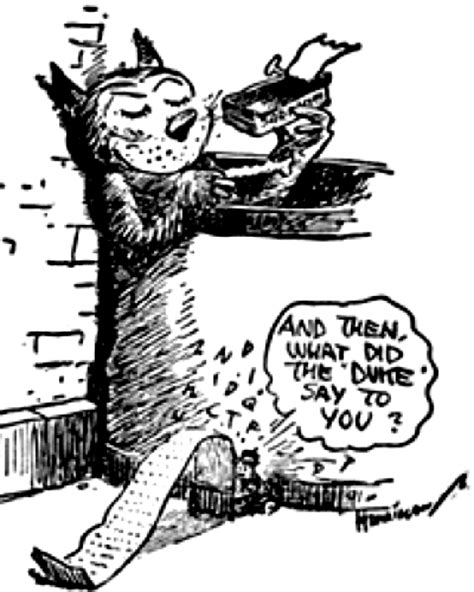
As I go through their letters, I’m struck by the role poetry played in their relationship. They were big fans of Don Marquis’s Archy and Mehitabel, a poetic series that appeared in the Baltimore Sun. It featured cockroach Archie, who writes in lower case letters since he can’t work the shift key on the typewriter, and alleycat Mehitabel, who claims that she is Cleopatra reincarnated and whose watchword is “toujours gai” (always joyous).
“Toujours gai” became their motto that first semester, and my father would use it in his desperate letters to her over the summer as he tried to win her back. “Laugh, be merry, be gay, raise hell” he wrote her in August of that summer, along with some cutting remarks about that “old soak” Bill, whom she was dating at the time. (If he knew about Bill, then my mother must have been telling her about him, perhaps using my father as “a friend.” Years later she would confide to me that Bill, whom she corresponded with into their nineties—her exploration of a road not taken?–was one of the most boring men she had ever known. My father, who was always stirring things up, could be unpredictable and unsettling and exasperating but he was never boring.)
I note in passing that “toujours gai” is the epitaph my brothers and I inscribed on my mother’s plaque in the Sewanee cemetery.
In my father’s letters to her that summer, my father also channeled the great humorist and cartoonist Milt Gross, whose characters deliver a mixture of English and Yiddish. In the following paragraph, he hints that he could have come to see her return from visiting “Jim” at the airport, Jim being the watch guy who had also been in the navy [“da gobs,” “da middies,” “da fleet”]. He imagines Jim being carried off in a stretcher and being hit by a train. Or maybe it’s he who feels like he’s been run over by this train:
Almost came down to the airport Thursday to see you in but thought you might have changed your plans or something’. Sorry now I didn’t. Mama, that woulda been delicious! I can see myself leaping into your waiting arms (joke!) while they carried Jim off in a stretcher. “hi, kids, meet Bates, your daughter’s latest! What goes wit da gobs? Ha. Ha. What makes wit da’ middies? Ha, Ha. Bin flirtin’ wit’ da fleet, baby? Oh, ha. Ha, Ha. The lifeless, shattered remains found under the caboose of the Peoria Rocket have been identified as formerly belonging to a Miss Phoebe Strehlow, late of ….” Sorry, honey I would have liked to have seen you though.
I’m struck by my father’s use of jazz age lingo, here and in the next paragraph. Notice the agony in his tone as he describes a knife being twisted by all her “extra-curricular activities” (which, again, indicates that she must have been telling him about them):
Darling, if you missed me for a day, that’ wonderful, and I will always remember it, but Jesus, Phoebe, I’ve been like that ever since, strictly laughin’ on the outside, crying on the inside, and your letters usually have so much penicillin in them. Baby, they vibrate and sing! I guess you must be pretty shot, tho’ from all the extra-curricular activities. It’s swell that you had a bang-up time on your trip and God knows I want you to be livin’ on a rainbow toujours, but please don’ twist the blade. I’m too young to be an alcoholic! Jeez, I’m sorry honey, I shall now commence kicking myself around the block for being so dodard (surprise!) jealous; you must think I’m a damn’ fool sometimes, Phoebe.
So now to one of the poems that he wrote during this time, perhaps in the fall in a creative writing class. He knew well the tradition of unrequited love poetry and about poets lamenting their broken hearts. Perhaps the following poignant but bitter poem provided some comfort. I think “crashing chords” is a reference to wedding music:
Orpheus, you played and overplayed your hand.
Your mystic ripples lapped on shifting sand
Ahead: instead of crashing chords you planned
You touched raw, clanging dissonances, and
Found magic nothing more than sleight-of-hand.
What most strikes me about these letters is how my parents’ relationship foreshadowed my own with Julia, albeit without the heartbreak. We too met at Carleton our junior year and we too were brought together by poetry: Julia had started a poetry group and I wowed her by showing up and reciting the opening lines of a Gerard Manley Hopkins poem (“The Leaden Echo”)—and then disappointed her by not joining the group because I was so busy with my duties on the Carletonian, which I would go on to edit.
We didn’t start dating right away but, later that school year, we started talking in more depth and found each other endlessly fascinating. I too sent her poetry over the following summer and would go on to sprinkle poetry liberally into our commencement day wedding ceremony (including a sexually explicit D. H. Lawrence poem).
I imagine that my sons will someday discover the letters I wrote to Julia over that summer, which are stored somewhere. Unfortunately, like my father, I didn’t hold on to Julia’s letters to me.
We think we are different from our parents until we discover that, in many ways, we are not.