Note: If you wish to receive, via e-mail, (1) my weekly newsletter or (2) daily copies of these posts, write to me at rrbates1951@gmail.com. Comments may also be sent to this address. I promise not to share your e-mail with anyone. To unsubscribe, write here as well.
Sunday
Rosh Hashanah, when Jews celebrate their new year and reflect upon their lives, begins tomorrow evening. Emma Lazarus’s “New Year” notes the difference between celebrating the occasion during the harvest season and in the bleak midwinter. Why not turn over a new leaf “when orchards burn their lamps of fiery gold” and when the grape “glows like a jewel”? Lazarus calls this time of year “the mother of months.”
In this context, the horn of plenty makes sense, and the poet links it with the shofar, the ram’s horn or “sacred cornet” that is sounded in the synagogue to mark the High Holy Days. Whatever anguish has been “wrought by priest and mob”—Lazarus is thinking here of the murderous pogroms in Russia that were occurring in the 1880s—is giving way to new hope (“undreamed of morn”).
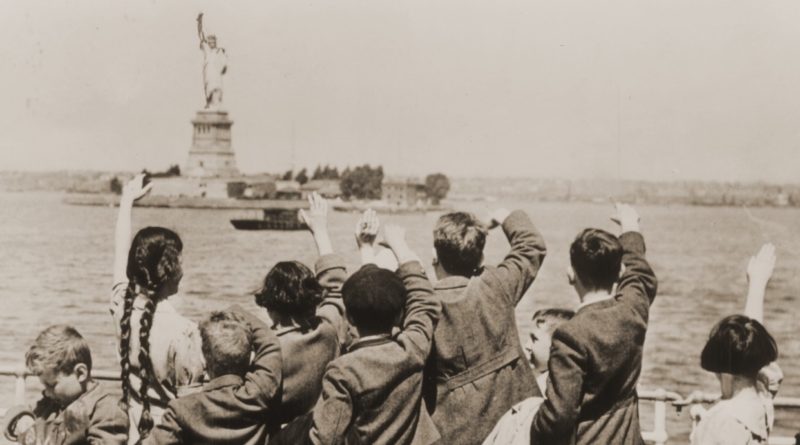
The promise of America is part of this vision. Lazarus, of course, is best-known for “The New Colossus,” inscribed on the Statue of Liberty. People especially know the final lines:
Give me your tired, your poor,
Your huddled masses yearning to breathe free,
The wretched refuse of your teeming shore,
Send these, the homeless, tempest-tost to me,
I lift my lamp beside the golden door!
Lazarus recycles one of the images in today’s poem: “Through fire and blood and tempest-tossing wave.” The journey she describes was first set in motion by the Roman destruction of the Temple in 70 AD, which set off a Jewish diaspora. In the 19th century, when Lazarus wrote the poem, Jews were moving from the steppes of Russia to as far west as the “snow-capped Sierras.” Their goal: the freedom “to proclaim and worship Him” in a country that promised freedom of religion for all.
Lazarus draws on Isaiah (52:2-4) to provide a prophetic framework for the journey:
Enlarge the place of your tent,
stretch your tent curtains wide,
do not hold back;
lengthen your cords,
strengthen your stakes.
For you will spread out to the right and to the left;
your descendants will dispossess nations
and settle in their desolate cities.
Isaiah is drawing here on God’s promise to Abraham in Genesis 15:5: “Look now toward heaven, and tell the stars, if thou be able to number them: and he said unto him, So shall thy seed be.”
Lazarus acknowledges both those Jews who are traveling westward into an America of hope and promise and those who are journeying back to Palestine. “In two divided streams the exiles part,” she writes,
One rolling homeward to its ancient source,
One rushing sunward with fresh will, new heart.
In both instances, however,
the truth is spread, the law unfurled,
Each separate soul contains the nation’s force,
And both embrace the world.
The reference to “the silver candle’s seven rays” in the last stanza is to the seven branched menorah, which an internet search informs me represents the original Temple menorah and functions as (1) a symbol of human wisdom and enlightenment and (2) a symbol of God’s creation of the world (six days of creating and the central seventh branch for Shabbat). The “garnered spoil of bees,” meanwhile, refers to the practice of dipping apples in honey during the Rosh Hashanah ceremonies in the hope of a sweet and fruitful new year. Through the prayer and praise of the occasion, Lazarus writes,
once more we prove
How strength of supreme suffering still is ours
For Truth and Law and Love.
The New Year
By Emma Lazarus
Rosh-Hashanah, 5643 [1883]
Not while the snow-shroud round dead earth is rolled,
And naked branches point to frozen skies.—
When orchards burn their lamps of fiery gold,
The grape glows like a jewel, and the corn
A sea of beauty and abundance lies,
Then the new year is born.
Look where the mother of the months uplifts
In the green clearness of the unsunned West,
Her ivory horn of plenty, dropping gifts,
Cool, harvest-feeding dews, fine-winnowed light;
Tired labor with fruition, joy and rest
Profusely to requite.
Blow, Israel, the sacred cornet! Call
Back to thy courts whatever faint heart throb
With thine ancestral blood, thy need craves all.
The red, dark year is dead, the year just born
Leads on from anguish wrought by priest and mob,
To what undreamed-of morn?
For never yet, since on the holy height,
The Temple’s marble walls of white and green
Carved like the sea-waves, fell, and the world’s light
Went out in darkness,—never was the year
Greater with portent and with promise seen,
Than this eve now and here.
Even as the Prophet promised, so your tent
Hath been enlarged unto earth’s farthest rim.
To snow-capped Sierras from vast steppes ye went,
Through fire and blood and tempest-tossing wave,
For freedom to proclaim and worship Him,
Mighty to slay and save.
High above flood and fire ye held the scroll,
Out of the depths ye published still the Word.
No bodily pang had power to swerve your soul:
Ye, in a cynic age of crumbling faiths,
Lived to bear witness to the living Lord,
Or died a thousand deaths.
In two divided streams the exiles part,
One rolling homeward to its ancient source,
One rushing sunward with fresh will, new heart.
By each the truth is spread, the law unfurled,
Each separate soul contains the nation’s force,
And both embrace the world.
Kindle the silver candle’s seven rays,
Offer the first fruits of the clustered bowers,
The garnered spoil of bees. With prayer and praise
Rejoice that once more tried, once more we prove
How strength of supreme suffering still is ours
For Truth and Law and Love.
Integral to Rosh Hashanah, and to Judaism generally, is the command to welcome the stranger. We all of us need such reminders in these days of ICE raids and immigrant crackdowns. Lazarus conveyed this vision in “New Colossus” and she saw its renewed necessity in the 1880s.
America at its best has functioned as a promised land for the world’s dispossessed. Keep this in mind as you gather with friends and loved ones.
Happy New Year! Shana Tovah!
Past Posts about the High Holy Days
–Lucille Clifton – Running into a New Year
–Alicia Ostriker – Poems for Judaism’s High Holy Days
–Marge Piercy – The Light You Seek Hides in Your Belly
–Grace Schulman May God’s Love Be Taught at Last in Jerusalem
—Rachel Barenblat–Rosh Hashanah: How to Keep It New
—Enid Shomer–How Rosh Hashanah Is Like Swimming
—Marge Piercy–Let My Words Turn into Sparks
—Yehuda Amichai–Theoretically, a Season for Everything
—Emma Lazarus–High above the Flood and Fire Ye Held the Scroll
—Kadya Molodowsky–Blowing for Hope in the Face of Darkness
—Alicia Ostriker–Entering the Days of Awe
—Muriel Ruykeyser and Denise Levertov: Rosh Hashanah – A Stirring of Wonder
—Marge Piercy: Rosh Hashanah – Weave Real Connections
—Lucille Clifton: On 9-11 Firemen Ascended Jacob’s Ladder
—Rashani: Blowing for Hope in the Face of Darkness
—A Ninth Century Prayer for Yom Kippur
—Adrienne Rich’s Yom Kippur Thoughts about Conflict
—Jane Kenyon: Thirsting of Disordered Souls
—Rashani: Out of Darkness, Sanctified into Being
–Stanley Kunitz: Live in the Layers, Not on the Litter
—Philip Schultz: Believe in the Utter Sweetness of Your Life