Note: If you wish to receive, via e-mail, (1) my weekly newsletter or (2) daily copies of these posts, write to me at rrbates1951@gmail.com. Comments may also be sent to this address. I promise not to share your e-mail with anyone. To unsubscribe, write here as well.
Tuesday
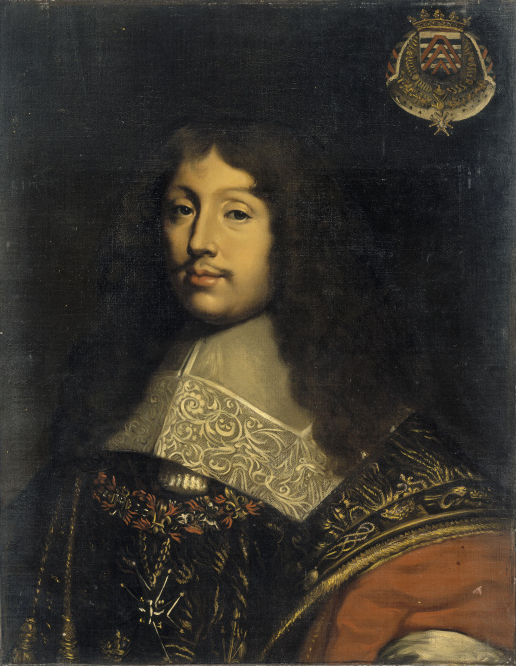
I am an admirer of François de La Rochefoucauld, the brilliant 17th century moralist. So was Jonathan Swift, who in “Verses on the Death of Dr. Swift” wrote,
As Rochefoucauld his maxims drew
From Nature, I believe ’em true:
They argue no corrupted mind
In him; the fault is in mankind.
If some saw La Rochefoucauld as possessing a corrupted mind, it’s because he punctured sentimental accounts of human nature, revealing unsettling truths. Swift’s favorite maxim, which he used when imagining how people would respond to his death, was, “Dans l’adversité de nos meilleurs amis nous trouvons quelque chose, qui ne nous déplaît pas.” Or as Swift translates it, “In the hard times of our best friends we find something that doesn’t displease us.”
I turn to another maxim, #218, to examine Charlie Kirk and MAGA’s response to his assassination since it deals with people who say one thing and act another. “Hypocrisy,” the French thinker writes, “is a tribute that vice pays to virtue.” (“L’hypocrisie est un hommage que le vice rend à la vertu.”)
Kirk paid constant homage to the First Amendment, even as he set up watch lists to hound professors. He was so successful at this double game that, for a while, MAGA was as fervent about free speech as anyone on the Left.
The hypocrisy has become apparent since Kirk’s death. Political commentator Paul Waldman describes himself as shocked, shocked as he observes that the Trump administration and the American right “may not be quite as committed to freedom of speech as they led us to believe.” Even as they celebrate Kirk as a free speech warrior, they are bent on repressing the free speech of anyone who doesn’t agree with them:
Conservatives are collecting names of ordinary people who said the wrong thing about Kirk to target them for harassment. The attorney general is threatening prosecutions for various Kirk-related speech sins. Her number two at the Justice Department says people who say mean things about the president could face racketeering charges.
Reporters love to call out hypocrisy, confronting hypocrites with past statements and asking how they reconcile them with current behavior. The assumption is that people at least gesture towards virtue and will be ashamed when they are caught out. Or if they themselves are not ashamed, then at least society will insist on virtue and hold them to account.
What happens, however, if hypocrites flaunt their hypocrisy as a badge of honor? They are essentially saying that it’s okay if they suppress speech but not if the Left does. It’s the same kind of impunity we saw in former Fox host Megyn Kelly who, in response to border czar Thomas Holman accepting $50,000 in bribe money, brazenly declared, “We do not care!”
I’m wondering if La Rochefoucauld could have anticipated such impunity. As he writes in Maxim #489, “However wicked men may be, they do not dare openly to appear the enemies of virtue.” Then again, he does anticipate how Trump and his sycophants have gone after Barack Obama and Joe Biden, two of our most virtuous presidents. As the moralist concludes his maxim, “and when they desire to persecute her [virtue] they either pretend to believe her false or attribute crimes to her.”
Another maxim that could be applied to Kirk is #187: “The name of virtue is as useful to our interest as that of vice.” Kirk was able to achieve certain ends by appearing virtuous—which in this context meant appearing reasonable. This appearing took in liberal pundit Ezra Klein, who observed that Kirk “practiced politics the right way.” It’s a dubious assertion, as Ta-Nehisi Coates has pointed out:
Kirk reveled in open bigotry. Indeed, claims of Kirk’s “civility” are tough to square with his penchant for demeaning members of the LGBTQ+ community as “freaks” and referring to trans people with the slur “tranny.”… he defined “the American way of life” as marriage, home ownership, and child-rearing free of “the lesbian, gay, transgender garbage in their school,” adding that he did not want kids to “have to hear the Muslim call to prayer five times a day.” … Kirk habitually railed against “Black crime,” claiming that “prowling Blacks go around for fun to go target white people.” He repeated the rape accusations against Yusef Salaam, a member of the exonerated Central Park Five who is now a New York City councilman, calling him a “disgusting pig” who had gotten away with “gang rape.” Whatever distaste Kirk held for Blacks was multiplied when he turned to those from Haiti. Haiti was, by Kirk’s lights, a country “infested with demonic voodoo,” whose migrants were “raping your women and hunting you down at night.”
So what are we to make of Kirk’s success? La Rochefocauld’s Maxim #273 explains it:
There are persons of whom the world approves who have no merit beyond the vices they use in the affairs of life.
As to whether Kirk, with all his energy, charisma, and charm, could ever have developed into a better human being, our moralist gives us every reason to doubt it. “Lucky people,” he writes in Maxim #227, “are bad hands at correcting their faults; they always believe that they are right when fortune backs up their vice or folly.”
Come to think of it, the same could be said of Donald Trump.