Note: If you wish to receive, via e-mail, (1) my weekly newsletter or (2) daily copies of these posts, write to me at rrbates1951@gmail.com. Comments may also be sent to this address. I promise not to share your e-mail with anyone. To unsubscribe, write here as well.
Monday
Okay, schools banning books has just become personal for me. Not on account of a book that has been banned but on a book that could have been banned had my nine-year-old granddaughter Eve (not her real name) resided in a different school district. Here’s the story.
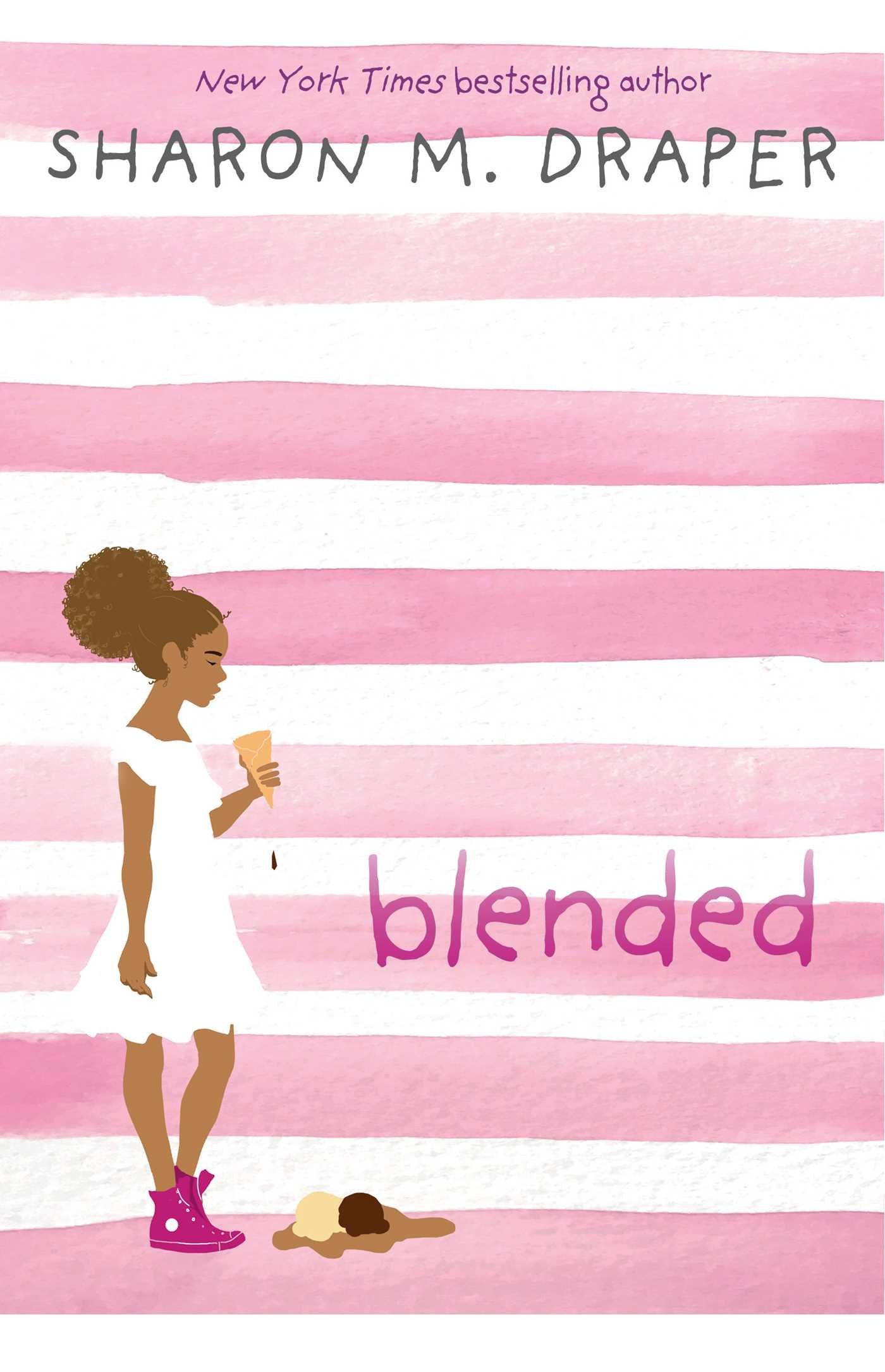
My four grandchildren are biracial, with a Trinidadian American mother. They live in Buford, Georgia, and while Gwinnett County was once Newt Gingrich’s congressional district, it is now wonderfully multicultural and regularly votes blue. Therefore it’s no surprise that the school library would carry Sharon Draper’s Blended, about a mixed-race 11-year-old dealing with various family and social issues.
My own biracial granddaughter is a precocious fourth grader who loves reading, math, tennis, and piano playing. I’m not surprised that she would be drawn to Blended when she saw it in the library because the girl on the cover sports an Afro puff, which Eve often does as well. When we video chat with our grandchildren on Sundays, we always ask them what they’re reading, which is how we learned about Eve’s excitement about Draper’s novel.
Goodreads describes Blended as follows:
“You’re so exotic!” “You look so unusual.” “But what are you really?”
Eleven-year-old Isabella is used to these kinds of comments – her father is black, her mother is white – but that doesn’t mean she likes them. And now that her parents are divorced (and getting along WORSE than ever), Isabella feels more like a push-me-pull-me toy. One week she’s Isabella with her dad, his girlfriend Anastasia, and her son Darren living in a fancy house where they are one of the only black families in the neighborhood. The next week she’s Izzy with her mom and her boyfriend John-Mark in a small, not-so-fancy house that she loves.
The description notes that the novel grapples with identity issues. “If you’re only seen as half of this and half of that,” it asks, “how can you ever feel whole?”
Eve was stimulated by Blended because she felt seen. I don’t know if she’s ever been asked, “But what are you really?”, although I know one of her older sisters was once informed (this by an African American kid who lives next door) that she wasn’t really Black. In any event, Eve, like her two older sisters, is very thoughtful, and the plot gave her a framework for thinking about her own life. The issues raised by the novel seemed familiar.
This goes also for police violence, which Eve has heard about. (The family marched around the neighborhood declaring “Black Lives Matter!” after the murder of George Floyd.) Protagonist Isabella is winged by a police bullet at one point, which momentarily brings the estranged parents together. Eve was riveted.
Had Eve, however, been attending school in Hamilton County, Tennessee; Indian River County or Clay County, Florida; Goddard County, Kansas; Eanes County or Clear Creek County, Texas; Cumberland County, North Carolina; or Elkhorn Area School District, Wisconsin, she would not have come across the book. And while her parents are both professors, they wouldn’t necessarily have known about it. Thanks to a school library, she picked it up and read it.
In a library challenge to the book brought by a Wrightsboro, North Carolina parent, we get some sense of objections. As reported by WHQR,
They wrote that this is “intentionally creating highly controversial topics and embedding them into the life events of a small child,” adding that the content is too mature and that while the book is written for children ages 8-12, “authors write and sell books, our job is to look out for kids.”
To its credit, the Wrightboro Public Library overrode the parental challenge, declaring that Blended has “an engaging storyline for young readers, relatable issues, covers issues our students experience such as the impact of divorce, racism, blended families, and positive role model characters who demonstrate resilience and empathy (something our students can benefit from).”
Given our conversation with nine-year-old Eve, I can testify that the librarians know what they are talking about.
In the recent Friends of the Library event we had at Sewanee on book banning, author Christina Soontornvat and librarian Keri Lambert repeatedly pointed out that libraries are not against parents supervising what their own children read; the parents just shouldn’t be able to deny books to other people’s children. In the question-and-answer period that followed, one young person talked about how John Green’s much banned Looking for Alaska “saved my life.” Another said the same about Green’s The Fault in Our Stars.
In other words, certain parents are against other people’s children having their lives saved.
While Blended hasn’t saved Eve’s life, it has spurred her to question and explore the world around her, along with her own developing self. What more can you hope for from a book?