Note: If you wish to receive, via e-mail, (1) my weekly newsletter or (2) daily copies of these posts, write to me at rrbates1951@gmail.com. Comments may also be sent to this address. I promise not to share your e-mail with anyone. To unsubscribe, write here as well.
Thursday
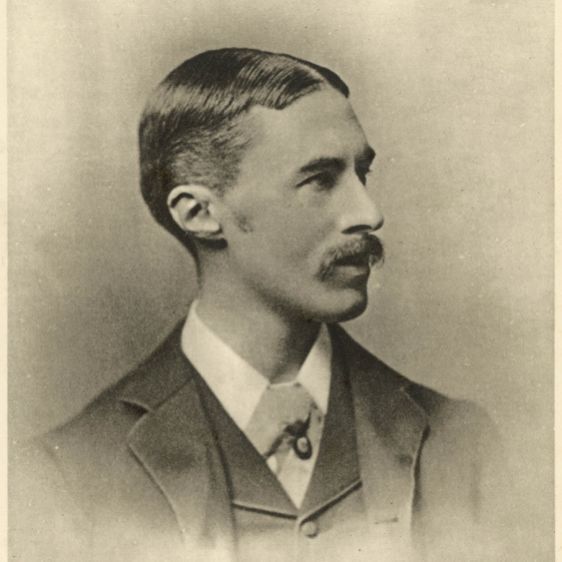
Greg O’Lear, one of my favorite bloggers because of his wonderfully rambling essays about literature and politics, has posted another gem. The subject is a poem I loved as an adolescent, albeit one that I’ve never fully understood until now. Taking his cue from A.E. Housman’s “Terence, This Is Stupid Stuff,” Olear contends that the poet offers us important advice for surviving the Trump presidency.
Better yet, poetry is part of the answer.
The poem is a debate between a poet who writes depressing poems and one of his drinking mates. This mate wants something livelier that Terence’s usual fare. He begins by denigrating the poet’s melancholy poetry, seeing it at odds with the gusto with which he eats and drinks. The reference to the cow, Olear notes, is to a popular song from the time:
Terence, this is stupid stuff:
You eat your victuals fast enough;
There can’t be much amiss, ‘tis clear,
To see the rate you drink your beer.
But oh, good Lord, the verse you make,
It gives a chap the belly-ache.
The cow, the old cow, she is dead;
It sleeps well, the horned head:
We poor lads, ‘tis our turn now
To hear such tunes as killed the cow.
Perhaps this friend isn’t averse to all poetry, but he wants something more upbeat that the melancholy poetry that was characteristic of Housman, such as “To an Athlete Dying Young,” “Into my heart an air that kills,” and “Here dead we lie” :
Pretty friendship ‘tis to rhyme
Your friends to death before their time
Moping melancholy mad:
Come, pipe a tune to dance to, lad.’
Terence begins his counter argument by conceding that, yes, there are indeed more uplifting things than depressing poetry. Guinness, for instance:
Why, if ‘tis dancing you would be,
There’s brisker pipes than poetry.
Say, for what were hop-yards meant,
Or why was Burton built on Trent?
Oh many a peer of England brews
Livelier liquor than the Muse…
Then comes the most famous couplet from the poem:
And malt does more than Milton can
To justify God’s ways to man.
The reference, of course, is to the opening invocation of Paradise Lost, where Milton, blind and in jail following the collapse of the Commonwealth and restoration of the the monarchy—is trying to figure out God’s plan in all this. Imagining the Holy Spirit as his epic muse, Milton says that he writes his poem to restore his faith in “Eternal Providence,” which he has begun to doubt:
What in me is dark
Illumine, what is low raise and support;
That to the height of this great Argument [the poem]
I may assert Eternal Providence,
And justify the ways of God to men.
Terence isn’t done acknowledging that beer has its virtues, but he begins to land some subtle jabs: beer works best with fellows “whom it hurts to think” and who would rather “see the world as the world’s not”:
Ale, man, ale’s the stuff to drink
For fellows whom it hurts to think:
Look into the pewter pot
To see the world as the world’s not.
And faith, ‘tis pleasant till ‘tis past:
The mischief is that ‘twill not last.
Oh I have been to Ludlow fair
And left my necktie God knows where,
And carried half way home, or near,
Pints and quarts of Ludlow beer:
Then the world seemed none so bad,
And I myself a sterling lad;
And down in lovely muck I’ve lain,
Happy till I woke again.
Now comes the counterargument, beginning with the inevitable hangover:
Then I saw the morning sky:
Heigho, the tale was all a lie;
The world, it was the old world yet,
I was I, my things were wet,
And nothing now remained to do
But begin the game anew.
Many use the internet, algorithmically programmed to confirm their fantasies, as Housman’s lads use beer. Because the tale that Trump tells is indeed “a lie,” sooner or later we wake up with wet clothes and a splitting headache. And while some do indeed “begin the game anew”—it’s how addiction works, after all—we all know where that leads.
Depressing poems provide a more substantive response to bad times. While Terence makes one last concession—”’Tis true, the stuff I bring for sale/ Is not so brisk a brew as ale”—he points out that he speaks from experience: the poetry “has been rung out in a weary land.” Although “the smack is sour,” all the better “for the embittered hour”:
Therefore, since the world has still
Much good, but much less good than ill,
And while the sun and moon endure
Luck’s a chance, but trouble’s sure,
I’d face it as a wise man would,
And train for ill and not for good.
‘Tis true, the stuff I bring for sale
Is not so brisk a brew as ale:
Out of a stem that scored the hand
I wrung it in a weary land.
But take it: if the smack is sour,
The better for the embittered hour;
It should do good to heart and head
When your soul is in my soul’s stead;
And I will friend you, if I may,
In the dark and cloudy day.
The poem ends with how to prepare for “the dark and cloudy day” that is sure to come. We should read poetry that alerts us to our condition because it can build up our immune systems. Terence’s example is King Mithridates, who rendered himself immune to poison by ingesting small amounts over time:
There was a king reigned in the East:
There, when kings will sit to feast,
They get their fill before they think
With poisoned meat and poisoned drink.
He gathered all the springs to birth
From the many-venomed earth;
First a little, thence to more,
He sampled all her killing store;
And easy, smiling, seasoned sound,
Sate the king when healths went round.
They put arsenic in his meat
And stared aghast to watch him eat;
They poured strychnine in his cup
And shook to see him drink it up:
They shook, they stared as white’s their shirt:
Them it was their poison hurt.
Terence ends his case with a climactic couplet:
I tell the tale that I heard told.
Mithridates, he died old.
From a poetic point of view, there are some problems here. First of all, do we really want to compare poetry to poison? Also, should we only read poetry in small amounts?
Obviously Terence—or at least Housman—is being humorous here, making what he knows to be an outlandish case for poetry. There’s real wisdom here as well, however. In the many ways I’ve explored over the years, literature provides us a powerful means for negotiating the slings and arrows of outrageous fortune, from the death of loved ones to shattering world events. It certainly provides deeper comfort and deeper understanding than a pint.
Back to Olear since he’s using Housman’s poem to provide ways, not just poetry, to handle Trumpism’s daily assaults. Terence offers us two important reminders. First, we can’t live in ignorance, eating, drinking, and being merry while Trumpism is wreaking havoc, because we’ll all end up in the muck. At the same time, however, we must get through these times “emotionally intact.” And to do that, we must find ways to “inure ourselves to bitterness, injustice, heartache, and woe—to steel ourselves to those inevitable negative outcomes.”
You can see where the Mithridates solution comes in. Because the newsfeed “is so toxic that we risk succumbing to its fascist poison,” we must, like the Persian king, “take it all in small doses.”
The goal, for us and for our democracy, is to die old. In order to keep fighting the good fight, limit the amount of time you spend tracking the latest outrages.
Also, keep reading poetry.