Note: If you wish to receive, via e-mail, (1) my weekly newsletter or (2) daily copies of these posts, write to me at rrbates1951@gmail.com. Comments may also be sent to this address. I promise not to share your e-mail with anyone. To unsubscribe, write here as well.
Friday
This is the latest post in my on-going series on “My Life in Literature,” which appears every Friday. Because an informal autobiography written by my great grandmother Eliza Scott means so much to me—she discusses the novels that were important to her as she grew up in Victorian England—I figured that I should do something similar for family members who come after me. Of course, the subject is also consistent with the mission of this blog, which is to explore the many ways that literature enhances and sometimes changes our lives.
Because of southern racism, I determined that, for college, I would get as far away from the south as I could. It wasn’t only that I was attending a segregated high school—we had our first African American student my senior year—but that I regularly encountered racist remarks from fellow students and some teachers. For instance, the day after Martin Luther King was assassinated, our rightwing American History teacher observed, “He lived by the sword, and he died by the sword.” I, who the year before had attended a King speech in Charleston where he decried the urban riots (“Therefore I say to you, not “burn, baby, burn!” but “build, baby build!”) stewed in silence. This is one reason why I left for my parents’ alma mater, which was Carleton College in Northfield, Minnesota.
I knew I wasn’t in Tennessee anymore when, for first-year orientation, we were assigned various books by African American activists. I read them and remember being baffled by Eldridge Cleaver’s Soul on Ice, which was far too accepting of the violence that King was condemning. (I now know that the author was a rapist masquerading as a liberation figure.) Nevertheless, it signaled to me that college was a far cry from high school.
1969 was a tumultuous year. Along with the urban riots, the Vietnam War was in full swing, and while I had a four-year student deferment, to our eyes it appeared that the war would never end. Our school observed a special protest moratorium in October and closed down for a week in April because of the Kent State killings. During that week I joined 80 Carleton and St. Olaf students and faculty in a demonstration designed to disrupt the Minneapolis draft induction center. We went intending to get arrested and, in order to participate, had to promise that we would go nonviolently when it happened. After two hours of blocking the doors, we were carted off to the Hennepin County jail in police wagons.
I remember all of us singing John Lennon’s “All we are saying is give peace a chance,” which caused the elevator operator to roll his eyes. We were housed in the drunk tank—no other place was big enough to house us—and then released on our own recognizance. Later there would be a jury trial where we would be found guilty of a misdemeanor. We had a choice between a light fine and a week in jail. As I was in Tennessee when the sentence came down, I paid the fine.
Only years later did I fully appreciate how angry we were. Having grown up reciting the Pledge of Allegiance and singing “America the Beautiful,” “God Bless America,” and “My Country ‘Tis of Thee,” we felt like our country had betrayed us. Men our age were being sent to fight and die in a war that no one could satisfactorily justify.
Of course, the war wasn’t the only thing going on since college demanded a lot of us academically. The joke at Carleton was that, on the first day of class, you were two weeks behind, and it’s true that the courses were difficult. In that first year I took Composition, two British literature surveys, two interdisciplinary humanities courses (one in 5th century Athens, one in the Renaissance), two French literature survey courses, anthropology, geology, and an introductory history course on Nazi Germany. I was a willing and eager student, writing essays on Marlowe’s Doctor Faustus and Tamburlaine for the early Brit Lit survey and grappling with T.S. Eliot’s Waste Land in the 20th century survey. But the only course that allowed me to connect with what was going on in our lives—the only course in which I truly caught fire—was the history course. I remember writing an essay on Fritz Stern’s The Politics of Cultural Despair: A Study in the Rise of the Germanic Ideology, which I tried to apply—not entirely successfully—to our own time.
I would catch fire a second time my sophomore year in a course I took on the French Revolution. Carl Weiner, a charismatic professor who made the events come alive for us, assigned J. L. Talmon’s The Origins of Totalitarian Democracy for the final essay. There I had to reflect on how an intellectual like Robespierre, even when driven by the lofty ideal of a “republic of virtue,” could also usher in a bloody reign of terror. As I considered myself an intellectual, it prompted me to do some self-questioning—and to distance myself from the more radical leftists one encountered in those days, especially the Trotskyite Worker’s League, which had a small campus chapter.
The following year I journeyed to Normandy with a group of Carleton students, headed by Weiner, to study the Student-Worker Uprising of 1968. As this history was only three years old, there was still a lot of unrest and we had the opportunity to witness, first-hand, a student demonstration over worker rights that involved molotov cocktails and tear gas. The Maoists and the Trotskyites were quarreling, and I believe it was the more violent Maoists that captured a police van by throwing a molotov cocktail through the window, emptying it out. Then they drove it onto the University of Caen campus, where the police were not allowed, and parked it by a statue of a phoenix, symbol of Caen’s recovery from World War II bombing. As they burned it, everyone there lifted their left hand in a fist and sang the Communist “International.”
I add that the day ended somberly as a student was badly hurt from having been hit by a teargas canister. An ambulance had to come on campus to care for him and, as the day was ending, the protest ended there and then. We Americans, functioning as observers, felt like we had been a part of history.
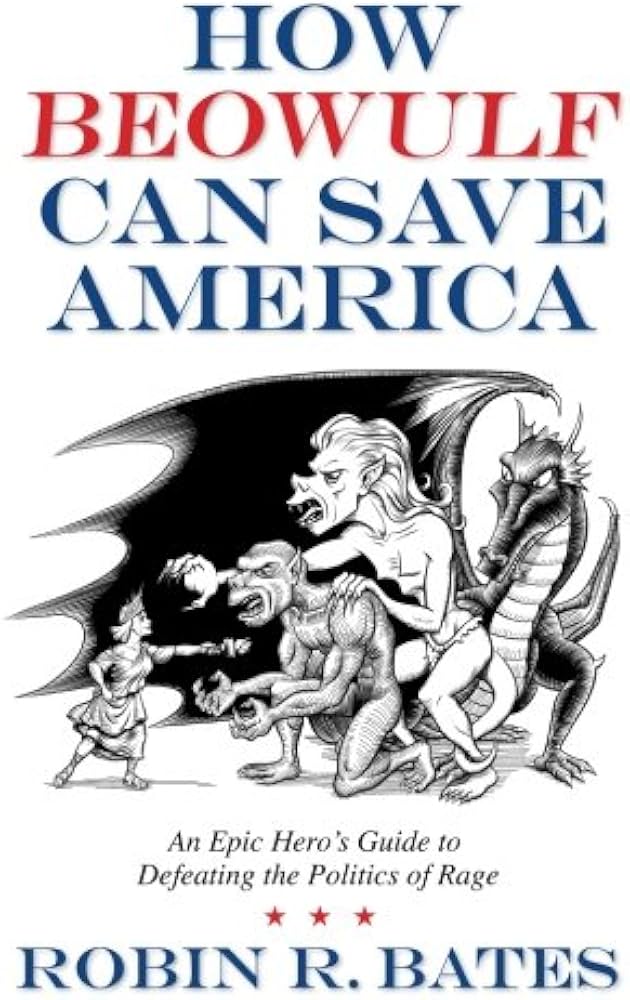
Grappling with urgent concerns was not occurring in my English classes. In those days formalism reigned supreme, with scholars contending that literature rose above the dirty facts of history. I now realize that it was therefore almost inevitable that I would major in history, even though literature was my deepest love and even though I wasn’t interested in history’s drive to figure out what really happened. I was drawn to historical ideas, not historical facts, and so confined myself mostly to intellectual history courses. I was fortunate that I also had history professors who encouraged me to regard literary artifacts as prime source material. In Medieval History I I wrote an essay on “Beowulf and the Historical Role of Monsters in Barbarian Society” and in Medieval History II how author of Arthurian tales Chrétien de Troyes regarded adultery in 12th century France.
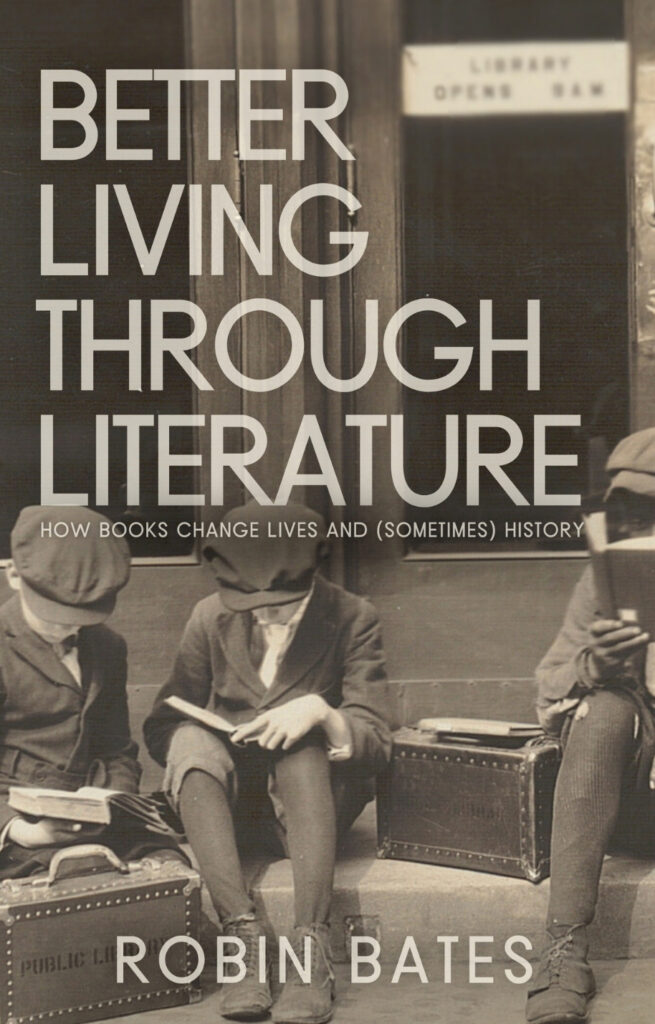
In my book I recount how the Beowulf essay was one of the most meaningful moments in my life. That’s because I saw a connection between literature and world-shaking events that my literature classes didn’t care about. It was not only that poems and stories reflected what was going on (although formalists didn’t even admit to that much) but that they provided people a way to negotiate the forces that were threatening to tear apart their societies.
The theorist who influenced me the most was the Italian activist Antonio Gramsci, whom I encountered in a course on Marxist thought: Gramsci spoke of the need for cultural workers (philosophers and poets), who could penetrate false consciousness and see class relations as they really were. Gramsci especially prized these cultural workers if they came from working class, and since I had begun dating my future wife at that time, we had fun labeling her (since she grew up on a farm) a Gramscian “organic intellectual.” For that class I would write a clarifying Gramsci-like “manifesto” of my beliefs.
Finally, for my senior thesis I contended that Enlightenment figures like Jean Jacques Rousseau and Denis Diderot had a far more profound influence on the French Revolution than did the pamphlet writers of the day, even though the latter were in the thick of things and had an immediate impact.
In other words, faced with the Vietnam War and other momentous events of the day, I was looking for reassurance that someone who loved books and ideas could play an historical role. I had once been part of a lawsuit that integrated the Franklin County schools but now I was feeling impotent. My history classes provided me with a framework for exploring possibilities, my English classes not at all.
What those literature classes gave me, however, were moments of aesthetic ecstasy missing from my more prosaic history courses. To this day I remember where I first encountered “Why this is hell nor am I out of it” and “We are such stuff as dreams are made on” and “I will show you fear in a handful of dust” and “One man loved the pilgrim soul in you” and “Mad Ireland hurt him into poetry.”*
For this reason, when I was writing my senior thesis I floated the idea that Rousseau and Diderot had the impact they did on the French Revolution because of the aesthetic quality of their works. The higher the literary quality of a work, I speculated, the greater the historical impact.
At that moment I decided I needed to go to graduate school to figure out if this was true.
*The lines are from Marlowe’s Doctor Faustus, Shakespeare’s Tempest, Eliot’s Waste Land, Yeats’s “When You Are Old,” and Auden’s “In Memory of W.B. Yeats.”