Tuesday
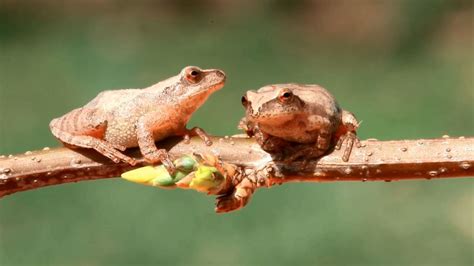
Julia and I live by a small lake, which means that, when we eat our suppers on our screen porch these days, we get to hear a full-throated frog chorus, both spring peepers and bullfrogs. Thinking of how the Modern Major General in Gilbert and Sullivan’s Pirates of Penzance boasts of knowing “the croaking chorus from The Frogs of Aristophanes,” I decided to check out the play.
It turns out that there are relatively few lines in the frog chorus, so the MMG doesn’t have much to boast about. It could also be that he himself is like one of the frogs, croaking out a meaningless list accomplishments that have nothing to do with effective military leadership. In the play, the frogs of Hades are pestering the Greek god Dionysus as he travels to the underworld. His mission is to free one of the great Greek tragedians, either Euripides or Aeschylus, since Greek theater has declined since their deaths.
I’m not clear what thematic role the frogs play or why the play is called The Frogs. Maybe they represent the babble of the modern theater. Emily Dickinson’s frog comes to mind:
I’m Nobody! Who are you?
Are you – Nobody – too?
Then there’s a pair of us!
Dont tell! they’d banish us – you know!
How dreary – to be – Somebody!
How public – like a Frog –
To tell your name – the livelong June –
To an admiring Bog!
Whatever they represent, their incessant chirping—sound without substance–drives Dionysus crazy. Here they are:
Brekekekex, ko-ax, ko-ax!
Brekekekex, ko-ax, ko-ax!
We children of the fountain and the lake
Let us wake
Our full choir-shout, as the flutes are ringing out,
Our symphony of clear-voiced song.
The song we used to love in the Marshland up above,
In praise of DIOnysus to produce,
Of Nysaean DIOnysus, son of Zeus,
When the revel-tipsy throng, all crapulous and gay,
To our precinct reeled along on the holy
Pitcher day.
Brekekekex, ko-ax, ko-ax.
When Dionysus complains, “Hang you, and your ko-axing too! There’s nothing but ko-ax with you,” the annoying frogs reply:
That is right, Mr. Busybody, right!
For the Muses of the lyre love us well;
And hornfoot Pan who plays on the pipe his jocund lays;
And Apollo, Harper bright, in our Chorus takes delight
For the strong reed’s sake which I grow within my lake
To be girdled in his lyre’s deep shell.
Brekekekex, ko-ax, ko-ax.
When Dionysus prays for them to “give o’er, sing no more,” the frogs takes this as a challenges to grow louder:
Ah, no! ah, no! Loud and louder our chant must flow.
Sing if ever ye sang of yore,
When in sunny and glorious days
Through the rushes and marsh-flags springing
On we swept, in the joy of singing
Myriad-divine roundelays.
Or when fleeing the storm, we went
Down to the depths, and our choral song
Wildly raised to a loud and long
Bubble-bursting accompaniment.
Finally Dionysus concludes that, if he can’t beat them, he’ll join them, so that both parties are croaking by the end of the scene:
DIO. Go, hang yourselves; for what care I?
FR. All the same we’ll shout and cry,
Stretching all our throats with song,
Shouting, crying, all day long.
FR. and DIO. Brekekekex, ko-ax, ko-ax.
Unlike the Greek god, Julia and I enjoy the frogs. In fact, we’ll miss them later in the summer when the katydids drown everything out, from frogs to coyotes. At the moment, however, the frogs capture our excitement over the warm spring nights and the tree foliage bursting out all over.
It’s a magical time.