Monday
I’m using today’s post to sort through some of the material in a postcolonial course I’m teaching at the University of Ljubljana. The course aims to introduce the students to works by authors from the former British colonies, along with various theories that help unlock them.
Amongst the works are Chinua Achebe’s Things Fall Apart and Chimamanda Adichie’s Purple Hibiscus (Nigeria); Salman Rushdie’s Midnight’s Children and Arundhati Roy’s God of Small Things (India); Leslie Marmon Silko’s Ceremony (although the colonizer in this case is the United States); and either Black Leopard, Red Wolf or A Brief History of Seven Killings (Jamaica’s Marlon James). We will also be looking at authors with hybrid nationalities, such as Anglo-Jamaican Zadie Smith (Playtime); Anglo-Pakistani Hanif Kureishi (The Buddha of Suburbia); Indian-Canadian Rohinton Mistry; Indian American Kiran Desai (The Loneliness of Sonia and Sunny); and Scottish-Sudanese Leila Aboulela (Elsewhere Home).
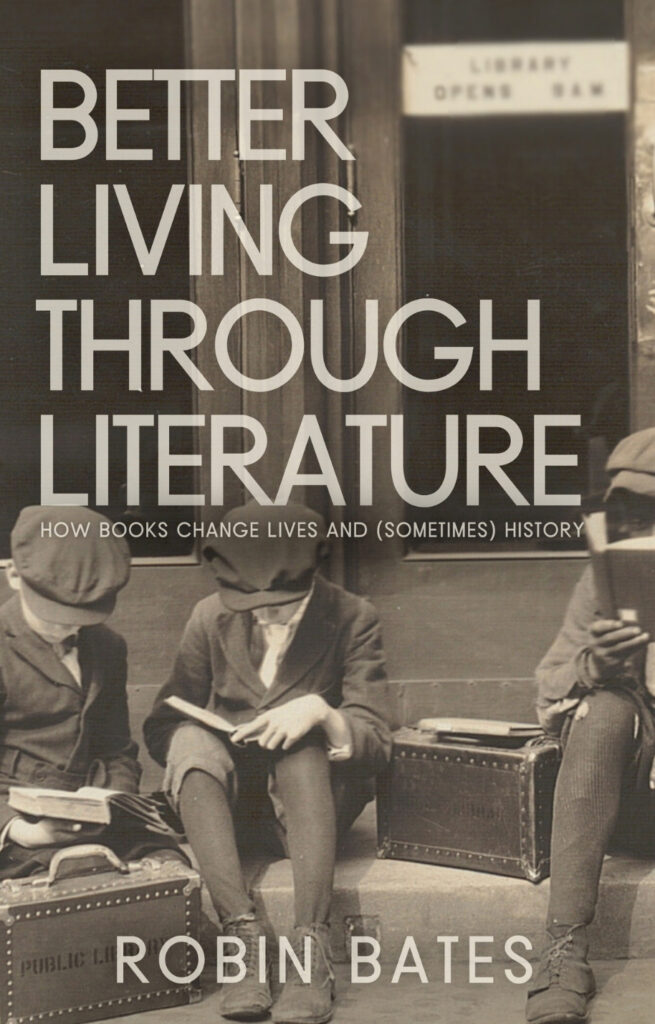
As I teach the course, I wish I could revise my postcolonialism chapter in Better Living through Literature. Focused as it is on Frantz Fanon, it omits any mention of Edward Said or Homi Bhabha, who are critical to understanding the dynamics at play.
It’s not that Fanon doesn’t deserve a chapter. Regarded as the father of Postcolonial Studies, Fanon showed how literature helped the colonizers justify conquest, with them more or less saying, “We’re superior because we have Shakespeare/ Racine/ Goethe.” Literature couldn’t carry out the conquest all on its own, of course. One needs guns for that. But hard power requires soft power to ensure acceptance of its rule.
To fight back, Fanon called upon native authors to create new national literatures, what he called “literature of combat.” Novels especially would prove invaluable allies to resistance movements.
It’s important to note that works of combat need not be overtly political to accomplish such aims. As Achebe wrote about his own groundbreaking novels,
This is my answer to those who say that a writer should be writing about contemporary issues–about politics in 1964, about city life, about the last coup d’etat. Of course, these are legitimate themes for the writer but as far as I am concerned the fundamental theme must first be disposed of. This theme–put quite simply–is that African peoples did not hear of culture for the first time from Europeans, that their societies were not mindless but frequently had a philosophy of great depth and value and beauty, that they had poetry and, above all, they had dignity. It is this dignity that many African peoples all but lost in the colonial period, and it is this dignity that they must now regain. The worst thing that can happen to any people is the loss of their dignity and self-respect. The writer’s duty is to help them regain it by showing them in human terms what happened to them, what they lost.
Then, as he does so often in Things Fall Apart, Achebe turns to his folk origins:
There is a saying in Ibo that a man who can’t tell where the rain began to beat him cannot know where he dried his body. The writer can tell the people where the rain began to beat them. After all the novelist’s duty is not to beat this morning’s headline in topicality, it is to explore in depth the human condition. In Africa he cannot perform this task unless he has a proper sense of history.
Following up on Fanon’s cultural observations almost two decades later, Said pointed out how literary caricatures of “the Orient” helped European powers rationalize their colonial takeovers. Because “Orientals” were depicted as irrational, depraved, fallen, childlike, and altogether “different” (my class examined Rider Haggard’s She, Joseph Conrad’s Heart of Darkness, and Rudyard Kipling’s “The White Man’s Burden”), Europeans could perceive themselves as rational, virtuous, mature, and “normal.” As Marlow in Heart of Darkness notes, colonialism needed a noble idea to justify smash and grab exploitation, and various authors helped provide it with that idea.
While Fanon and Said were important in setting the groundwork for colonial studies, Indian scholar Homi Bhabha helps us understand what has emerged since the former colonies have broken free. Although cultures may seem distinct, they are never set in stone but rather continually evolve as they interact. (Culture is like clay and is continually being “enunciated,” Bhabha writes.) This was true in the time of colonization and it’s even more true now.
For instance, the sense of what it means to be British has been changing as the empire has written back (to borrow Rushdie’s useful phrase). Increasingly, traditional Brits have found themselves framed by narratives originating elsewhere. Nor has the experience been entirely virtual as West Indians, South Asians, and Sub-Saharan Africans move to the island.
In their interactions, no one remains the same. This new “hybridity” (Bhabha’s term) is being captured by extraordinary new works of literature. Bhabha calls what emerges “the Third Space,” which is the in-between space where culture and identity are negotiated.
In some ways, the class I am teaching functions as a third space. Of the eight students, two are Slovenian, two Macedonian, two Serbian, one Belgian, and one Austrian (these last two from the European Union’s Erasmus exchange program). In the fiction they have chosen to write about, we see two generational takes on Nigerian independence (Achebe and Adichie); Aboulela, Kureishi, Andrea Levy, and Ishiguro wrestling with their Scottish-Soudanese, Anglo-Pakistani, Anglo-Jamaican, and Anglo-Japanese identities respectively; and Afrikaner Coetzee exploring white identity in post-apartheid South African. Some of my students have their own hybrid identities, which makes the works particularly relevant.
Two of Bhabha’s concepts that are proving particularly useful are mimicry and ambivalence. The colonizers expect the colonized to become western—to mimic white behavior—only to find it disturbing when they do. They may feel ambivalent that the differences are not as great as they thought (as Marlow does in Heart of Darkness) or over the fact that they are simultaneously exploitative and nurturing (or at least see themselves as nurturing).
For their part, colonized or previously colonized subjects may mimic the colonizers for a number of reasons, whether to survive, to mock, or to join. Some really want to leave behind old identities.
I’ve written about how, in the United States, immigrants sometimes want to “become white,” thereby joining the upper echelon of America’s (unofficial) racial caste system. That’s one way of understanding “Latinos for Trump” and “Muslims for Trump.” Many who voted for DJT in 2024, however, swung back heavily to the Democrats in 2026 when they discovered that white nationalists were rejecting their attempts to fit in. To cite one egregious example, a Texas candidate posted a photo of Indian-American students, some wearing cowboy hats, celebrating a University of Texas football comeback, along with the observation,
Like bodycams exposed criminals, social media is exposing how many Americans have been displaced by foreigners. It’s everywhere and far worse than any of us could imagine.
In a follow-up post he wrote,
I heard UT graduation this year looked like this. I didn’t believe it. The problem is now obviously far worse than anyone imagined.
In short, the politician was horrified by what he saw as mimicry, even though the students thought they were just like every other student. Thanks in part to Latino votes, he was soundly trounced in the election.
Debates over who is authentic and who is alien cause conflict everywhere, often stirred up by autocratic demagogues tapping into racial and ethnic resentment. Postcolonial literature provides an invaluable service by capturing individuals in their full complexity while the forces of history swirl around them. My students, meanwhile, are not only fulfilling an academic assignment but figuring out how to find their way in an increasingly confusing global community.