Monday
I had a lovely opportunity Friday to share my approach to literature with an American poetry class at the University of Maribor, the second largest university in Slovenia. For people new to this blog or unfamiliar with my approach, I share it here as a quick overview.
I entitled my talk Poetry as an Indispensable Life Companion: People “Die Miserably Every Day” without It. The allusion is to a passage by the Modernist American poet William Carlos Williams:
it is difficult
to get the news from poems
yet men die miserably every day
for lack
of what is found there
Williams, I noted, was in a defensive crouch. Poetry was deemed irrelevant by many in pragmatic 1950s America. He imagines people dismissing poetry because it doesn’t address current topics and responds by making the best case he can for poetry’s relevance.
His fear was not new. I did a quick survey of others throughout the ages who have called poetry irrelevant. Here are some of the most notable instances:
–Plato was prepared to ban poetry from his ideal republic unless it could prove itself socially useful. “Poetry must “show not only that she is pleasant but also useful to states and to human life,” he wrote. Neither Hesiod nor Homer fit his criteria;
–The Roman poet Horace noted that grumpy old men only like poetry that is edifying, thereby alienating entertainment-seeking young men. The best poetry, he concluded, is poetry that is useful and entertaining;
–The 16th century Puritan writer Stephen Gossen said that poetry was “unprofitable” and a waste of time, thereby triggering Sir Philip Sidney’s famous essay “Defense of Poesie”;
–In 1802, Romantic poet William Wordsworth worried that poetry was becoming “a thing as indifferent” as a taste for rope dancing or sherry;
–In 1821 Thomas Peacock light-heartedly argued that poetry was in decline, bypassed by new scientific and technological breakthroughs. The essay triggered Percy Shelley’s famous Defence of Poetry;
–At the end of the 19th century, worried about people who made utilitarian arguments for art, Oscar Wilde famously said, “All art is quite useless.” (He also wrote “The Soul of Man under Socialism,” which contradicts this.)
–In his poem “Adam’s Curse,” William Butler Yeats wrote that the poet who articulates “sweet sounds together” is considered to be an idler
by the noisy set
Of bankers, schoolmasters, and clergymen
The martyrs call the world.
–In his poem “In Memory of W.B. Yeats,” W.H. Auden famously wrote that “poetry makes nothing happen,” at least in the eyes of “executives.”
At this point, however, I mentioned that one of Auden’s own poems made something happen for Americans on September 11, 2001. On a day when America was reeling from the attacks on the Twin Towers, Scott Simon of National Public Radio read excerpts from Auden’s “September 1, 1939,” written in response to Hitler’s invasion of Poland. Many found the poem articulated their uncertainty and pain while offering them solace, especially the final stanza:
Defenceless under the night
Our world in stupor lies;
Yet, dotted everywhere,
Ironic points of light
Flash out wherever the Just
Exchange their messages:
May I, composed like them
Of Eros and of dust,
Beleaguered by the same
Negation and despair,
Show an affirming flame.
Nevertheless, far too many agree with Gossen’s contention that poetry is unprofitable and a waste of time. This, I told the class, led to my blog and my book.
Explaining that I have always been fascinated by how literature enters people’s lives, I discussed the difficulty of making general statements about literary impact. After all, literary response is subjective, with different individuals often having widely different experiences with the same work. I therefore shared my two ways of exploring the question:
#1: By writing a daily blog in which I examine how I am using literature that day, I have an on-going record of how I–and sometimes others–use literature. Perhaps I can capture over time what I cannot sum up in an essay or book.
#2: I survey what many of the world’s great thinkers have said about literature impacting lives. While there are a range of theories, at least we can get a sense of the possibilities.
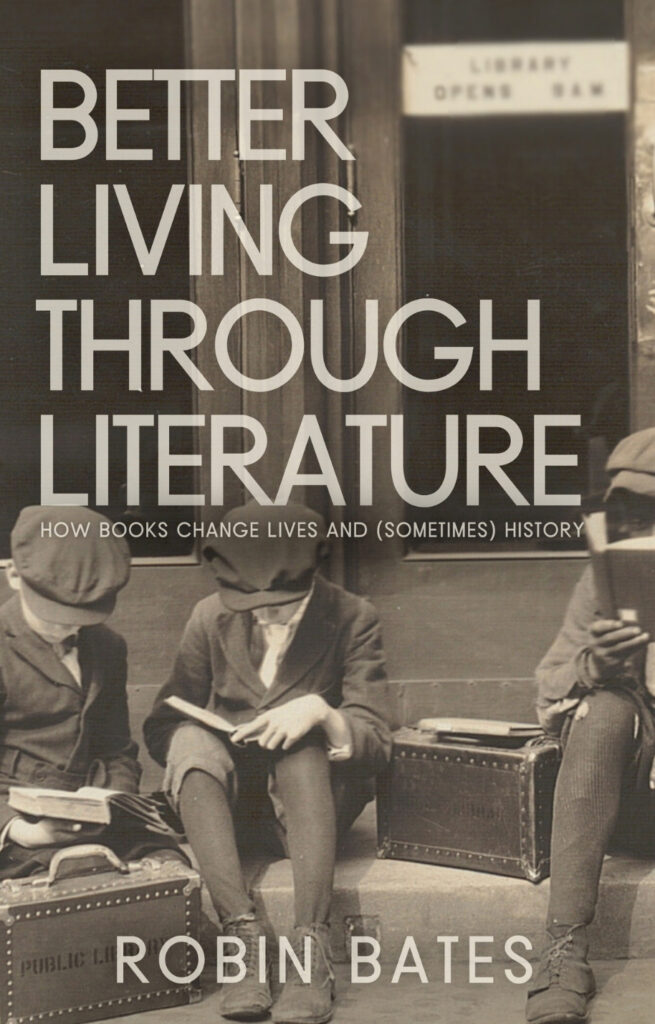
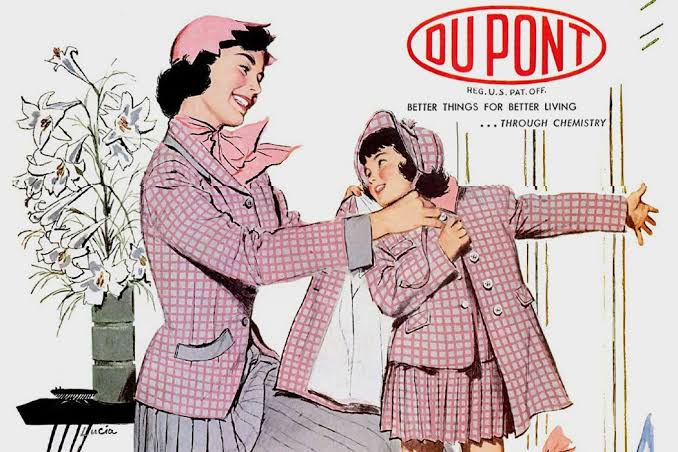
To give my blog and then my book a title, I borrowed from a Dupont Chemicals ad campaign in the middle decades of the 20th century. In other words, I pushed against a pragmatism that deems poetry to be non-essential by going into the heart of the beast. Because it had invented polyester fabrics, nylon stockings, and cellophane (among other things), Dupont could proudly proclaim
BETTER THINGS FOR BETTER LIVING . . . THROUGH CHEMISTRY
I figured I would dramatically make my point by ironically juxtaposing something authentic (literature) with something utterly inauthentic (plastic). I sought to refute the enemy on the enemy’s own turf.
I shared with the students several personal examples of literature leading to better living, all of which have appeared in my blog and in my book. They included:
–how I used Huckleberry Finn to find my center in the civil rights battles I experienced as a middle schooler;
–how Sir Gawain and the Green Knight helped an Afghanistan War vet in one of my classes to recognize and begin working with some PTSD he had picked up from defusing roadside bombs;
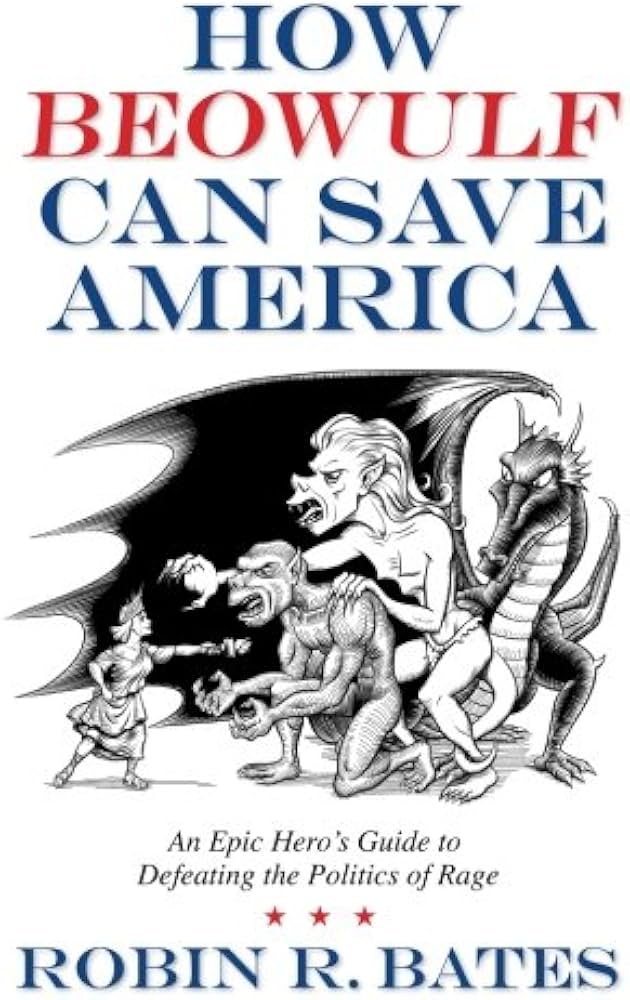
–how I would often turn to Beowulf to explore mass killings in America and around the world since, like Grendel, the murderers are often driven by resentment.
I then gave the class a brief summation of some of what some of history’s great minds have said about literary impact:
–Plato feared that dramatic poetry corrupted young men;
–Aristotle saw the same poetry training citizens in leadership;
–Horace saw poetry as the best way to deliver life lessons;
–Sir Philip Sidney believed that poetry inculcated virtue;
–Samuel Johnson feared that novels corrupted young people;
–Percy Shelley believed poetry helped free slaves and women;
–John Stuart Mill believed poetry gave our lives meaning;
–Marx and Engels believed novels could serve human liberation;
–Du Bois, Brecht, Marcuse, Fanon, Jameson, Eagleton agreed;
–Modern feminists are ambivalent;
–Freud and Jung believed that novels and poetry could heal us;
–Wayne Booth and Martha Nussbaum believe great lit makes us better people and better voters;
–American cultural conservatives believe the classics hold off the barbarians at the gates.
This I followed with quotations from my own two favorite theorists:
–It exceeds all imagination to conceive what would have been the moral condition of the world if neither Dante, Petrarch, Boccaccio, Chaucer, Shakespeare, Calderon, Lord Bacon, nor Milton, had ever existed; if Raphael and Michael Angelo had never been born; if the Hebrew poetry had never been translated; if a revival of the study of Greek literature had never taken place. —Percy Bysshe Shelley, Defence of Poetry (1821)
And:
–You [literature] lead me first to practice ways of living that are more profound, more sensitive, more intense, and in a curious way more fully generous than I am likely to meet anywhere else in the world. You correct my faults, rebuke my insensitivities. You mold me into patterns of longing and fulfillment that make my ordinary dreams seem petty and absurd. You finally show what life can be…to anyone who is willing to work to earn the title of equal and true friend.—Wayne Booth, The Company We Keep: An Ethics of Fiction (1989)
Since it was a modern poetry class, I wrapped up the talk with poems by Mary Oliver (“A Poem for the Blue Heron” and “Wild Geese”) and Wendell Berry (“A Vision.”). As we discussed them, I mentioned that the relative popularity of both poets suggests that people still see poetry as much more than an extraneous add-on to our lives. “A Vision,” for instance, has been taken up by climate activists and other environmentalists as they seek to save the world.
So that was my talk.