First Sunday of Advent
When I was growing up in an Episcopal community, one of my favorite hymns was “Watchman, Tell Us of the Night.” Then the church broke my heart by changing the music. I can’t judge objectively whether the new tune is an improvement because my childhood memories are so vivid.
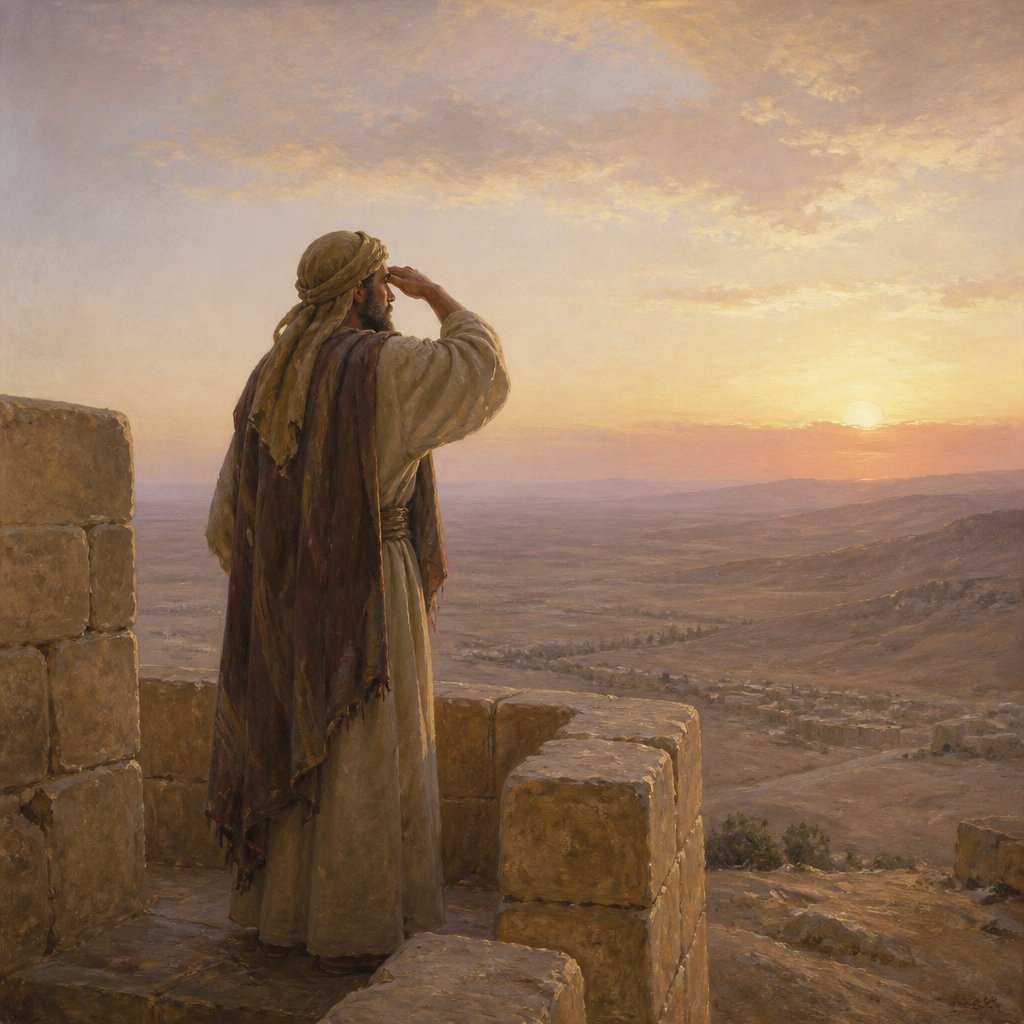
In the old tune, the hymn soars when it gets to the star: “Watchman, does its beauteous ray news of joy or hope foretell?” I think of this line when I encounter the watchman in Isaiah 21:6—”For thus hath the Lord said unto me, ‘Go, set a watchman, let him declare what he seeth’”—and in today’s Gospel reading from Mark (13:24-37). Here’s the relevant excerpt from the latter:
Therefore, keep awake—for you do not know when the master of the house will come, in the evening, or at midnight, or at cockcrow, or at dawn, or else he may find you asleep when he comes suddenly. And what I say to you I say to all: Keep awake.
When Harper Lee titled her second novel Go Set a Watchman, it was because the south needed further awakening. Atticus Finch may have been awake to certain responsibilities in To Kill a Mockingbird, but he still ascribes to America’s racial caste system. In Watchman he is a member of the White Citizens Council, an upper-class version of the KKK, and is striving to keep integration at bay. Scout, who has learned her ethics at his knee, must take the painful step of calling him out for failing to take the next step.
Readers tend to prefer Mockingbird to Watchman, but Watchman’s politics are better. Rather than celebrating a white savior, the novel shows a conflicted white woman breaking painfully with her family and community to stand up for what is right. At one point her wise uncle, serving as the mentor her father used to be, tells her that “the time your friends need you is when they’re wrong. They don’t need you when they’re right.”
I like Ursula Le Guin’s assessment: “For all its faults and omissions, [Watchman] asks some of the hard questions To Kill a Mockingbird evades.”
On what it means to be a watchman, I think of lines from Mary Oliver’s “Summer Day”:
I don’t know exactly what a prayer is.
I do know how to pay attention…
Paying attention can be a kind of prayer. Here’s a lovely poem by Norwegian poet Rolf Jacobsen about paying attention to delicate needles of light in times of darkness. Thanks to Victoria Jones’s blog Art and Theology for alerting me to it:
“Just Delicate Needles—”
By Rolf Jacobsen
Trans. Robert HedinIt’s so delicate, the light.
And there’s so little of it. The dark
is huge.
Just delicate needles, the light,
in an endless night.
And it has such a long way to go
through such desolate space.
So let’s be gentle with it.
Cherish it.
So it will come again in the morning.
We hope.
In Anthony Doerr’s wondrous novel All the Light We Cannot See, the blind protagonist can see light in the darkness of World War II that others miss. Seeing the light is what Jesus meant by heaven on earth.