Note: If you wish to receive, via e-mail, (1) my weekly newsletter or (2) daily copies of these posts, write to me at rrbates1951@gmail.com. Comments may also be sent to this address. I promise not to share your e-mail with anyone. To unsubscribe, write here as well.
Friday
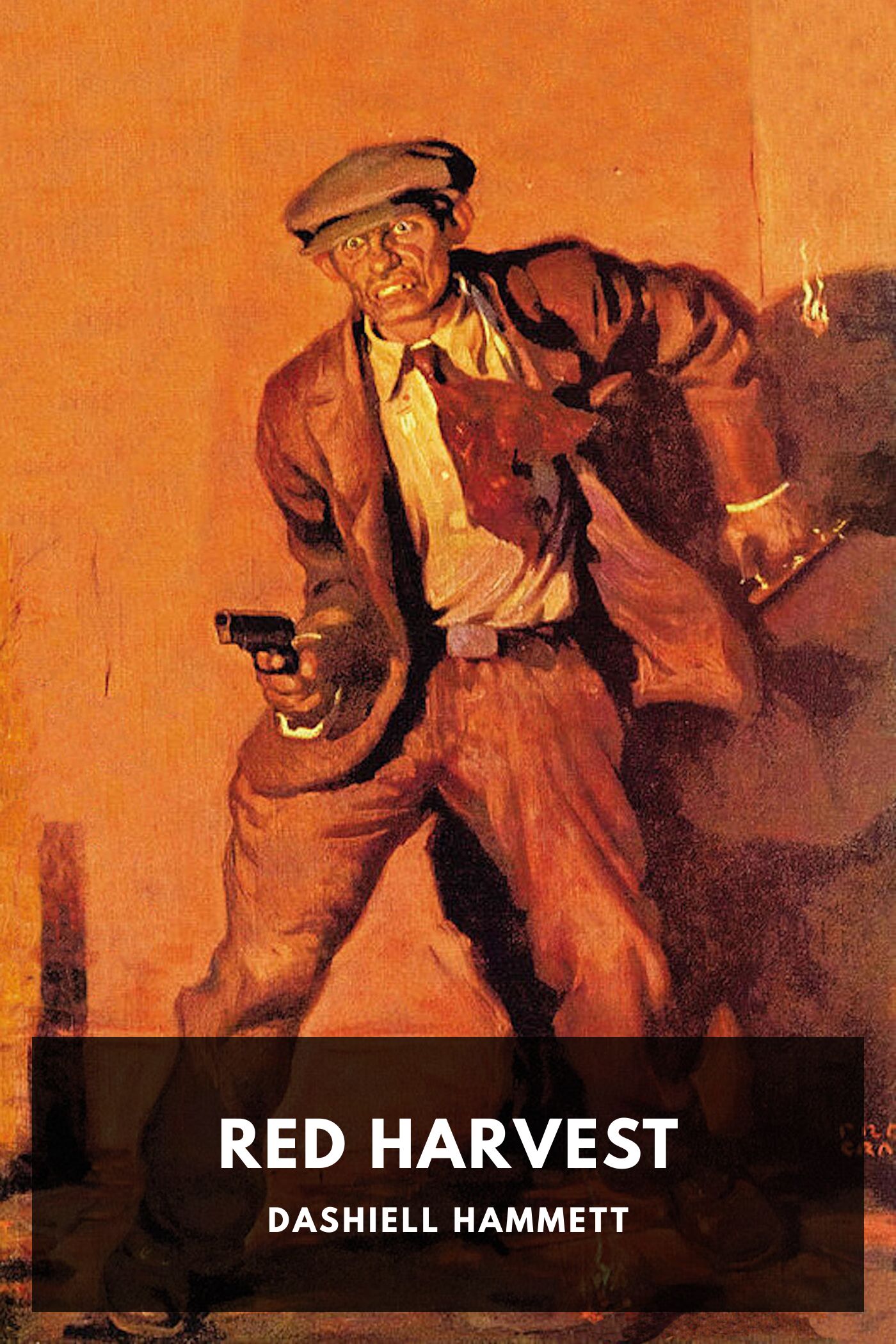
Last week I promised a follow-up post on Dashiell Hammett’ s Red Harvest once I finished it. At the time, I applied it to Donald Trump unleashing forces he could not contain, whether in the form of ICE storm troopers or promises to release Epstein’s client list. Now, however, I see the novel as the kind of fantasy that a number of Trump fans indulge in. If even respectable citizens who see Trump as an incompetent jerk continue to support him, it’s because they believe his blundering is destroying a bad system—and that, by doing so, he gives them the opportunity to pick up the pieces and create something new and better.
This is the fantasy of Red Harvest. In the novel, Elihu Willsson has brought in a number of thugs to solve his labor problems, only to see them take over his city. He hires a “continental op” to clean up the mess, then tries to fire him, then wants to hire him again, then tries to fire him again. In other words, he behaves like our TACO president (Trump Always Chickens Out) when it comes to tariffs or Ukraine or Iran or any other hard decision. As the narrator tells him,
You’re the damnedest client I ever had. What do you do? You hire me to clean town, change your mind, run out on me, work against me until I begin to look like a winner, then sit on the fence, and now when you think I’m licked again, you don’t even want to let me’ in the house.
The op, however, has outfoxed “old Elihu.” Figuring that the best way to clean up the city is to set the various thugs against each other, he circulates a number of rumors than ensure that they will kill each other off. Which they do.
The novel in this way reminds me of Akira Kurosawa’s Yojimbo [The Bodyguard], where an unemployed samurai walks into a corrupt city and does a version of the same. While he kills a few, most of the damage is done by the rival families. The film has a darkly comic last line. Surveying the smoking ruins of the town in which all the buildings have been leveled and only a couple of survivors remain, Yojimbo remarks, “Now there will be some peace in this town.”
Here’s the narrator reporting to Willson on what he’s done for him:
You came crying to me that some naughty men had taken your little city. away from you. Pete the Finn, Lew Yard, Whisper Thaler, and Noonan. Where are they now? Yard died Tuesday morning, Noonan the same night, Whisper Wednesday morning, and the Finn a little while ago. I’m giving your city back to you whether you want it or not.
Then comes the autocratic fantasy, which imagines having someone in charge who will step in and save the day:
O. K. Now Here’s what you’re going to do. You’re going to get hold of your mayor, I suppose the lousy village has got one, and you and he are going to phone the governor — Keep still until I get through.
You’re going to tell the governor that your city police have got out of hand, what with bootleggers sworn in as officers, and so on. You’re going to ask him for help — the national guard would be best. I don’t know how various ruckuses around town have come out, but I do know the big boys — the ones you were afraid of — are dead. The ones that had too much on you for you to stand up to them. There are plenty of busy young men working like hell right now, trying to get into the dead men’s shoes. The more, the better. They’ll make it easier for the white-collar soldiers to take hold while everything is disorganized. And none of the substitutes are likely to have enough on you to do much damage.You’re going to have the mayor, or the governor, whichever it comes under, suspend the whole Personville police department, and let the mail-order troops handle things till you can organize another. I’m told that the mayor and the governor are both pieces of your property. They’ll do what you tell them. And that’s what you’re going to tell them. It can be done, and it’s got to be done.
Then you’ll have your city back, all nice and clean and ready to go to the dogs again.
If old Elihu Willson doesn’t do all this, then the narrator says he will publish compromising love letters that he has found. In other words, he blackmails him into responsible behavior, and Willson folds.
The dream of fascists is that they can restore order, which often they themselves have disrupted. Hitler may have used the Brown Shirts to create chaos, but he employed the SS and “the Night of the Long Knives” to massacre their leaders and consolidate his power.
Unfortunately, from our point of view, Hammett’s assumption is that some entities—the mayor, the governor—actually care about good governance and that they will be willing to use the national guard to ensure that this happens. There’s little evidence that the current GOP is interested in governing.
Also, Hammett assumes that a man can be shamed/ blackmailed into behaving for the good of the greater community. But what happens when those in power are impervious to shame? Cynical though he may have been, Hammett didn’t consider that possibility.
In other words, our current situation may be even bleaker than Hammett’s worst nightmare.
Further thought: Hammett can be credited with creating the “hard-boiled detective,” in contrast to the more cerebral creations of Edgar Allan Poe, Arthur Conan Doyle, and Agatha Christie. I believe it is literary scholar Frederic Jameson who observed that Hammett’s protagonists, rather than retreating to a quiet room to connect all the dots, throw a spanner into the machinery, observe what kicks out, and then deal with whatever happens next. As a result, the continental op, Sam Spade, and the others are constantly getting beat up and shot at.
Trump certainly believes in throwing spanners in the works. It’s a way of grabbing headlines. The difference is that he’s not interested in fixing the problem. And he demonstrates none of the stoicism of the hard-boiled detective, casting himself as a perpetual victim as he whines about the consequences.