Note: If you wish to receive, via e-mail, (1) my weekly newsletter or (2) daily copies of these posts, write to me at rrbates1951@gmail.com. Comments may also be sent to this address. I promise not to share your e-mail with anyone. To unsubscribe, write here as well.
Friday
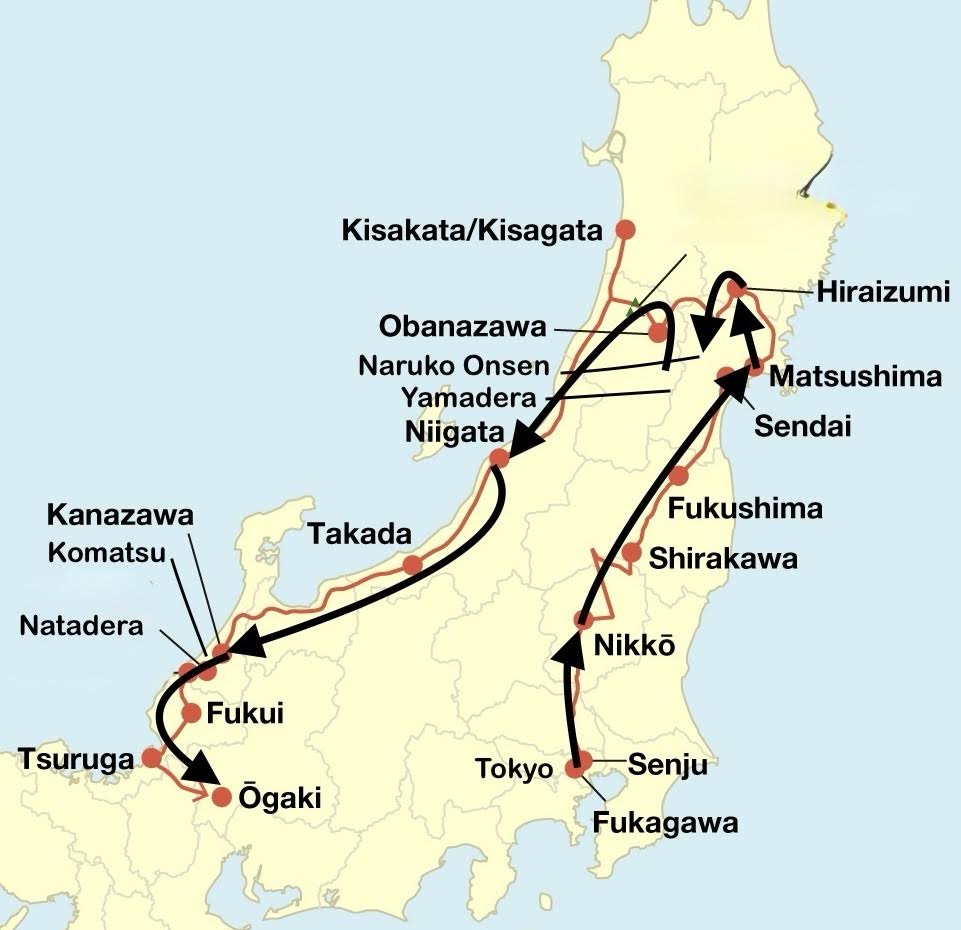
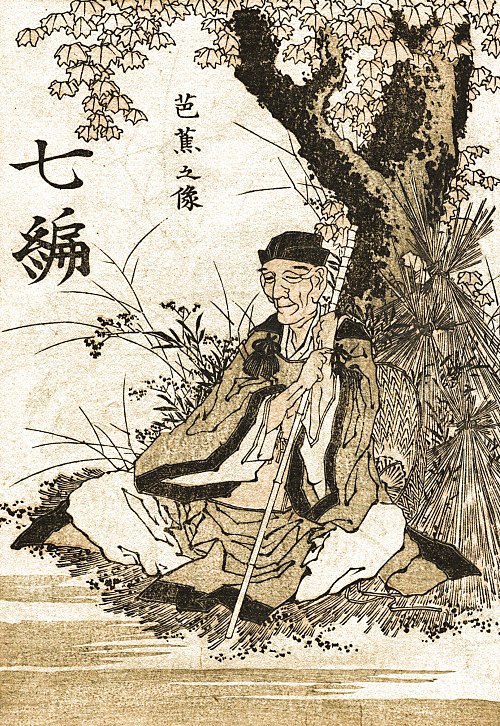
I received the following missive from reader Patrick Logan, who described a visit he and his wife made to Japan last fall to follow in the footsteps of the 17th century poet Matsuo Basho. Basho, considered the greatest master of the haiku form, at one point reported on a lengthy journey he made through Japan (see map below). While this gave Patrick an opportunity to pay homage to one of his poetic idols, it also (as you will see) provided him, upon his return, with resources needed to remain strong in the face of MAGA’s fascist threat.
I also recommend checking out Patrick’s observations about the miracle of child vaccinations, which was brought home to him when he saw the many child graves in an old graveyard. (He alludes to Robert Frost’s “Home Burial” in his observations.) That post was written at a time when Robert Kennedy, Jr. seemed only a distant threat, as opposed to a man now largely responsible for bringing back measles and other diseases we had all but eradicated.
Here’s Patrick’s letter:
Hi Robin,
I enjoyed your recent essay “Dachau and Hiroshima Remembered.” My wife and I spent a month in Japan last year, including a visit to the Peace Dome. The description of your father resonates with me: “Perhaps his pessimism served to insulate him against the kind of disappointment that causes people to withdraw from politics. Expecting nothing, he kept fighting.” With fighting in mind, let me tell you about the Lord Sanemori.
Last September my wife and I booked a four-week holiday in Japan. Our departure date, November 6, was chosen deliberately. Predicting chaos following an anticipated Harris victory, we planned to be elsewhere. After reading the headlines that Wednesday morning, we decided to postpone further post-election analysis until our return in December.
Our primary reading material during our trip was Donald Keene’s translation of Matsuo Basho’s Oku no Hosomichi – The Narrow Road to Oku, often translated as The Narrow Road to the Deep North. I’d first read the book decades earlier and had long dreamed of tracing the poet’s route.
Basho left Edo (modern-day Tokyo) in May 1689. Heading north, he reached present-day Iwate Prefecture before making his way to the Sea of Japan. Traveling in a south-westerly direction along the coast, he reached the port of Tsuruga and then turned southeast toward Ogaki.
Days after departing Edo, Basho arrived in Nikko (an express train took us there in just 94 minutes). We visited Urami Falls, where Basho and Sora, his traveling companion, “climbed a mile or so up the mountain to a waterfall that cascaded a hundred feet from the roof of a cave down into an azure pool.” In the taxi to the waterfall, we mentioned to the driver that we had just begun tracing Basho’s route and that our next destination would be Matsushima. He responded by reciting the poet’s reaction upon first seeing the bay there, “Matsushima ah! / A-ah, Matsushima, ah! / Matsushima, ah!”
As we read Basho’s narrative in the places he visited, we often experienced the same feelings of nostalgia and transient beauty that he felt. At Hiraizumi he lamented those who had failed to achieve their dreams. Sitting on the ground, his bamboo hat beside him, he recalled these lines from the 8th-century Chinese poet Tu Fu: “Countries may fall, but their rivers and mountains remain; when spring comes to the ruined castle, the grass is green again.” He then writes,
There I sat weeping, unaware of the passage of time.
The summer grasses–of brave soldiers’ dreams
The aftermath
Arriving at Komatsu’s Tada Shrine months later, Basho commented on the helmet of Lord Sanemori, the 73-year-old samurai who had done his best to maintain his honor at a time of shifting alliances. Prior to the Battle of Shinohara, he dyed his hair black to disguise his age, hoping to give his opponents an image of the fierce warrior he had once been. Sanemori died at Shinohara, but his courage did not go unnoticed. When his severed head was later washed in a stream, the victor recognized the samurai’s identity and courage. Visiting the shrine 500 years later, Basho wrote what is perhaps my favorite haiku:
muzan ya na
kabuto no shita no
kirigirisu
Keene translates this:
Alas for mortality!
Underneath the helmet
A grasshopper.
Here’s another translation:
How pitiful
Under the helmet
A cricket’s chirping
Basho ended his journey in Ogaki. My wife and I spent an afternoon visiting the castle there, reluctant to return to our purple town in our purple state. There we reread Keene’s translation of Oku no Hosomichi’s opening lines,
The months and days are the travelers of eternity. The years that come and go are also voyagers. Those who float away their lives on ships or who grow old leading horses are forever journeying, and their homes are wherever their travels take them.
Upon our return, winter had arrived in northern New England, and our shoes crunched the crusty snow in our driveway. We resumed reading the newspaper, anticipating four more years of stories we would rather not read. Still, I hold on to those words of Tu Fu: “Spring comes to the ruined castle, the grass is green again.” And I think of Sanemori’s courage and determination before the Battle of Shinohara.
Perhaps the time has come for us to dye our hair black.