Note: If you wish to receive, via e-mail, (1) my weekly newsletter or (2) daily copies of these posts, write to me at rrbates1951@gmail.com. Comments may also be sent to this address. I promise not to share your e-mail with anyone. To unsubscribe, write here as well.
Tuesday
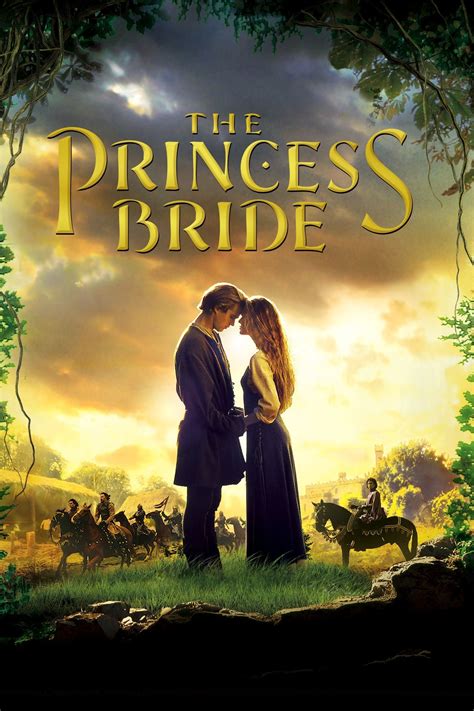
Some deaths of public figures hurt more than others, and the murder of Rob Reiner and his wife has hit me especially hard. It so happens that on Saturday, while attending the memorial service of a good friend, someone mentioned that The Princess Bride was his favorite film. There are many for whom this is true. In homage to the legendary director, I share how I used to use Princess Bride to teach Henry Fielding’s Tom Jones in “Couples Comedy in the Restoration and 18th Century.”
Let’s start with how Fielding pioneered the romantic comedy genre that would one day gives us Princess Bride and When Harry Met Sally. When you think about it, “romantic comedy” is an oxymoron since romance draws us close to the subject while comedy opens up a distance. In his book Masterworks: The 25 Most Powerful Inventions in the History of Literature, scholar Angus Fletcher says that Fielding blended romance with wit to invent a “valentine armor.”
The armor was necessary in the Age of Sentiment, as the latter half of the 18th century has been called. While women readers thrilled to such romance novels as Samuel Richardson’s Pamela and Clarissa, the works also made them vulnerable. If a hypocrite came along using the language of sentiment—I think especially of the villain Sir Joseph Surface in Richard Sheridan’s 1777 comedy School for Scandal—then young women seeking love might
discover to their miserable shock that the world was not, in fact, filled with would-be spouses. It was populated instead with carnal con artists, polite uninterest and mismatched affections. Over and over, [these women] rushed into kissing too fast. And over and over, they got dumped at the altar, their dreams ending in tears.
Simultaneously embracing and mocking true love served as a form of protection. As Fletcher puts it, readers alternated between “the Almighty Heart” and “lightly satiric narration.” Fletcher includes Jane Austen along with Fielding as a pioneer of the genre, and one thinks of the difference between Elizabeth and Lydia in Pride and Prejudice. Whereas Lydia rushes headlong into passion, avoiding tears only because Darcy bails her out, Elizabeth balances satiric distance with genuine feeling. Fielding and Austen, as Fletcher puts it, “elevated our heart while also restraining it.”
Which of course is what Reiner does in Princess Bride. Young Fred Savage is understandably skeptical of deep emotion. After all, consumer society and cynical politicians are expert at manipulating our feelings. In his grandfather’s story, however, he gets to indulge in true love even as he expresses skepticism. The two emotions are held in balance.
Savage’s cynicism in the 1980s was shared by postmodernism, which privileged irony while making fun of the romanticism found in such novelists as Barbara Cartland. I mention Cartland because she is the example cited by Italian novelist and theorist Umberto Eco when he described postmodernism. His observation concerned the difficulty of avowing love:
I think of the postmodern attitude as that of a man who loves a very cultivated woman and knows he cannot say to her “I love you madly,” because he knows that she knows (and that she knows he knows) that these words have already been written by Barbara Cartland. Still there is a solution. He can say, “As Barbara Cartland would put it, I love you madly,” At this point, having avoided false innocence, having said clearly it is no longer possible to speak innocently, he will nevertheless say what he wanted to say to the woman: that he loves her in an age of lost innocence.
So how is love expressed in The Princess Bride? I’m sure you remember the ending, when Savage allows his grandfather to read the final kissing scene:
Since the invention of the kiss, there have been five kisses that were rated the most passionate, the most pure, this one left them all behind. The end.
Like Princess Bride, Tom Jones has a framing narrative, where the author comments on the action he is recording. Without it, Tom and Sophia’s love story would seem too sappy, too Barbara Cartland-like. Note the over-the-top way he describes his heroine and then think of how Reiner introduces Buttercup to us:
So charming may she now appear! and you the feathered choristers of nature, whose sweetest notes not even Handel can excel, tune your melodious throats to celebrate her appearance. From love proceeds your music, and to love it returns. Awaken therefore that gentle passion in every swain: for lo! adorned with all the charms in which nature can array her; bedecked with beauty, youth, sprightliness, innocence, modesty, and tenderness, breathing sweetness from her rosy lips, and darting brightness from her sparkling eyes, the lovely Sophia comes!
Regarding parallels between Tom Jones and Princess Bride, I note one other that my student Erin Hendrix pointed out to me when I was teaching Fielding’s novel. Undoubtedly you remember how the villain Wally Shawn says “inconceivable” every time one of his two henchmen notes that the “dread Pirate Roberts” is still on their trail. When they cut a rope that he is climbing, only to discover him still in pursuit, the following exchange occurs:
Vizzini: HE DIDN’T FALL? INCONCEIVABLE!
Inigo Montoya: You keep using that word. I do not think it means what you think it means.
The word in Tom Jones is “impossible”—as in Tom’s guide telling him that it is “impossible” that they are lost. It is a word, Fielding observes,
which, in common conversation, is often used to signify not only improbable, but often what is really very likely, and, sometimes, what hath certainly happened; an hyperbolical violence like that which is so frequently offered to the words infinite and eternal; by the former of which it is usual to express a distance of half a yard, and by the latter, a duration of five minutes.
In this case, however, we reach for superlatives because anything thing else fails to do the event justice. Of his many talents, one could say that Reiner had a very 18th century sense of humor, balancing sentiment and wit in a way that did justice to both heart and head. It is inconceivable that he is dead.