Tuesday – St. Patrick’s Day
When Julia and I visited Ireland and Northern Ireland three years ago, we carried away many treasures. One was new knowledge about family origins: Julia discovered that her mother was descended from French Huguenots, who were brought to Ireland by the British in the 17th century to offset the Catholics (boo!) and became flax farmers in the Magherafelt region. Another was my discovery of Patrick Kavanagh’s poetry.
Although I had long known that the Irish hit above their weight when it comes to world class literature, I didn’t know about Kavanagh, who in some ways works as a counter to William Butler Yeats. Whereas Yeats loves Celtic legends and fairy lore, Kavanagh is more down to earth. Born and raised in the rural county of Monaghan, he depicts the lives of Irish farmers, whom he does not romanticize. Indeed, he himself felt trapped growing up there, as he reports in “Stony Grey Soil”:
Oh stony grey soil of Monaghan,
The laugh from my love you thieved;
You took the gay child of my passion
And gave me your clod-conceived.
Yet for all his complaints, he acknowledges in the final stanza that Monaghan gave him his poems, which helped him escape and become a beloved poet:
Mullahinsha, Drummeril, Black Shanco–
Wherever I turn I see
In the stony grey soil of Monaghan
Dead loves that were born for me.
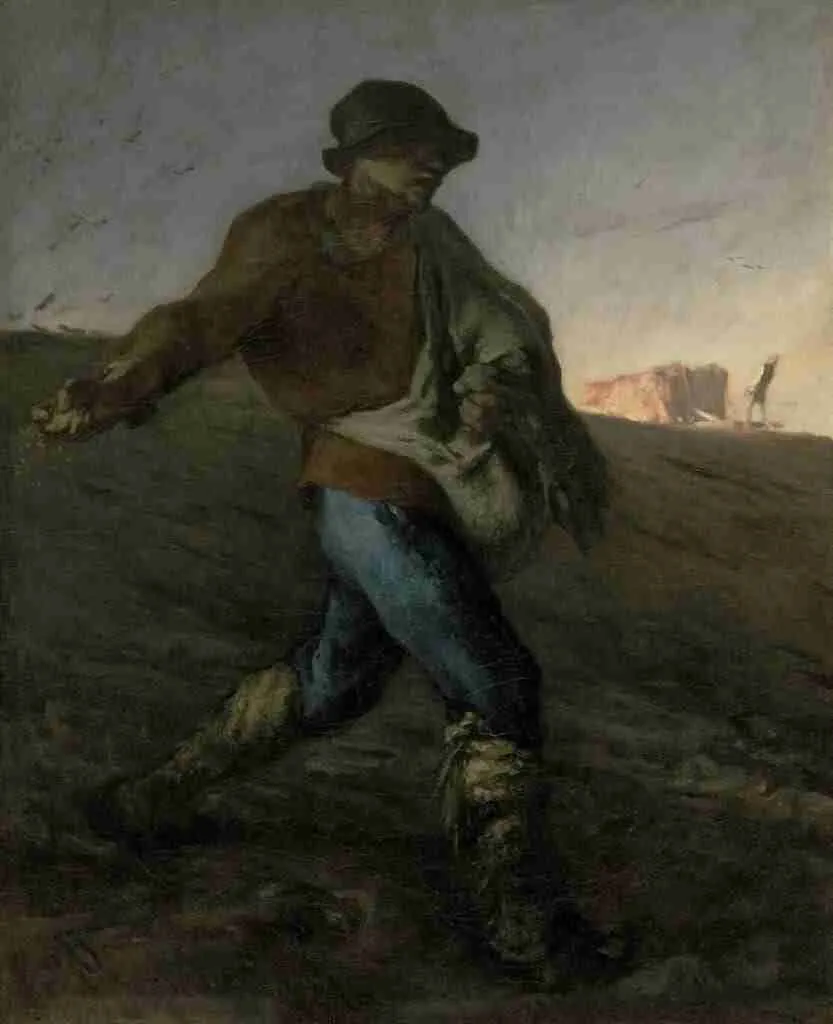
Although believing that rural life stole laughter and passion, Kavanagh dials back the bitterness in “The Hired Boy,” where he finds a “leg-dragged boy” achieving a kind of wisdom in a life of drudgery. The poem reminds me of how some of the high Romantics, Wordsworth especially, found worth in the lives of common folk. Kavanagh reports that the hired boy learned
how to be satisfied with the little
The destiny masters give
To the beasts of the tillage country…
It may not be the life that Kavanagh wanted for himself, but he finds a certain dignity in it. “To be damned and yet to live.”
The Hired Boy
Let me be no wiser than the dull
And leg-dragged boy who wrought
For John Maguire in Donaghmoyne
With never a vain thought
For fortune waiting round the next
Blind turning of life’s lane;
In dreams he never married a lady
To be dream-divorced again.
He knew what he wanted to know –
How the best potatoes are grown
And how to put flesh on a York pig’s back
And clay on a hilly bone.
And how to be satisfied with the little
The destiny masters give
To the beasts of the tillage country –
To be damned and yet to live.
Happy St. Patrick’s Day.