Wednesday
If you wish to receive daily emails of these posts, you can either subscribe to my Substack blog at https://betterlivingthroughbeowulf.substack.com or send me an email at rrbates1951 at gmail dot com and I will put you on my mailing list. You can also correspond with me privately at the latter address. Of course, I will maintain full confidentiality.
My friend Glenda Funk, former high school English teacher extraordinaire, recently compared Trump’s reordering of reality to Petruchio’s gaslighting in Taming of the Shrew, and I’m only sorry that I didn’t think of this myself. Glenda recalled Shakespeare’s comedy after seeing Trump confuse his current press secretary (“Kkkaroline Leavitt,” as Glenda calls her) with his former one (Kellyanne Conway). Rather than correct him, Leavitt goes along with it, just as Trump’s cabinet secretaries wear, without open complaint, Trump’s gift of ill-fitting new shoes.
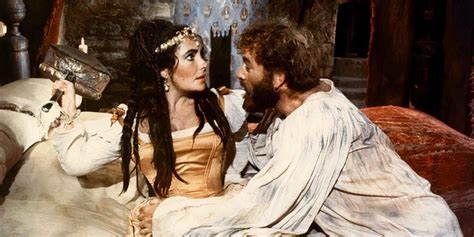
Petruchio, of course, gaslights the shrewish Kate in order to tame her, and by the end of the play she is so submissive that she chastises other women for not catering to their husbands’ whimsical demands. “Thy husband is thy lord, thy life, thy keeper, thy head, thy sovereign,” she tells them.
Petruchio not only gaslights but also employs starvation, sleep deprivation (“Last night she slept not, nor to-night she shall not”), and humiliation, which is to say tactics used by torturers to break down their prisoners. Then, in the passage Glenda quotes, he assaults her hold on reality itself:
PETRUCHIO Come on, i’ God’s name; once more toward our father’s.
Good Lord, how bright and goodly shines the moon!
KATHARINA The moon! the sun: it is not moonlight now.
PETRUCHIO I say it is the moon that shines so bright.
KATHARINA I know it is the sun that shines so bright.
PETRUCHIO Now, by my mother’s son, and that’s myself,
It shall be moon, or star, or what I list,
Or ere I journey to your father’s house.
Go on, and fetch our horses back again.
Evermore cross’d and cross’d; nothing but cross’d!
Kate’s surrender comes shortly after:
HORTENSIO Say as he says, or we shall never go.
KATHARINA Forward, I pray, since we have come so far,
And be it moon, or sun, or what you please:
An if you please to call it a rush-candle,
Henceforth I vow it shall be so for me.
PETRUCHIO I say it is the moon.
KATHARINA I know it is the moon.
PETRUCHIO Nay, then you lie: it is the blessed sun.
KATHARINA Then, God be bless’d, it is the blessed sun:
But sun it is not, when you say it is not;
And the moon changes even as your mind.
What you will have it named, even that it is;
And so it shall be so for Katharina.
A couple of other tests follow in which Kate is forced to humiliate herself. Petruchio then wins a dick measuring contest with the other newly married husbands in the play by demonstrating that he has the most control over his wife.
Glenda applies the play to Trump’s cabinet officials, but we are all at risk. In the face of the Trump administration’s incessant lying, there’s a temptation to throw up our hands and say, “Whatever.” Insist enough that the sun is the moon—or that the 2020 election was stolen—and sooner or later a certain portion of the electorate goes along. Or how about this:
–I say it is a war.
–I know it is a war.
–Nay, then you lie: it is a mere excursion.
–Then, God be bless’d it is a blessed excursion.
But war it is not when you say it is not;
And excursion changes even as your mind.
What you will have it named, even that it is;
And so it shall be so for MAGA.
Let me now apply the play in a manner that makes it even more relevant to our time. To set this up, I turn to a brilliant commentary this past weekend by MS NOW’s Ali Velshi. It has to do with how the Heritage Foundation (remember Project 2025?) and the fascist right is going after independent women:
Do not underestimate the determination of this movement or its hostility toward liberal values and the expansion of democratic rights for groups that they see as outsiders. And they see women as outsiders. Their latest document, Saving America by Saving the Family, a foundation for the next 250 years.
“You got to give it to these people,” he adds sarcastically. “They think big.”
While the purported goal of the fascist right is to reverse the country’s declining birth rate, Velshi says their proposed solutions reveal their real agenda. Since one can’t force women to physically have babies—although banning abortion and restricting birth control can help with that—Velshi says that, instead,
You cut off opportunities outside the home. You make the public sphere hostile to women’s independence. You create a system where the only viable path left for women is dependence on a man for survival.
He then cites conservative economist Scott Yenner of Heritage, who calls universities “citadels of our gynecocracy” (a society run by women) and believes that women should be pushed out of “male” jobs. The following Yenner quote, from a speech delivered at the 2021 National Conservatism Conference, now has me thinking of Kate:
Such medicated, quarrelsome and meddlesome women gain their meaning through their seeming participation in the global project. They are agents of the new world, but not new life. Such women are now the backbone of every left-wing cosmopolitan party in the western world, from the Greens in Germany to the Democratic Party in America.
And if our ideal woman is a childless media scold or a barren bureaucratic apparatchik, there is no question whether we can have a future. We can’t. There is a question of whether we deserve one.
So the problem is medicated, quarrelsome, meddlesome scolds. Time for some Petruchian discipline.
Taming of the Shrew has long been for me the most troubling Shakespeare play, more so even than Merchant of Venice. A few years back I saw a production of the latter at the Staunton, Virginia Shakespeare Theater and realized it can be staged to capture the ugliness of Jew baiting. I’m not sure, however, that Taming captures the ugliness of sexism. Shakespeare, who otherwise is brilliant at honoring the full humanity of his characters—even Shylock–seems to have a bit too much fun in seeing Kate cut down to size.
I have seen feminist productions suggesting that Kate Petruchio’s accomplice—sometimes they exchange a secret wink as her husbands strips his male companions of their gold—but I’ve never found this convincing. Rather, Kate appears to be fulfilling the Heritage wet dream of a tradwife in her closing speech:
I am ashamed that women are so simple
To offer war where they should kneel for peace;
Or seek for rule, supremacy and sway,
When they are bound to serve, love and obey.
Why are our bodies soft and weak and smooth,
Unapt to toil and trouble in the world,
But that our soft conditions and our hearts
Should well agree with our external parts?…
But now I see our lances are but straws,
Our strength as weak, our weakness past compare,
That seeming to be most which we indeed least are.
Then vail your stomachs, for it is no boot,
And place your hands below your husband’s foot:
In token of which duty, if he please,
My hand is ready; may it do him ease.
I do remember thinking—this when I listened to the play on records as a 12-year-old–that the men in the play are nothing to write home about. It’s as though, through Kate’s words, we are given an idealized portrayal of manhood, only to be presented with strutting and preening Pete Hegseths.
When your whole sense of self-respect is reliant on dominating women, you come across as pathetic rather than strong. Riffing off of Hamlet, one could say, “Frailty, thy name is male ego.”