Tuesday
Columnist David Brooks, about whom I sometimes have mixed feelings, has written a superb article in the recent Atlantic on “why reactionaries are taking over the world.” If history appears to be “running backwards,” he writes, it is because traditionalists speak to needs that progressives too often fail to acknowledge. After presenting both the traditionalist and the progressive cases, he concludes by advocating a way forward that (it so happens) is my primary goal with this blog. No wonder I like the piece.
Before getting to that goal, let’s look at how he sums up the warring factions. First, the progressives:
We used to have a clear idea of where modernity was heading—toward greater autonomy and equality, secularism, stronger individual rights, cultural openness, and liberal democracy. Progress was supposed to lead to the expansion of individual choice in sphere after sphere. Science and reason would prosper while superstition and conspiracy-mongering would wither away.
Then there’s the disturbing pushback:
The religious movements thriving in today’s secularized age are the traditionalist ones that dissent from large parts of contemporary culture—not only the Shiite Islam of post-revolution Iran, but Orthodox Judaism and conservative Catholicism. Young Americans are flooding into Eastern Orthodox churches.
And:
[F]or the past quarter century, we have seen a reversion to authoritarian strongmen. Donald Trump, acting like some 16th-century European prince, has made the presidency his own personal fiefdom. Vladimir Putin borrows ideas from reactionary thinkers such as Aleksandr Dugin—an Eastern Orthodox, anti-liberal philosopher who rejects the Enlightenment—to justify his imperial conquest of Ukraine.
Brooks also mentions vaccine skepticism, the emergence of tradwives, and the resurgence of 19th-century-style great-power rivalries, such as that between China and America and between Russia and Europe. Oh, and there’s Trump reinvoking the Monroe Doctrine as he attacks Venezuela and threatens Mexico, Cuba, and Canada.
These traditionalists long for the return to some golden age in the past, although that golden age varies depending on which traditionalist you’re talking to:
For some MAGA dudes, it’s the Roman empire, when men were men. For some theocrats, it’s the Middle Ages, when men were monks. In the U.S., many on the right want to go back to the social mores of the 1950s: men in the workplace, women at home; white people on top; epic levels of church attendance; and wholesome fare such as Oklahoma! and Leave It to Beaver onstage and on television.
After examining some of the leading conservative, theocratic, and fascist intellectuals of the past 200 years, Brooks concludes that traditionalists are drawn to roots, stable attachments, and clear moral order (one thinks of Texas posting the Ten Commandments in classrooms). They also desire protection against the cultural depredations of modernity, which explains why (here he quotes Christopher Lasch) lower middle-class culture is “organized around family, church, and neighborhood” and why it values “the community’s continuity more highly than individual advancement, solidarity more highly than social mobility.”
Traditionalists, Brooks concludes,
are right to say that one of the central problems in America and the West today is that many people have lost that secure base—a stable home and community, solid emotional connections, financial security, a coherent culture, and an understanding that our lives are contained within a shared moral order.
That Brooks would express sympathy for traditionalism didn’t surprise me as I have long seen him as a moderate conservative, someone worried by what he perceives as the excesses of the 1960s and 1970s. What I didn’t expect was his critique:
My problem with the traditionalists is that I don’t agree with them about what a flourishing life looks like. Traditionalists strike me as the kind of people who would score extremely low on the personality trait called “openness to experience.” They focus overwhelmingly on the secure base and seem to have no interest in daring adventures. They seem to want to lead stationary lives.
And:
Traditionalists are trying to live the monist dream—the dream that we can build a society in which all the pieces fit neatly together. But the many and diverse values that humans cherish will never fit neatly together. In every culture, groups argue over which values should have priority in present circumstances. There’s never been a tranquil resting spot, and there never will be.
Jesus himself was a Jewish radical, Brooks points out, one who “turned all the power structures of his society upside down.”
Sounding now like a progressive, Brooks points to how the world has changed for the better thanks to progressive ideas:
I look across the past 70 years—years the traditionalists say are filled with moral rot—and I see an astounding widening of the circle of concern. Segregation and racism have been reduced. Billions of women have a greater chance to gain power and professional success equal to men’s. Colonialism has been repudiated. We’ve seen the greatest reduction in global poverty in the history of the world. America has expanded opportunity beyond white, Protestant men. We’ve even passed laws to reduce cruelty to animals.
Always striving to maintain a balance, however, Brooks presents this with a caution about what we have lost, which is the weakening of the bonds between people and of certain elemental commitments to family, neighborhood, faith, and nation. “As part of this general tendency toward individualism,” he writes, “we have privatized morality, telling people to come up with their own values.”
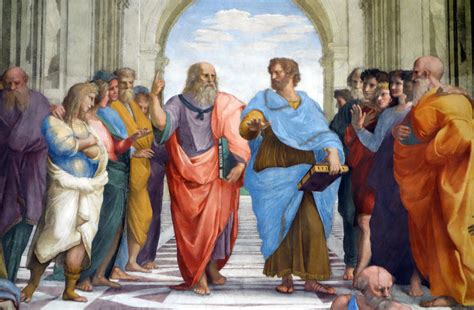
So what’s the solution? Teach the humanities.
For Westerners, this means making sure that people are familiar with the Bible—after all, Shakespeare, Jefferson, and Lincoln were—and that they are conversant with “the body of work we call humanism—the great novels, paintings, poems, dramas, histories, and philosophical tracts by thinkers and artists from all over the globe.” We must, Brooks declares, “pass down these sources of moral wisdom from one generation to the next.”
Now for the passage that had me applauding:
I agree with the traditionalists that tradition is important, but I don’t think of it as something we need to go back to. Rather, I see it as something that each generation pushes forward. And for this, we need a humanistic renaissance. In schools, universities, and culture at large, we need to focus more explicitly on the big questions of life: What is my purpose? How should the next generation live? What role should beauty play in my life? How do I build a friendship? What do I owe my spouse, my community, my nation? We need to use the best that has been thought and said by all of the great civilizations of the Earth, but especially by Western civilization, which is our own particular home, our core resource while we try to stumble toward a better future.
You can see why I love this article. Late in the 1980s, when I was a young professor, I found myself objecting to the either/or we were getting from both the right and the left. On the right, there were people like Lynne Cheney and William Bennett, who argued, “Jane Austen, not Alice Walker.” On the left, meanwhile (I draw on Brooks’s article for this example) there were Stanford students chanting, “Hey, hey, ho, ho, Western Culture has got to go!” For me (as should be clear from this blog) there has always been room for both Austen and Walker.
And what of politicians like Marco Rubio and J.D. Vance, who wave around “Western civilization” as a cudgel? A familiarity with the great thinkers and works produced by this civilization quickly dispels any facile claim that they bolster authoritarian talking points.
So yes, teach your children well. Include the classics along with contemporary works in your lesson plan.