Tuesday
Donald Trump’s attacks on Pope Leo have prompted commentators to turn to two historical precedents that have generated fine literary works. Blogger Asha Rangappa of Freedom Academy, detecting Henry VIII and Thomas More dynamics at work, mentions Hillary Mantel’s Booker-winning novels Wolf Hall and Bring Up the Bodies and Robert Bolt’s play A Man for All Seasons. Atlantic’s Peter Wehner, meanwhile, looks at what T.S. Eliot says about Henry II and Thomas Becket in his verse drama Murder in the Cathedral.
Rangappa focuses on how Henry VIII demanded that his subjects choose him over the Pope, which is not unlike how Trump forces his underlings to choose him over the Constitution:
Henry required his subjects to take these oaths after he divorced his first wife, Catherine of Aragon, a move not condoned nor recognized by the Church. He got around this proscription by basically telling the Pope to take the L and making himself the head of the Church of England, and getting Parliament to pass two acts to ratify his break with the church and legitimize his marriage to Anne. These acts mandated the respective oaths: the Oath of Succession acknowledged Henry’s heirs with Anne Boleyn as legitimate, and the Oath of Supremacy recognized Henry VIII as the head of the Church of England.
When Thomas, who had been a close advisor, refused, Henry accused him of treason and tried and executed him. “Very Trumpy!” Rangappa observes.
Although Vice President J.D. Vance has a forthcoming book trumpeting his conversion to Catholicism—Communion is due out in June–he is proving himself no Thomas More. Or Becket either, to shift to an earlier conflict where a king’s command led to the death of an archbishop. One imagines Trump as Henry II saying some version of, “Will no one rid me of this meddlesome priest?” and of Vance immediately choosing to be one of the murderous knights rather than standing up for his spiritual leader. In Trump forcing Vance to choose himself over the Pope, Rangappa says that it’s hard to tell
whether for Trump this is mainly a loyalty-test-as-humiliation-ritual, or loyalty-test-to-tank-JD’s-chances-to-be-president, or loyalty-test-because-this-will-be-the-ultimate-show-of-subservience…or some combination of all three. Whatever it is, J.D. has passed with flying colors, warning the Pope to “be careful” and to “stick to matters of morality.”
To be sure, Trump hasn’t only sent Vance to take down Leo but has been attempting to be an assassin knight himself. As Wehner in his Atlantic article observes,
No president has ever attacked the spiritual leader of the Catholic Church so directly and so personally. Trump called Leo “WEAK on Crime” and “terrible for Foreign Policy.” He attacked the pontiff for opposing his Iran-war policy, labeling him a “very liberal person” who is “catering to the radical left.” He also said Leo owed his papacy to Trump. It’s unusual, to say the least, for a head of state—in this case, of the most powerful nation in the world—to treat the bishop of Rome as a bitter political rival.
Wehner then turns to Eliot’s play. To set up the Becket/Leo vs. Henry/Trump parallels, Wehner says there is “a dramatic, even archetypal quality” to the contrast between the pope and the president. On the one hand, Leo is “a religious man in the deepest sense; the whole of his life has been shaped by religious disciplines and a theological tradition. He is inseparable from his faith.” Trump, on the other hand, “measures success by wealth, by power, by sexual conquest. He admitted that he’s never asked God for forgiveness. He has no ties to any church and is in many ways contemptuous of the core teachings of the Christian faith.”
Unlike many of Trump’s Christian evangelical supporters, who have sold out Jesus for power, Wehner says that Leo
is unwilling to subordinate his faith to politics, or to adjust his commitment to the Gospel in exchange for access to power. A man who served the poor in Peru during the Shining Path insurgency—he stayed when others left—is not particularly fearful of critical posts on Truth Social or of those within his church who might disapprove of his public stand in defense of justice and a Christian ethic. He’s a person with deep moral convictions but who holds them with grace and ease. He comes across as calm, centered, and unhurried. He believes he answers to a higher authority; this allows him to offer a true Christian witness. This is a gift to the whole Church, and to the whole world.
At this point Wehner turns to Murder in the Cathedral, where Elliot writes, “Even now, in sordid particulars, the eternal design may appear.”
What Eliot means here, Wehner writes,
is that in the midst of a broken, chaotic world, where despair often abounds, there is an eternal design at play, even if we may not quite see it while we’re living through it. Nor is the divine set apart from human suffering. Christians believe that God entered into the suffering and violence of this world, redeeming even the “sordid particulars.”
Wehner adds, however, that this “doesn’t happen on its own.” We need religious leaders who believe, as Leo does, that the church should not be “the master or the servant of the state but the conscience of the state, its guide and critic and never its tool.” Wehner cites political philosopher Glenn Tinder, who in The Political Meaning of Christianity asserts, “Love obligates us to stay in the world where most of our fellow human beings are compelled by circumstances to stay.” A prophetic stance is necessary because it “can show us how to live in temporal society as citizens of an eternal society.”
Wehner concludes that such a prophetic stance has been conspicuously missing for the past decade. In fact, it’s rare at any time. We’re seeing it at present, however, thanks to “a native of the South Side of Chicago, who now resides in Vatican City.”
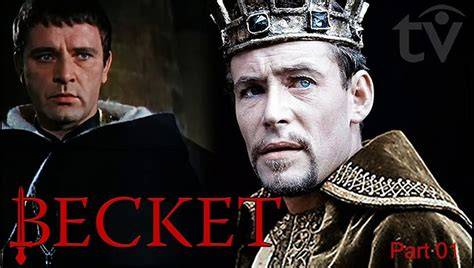
Added note: According to Wikipeida, “Will no one rid me of this meddlesome priest?” is from the Burton-O’Toole film. In Jean Anouilh’s 1959 play, on which the film is based, Henry II says, “Will no one rid me of him? A priest! A priest who jeers at me and does me injury.” An 18th century author imagines Henry to have said, “O wretched Man that I am, who shall deliver me from this turbulent priest?” And he may have been inspired by a contemporaneous account, from a man present at Becket’s death, who quoted Henry as saying, “What miserable drones and traitors have I nourished and promoted in my household, who let their lord be treated with such shameful contempt by a low-born clerk!” The film version has become the one most people quote.
In any event, they all apply only too well to Trump’s sentiments about Leo.