Monday
As we witness former Confederate states scrambling to throw out elected Black representatives following the Supreme Court’s dismantling of the Voting Rights Act, we are reminded once again how deeply racism is woven into the American fabric. When people talk about slavery as America’s original sin (along with Native American genocide), they capture the way that it continues to fester even though progress has been made. Henry Ford may have claimed that “history is bunk,” but William Faulkner understood the actual situation when he wrote, in Requiem for a Nun,
The past is never dead. It’s not even past. All of us labor in webs spun long before we were born, webs of heredity and environment, of desire and consequence, of history and eternity.
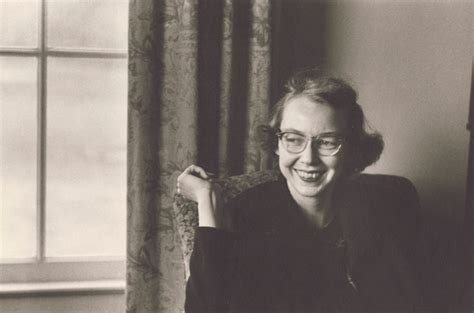
Our greatest writers understand how this works. I’ve just read a wonderful essay by Toni Morrison on how one of these writers shows how racism is inculcated in the young. In her short story “The Artificial Nigger,” Flannery O’Connor lays out a grandfather’s successful effort to make his orphaned grandson as racist as he is. Nelson, rebelling against the old man, has the potential to develop in a different direction, but in the end fear of the Other wins out.
In her posthumously published Language as Liberation: Reflections on the American Canon–a series of lectures Morrison gave at Princeton—Morrison discusses how authors like Edgar Allen Poe, Willa Cather, and Ernest Hemingway use Black characters as foils against which to define whiteness:
[They] make sure the Africanist character is never without the sign of color or other marks of racial identification; never identify him or her as a citizen of a country or state; never give black personae power other than the power to serve; nor any voice other than comic, cowardly, obsequious, unreasonable, illicit, or de-sexed—unless the voice reinforces the status quo.
Making an interesting exception of Herman Melville—I’ve written about his profound insights into race in his novella Benito Cereno—Morrison notes that the Africanists in most canonical American novels
either have no family context or obligations, or if they do have family, they are irrelevant emotionally to the black person and certainly to the whites. Their condition is timeless, history-less, without a cultural context other than their convenience or inconvenience to white culture. In short, they are bodies—for labor or exploitation; or they are shadows that haunt, hound, or threaten; or they are shadows that protect and guide.
While O’Connor doesn’t herself have fully fleshed-out African American characters, Morrison credits her with showing us “what purposes they serve in a white male consciousness and ultimately in literature itself.” Morrison says that, if she could have gotten away with it, she would have used the same title for her course that O’Connor uses for her story.
In it, Mr. Head worries that Nelson is not according him the respect he deserves. He therefore plans to teach him a lesson: from their home in rural Georgia, he will take him to Atlanta and so frighten him with its Black population that the boy will never question him or leave him. In other words, Nelson’s foundational identity will be based on a contrast with African Americans.
O’As it turns out, however, Mr. Head gets lost and can’t find his way back to the train station. They blunder into a Black community where people are willing to help them, but Mr. Head is too frightened to ask for directions. Then, determined to teach Nelson a lesson, he hides out when the boy falls asleep. When Nelson awakes and finds himself alone, he bolts out of sight and knocks over a woman carrying groceries. Like Peter denying Jesus, Head pretends that he doesn’t know him, stunning the woman and her friends:
[Mr. Head] stared straight ahead at the women who were massed in their fury like a solid wall to block his escape. “This is not my boy,” he said. “I never seen him before.”
He felt Nelson’s fingers fall out of his flesh.
The women dropped back, staring at him with horror, as if they were so repulsed by a man who would deny his own image and likeness that they could not bear to lay hands on him. Mr. Head walked on, through a space they silently cleared, and left Nelson behind. Ahead of him he saw nothing but a hollow tunnel that had once been the street.
The betrayal is so deep that Head is convinced that his betrayal can never be forgiven and that he has lost the boy forever. So much for using Atlanta for white identity formation. What saves him and brings about reconciliation is the sight of a plastic lawn statue:
He had not walked five hundred yards down the road when he saw, within reach of him, the plaster figure of a Negro sitting bent over on a low yellow brick fence that curved around a wide lawn. The Negro was about Nelson’s size and he was pitched forward at an unsteady angle because the putty that held him to the wall had cracked. One of his eyes was entirely white and he held a piece of brown watermelon. Mr. Head stood looking at him silently until Nelson stopped at a little distance. Then as the two of them stood there, Mr. Head breathed, “An artificial nigger!”
The statue is in a sorry state:
It was not possible to tell if the artificial Negro were meant to be young or old; he looked too miserable to be either. He was meant to look happy because his mouth was stretched up at the corners but the chipped eye and the angle he was cocked at gave him a wild look of misery instead.
This caricature of blackness brings the two together. As Morrison explains,
The narrative turns at this point. This means by which unification takes place, by which forgiveness is possible, by which mercy arrives, by which self-respect is regained is via the transference of humiliation to a plastic black form and the clear evidence that self-loathing disappears once it is projected onto this plastic, artificial (invented, made, constructed, built) figure who, fortunately for the characters’ requirements, is not alive and cannot speak, move, or, most importantly, look, return a look, or be understood to also know Mr. Head. It is my contention that this story is paradigmatic and is an uncommonly explicit model of the way in which black characters function in fiction as a trope for (catalyst of) self-fabrication.
In short, American whites define their whiteness by contrasting it with a fabricated image of blackness.
By the end of the story, Nelson’s rebellion has ended and he has bought into his grandfather’s stereotypes. After they descend from the train that has brought them home, O’Connor writes,
Nelson, composing his expression under the shadow of his hat brim, watched [his grandfather] with a mixture of fatigue and suspicion, but as the train glided past them and disappeared like a frightened serpent into the woods, even his face lightened and he muttered, “I’m glad I’ve went once, but I’ll never go back again!”
Thanks to his grandfather’s abusive initiation ritual, race differentiation, race fear, and race superiority are now permanent parts of his self-identity.
Racial identity formation differs from family to family, of course, but versions of the drama in O’Connor’s story occur every day all over America as parents pass on their prejudices and their fears to their children. Their anxieties are exacerbated when demagogues like Trump and Pete Hegseth turn up the volume. Meanwhile, racist school boards and library boards rewrite curricula, ban books, and forbid teachers from putting up “Everyone is welcome here” posters. The children then grow up to become legislators who, when the Supreme Court gives them permission, can’t redraw electoral maps fast enough.
Further thought: Morrison points out that O’Connor sees whiteness in and of itself as empty, something ghostlike. For instance, this is what Head and Nelson see in the train window:
“I heard you,” the boy muttered. “It’s no use in you yelling,” and he sat down and turned his head to the glass. There he saw a pale ghost-like face scowling at him beneath the brim of a pale ghost-like hat. His grandfather, looking quickly too, saw a different ghost, pale but grinning, under a black hat.
Morrison points out that O’Connor then sets up a dramatic contrast with the African American characters on the train, whose colors are warm and vibrant:
A huge coffee-colored man was coming slowly forward. He had on a light suit and a yellow satin tie with a ruby pin in it. One of his hands rested on his stomach which rode majestically under his buttoned coat, and in the other he held the head of a black walking stick that he picked up and set down with a deliberate outward motion each time he took a step. He was proceeding very slowly, his large brown eyes gazing over the heads of the passengers. He had a small white mustache and white crinkly hair. Behind him there were two young women, both coffee-colored, one in a yellow dress and one in a green. Their progress was kept at the rate of his and they chatted in low throaty voices as they followed him.
Later there’s the following encounter when Nelson, unlike his grandfather, has the courage to ask a Black woman to ask for directions. Note the warmth of the interaction, which contrasts with Head’s sterile stereotypes:
[Nelson] stood drinking in every detail of her. His eyes traveled up from her great knees to her forehead and then made a triangular path from the glistening sweat on her neck down and across her tremendous bosom and over her bare arm back to where her fingers lay hidden in her hair. He suddenly wanted her to reach down and pick him up and draw him against her and then he wanted to feel her breath on his face. He wanted to look down and down into her eyes while she held him tighter and tighter. He had never had such a feeling before. He felt as if he were reeling down through a pitchblack tunnel.
As I used to tell my students, life becomes infinitely richer when we open ourselves to Otherness rather than retreat into narrow isolation.