Tuesday
The theme for our church’s Adult Forum this year is “Narratives That Transform” (partly my idea). We kicked it off with John Gatta talking about his book Green Worlds of C.S. Lewis: The Ecology of Aslan’s Realm, which I followed up with a talk on why the Puritans and their heirs have long been suspicious of stories. I share some of what I said in today’s post.
The suspicion goes back to Plato, but it was taken up with renewed vigor by one Stephen Gosson, who is 1579 wrote that poetry
–is “unprofitable” and a waste of time;
–is untrue (“the mother of lies”);
–is “effeminate”; and
–infects us “with many pestilent desires, with a siren’s sweetness drawing the mind to the serpent’s tail of sinful fancies.”
We know of Gosson’s attack largely because it triggered Sir Philip Sidney’s Defense of Poesy, a powerful rebuttal that argues that poetry is rather the most powerful means to teach virtue. I devote a chapter in my book to Sidney’s essay.
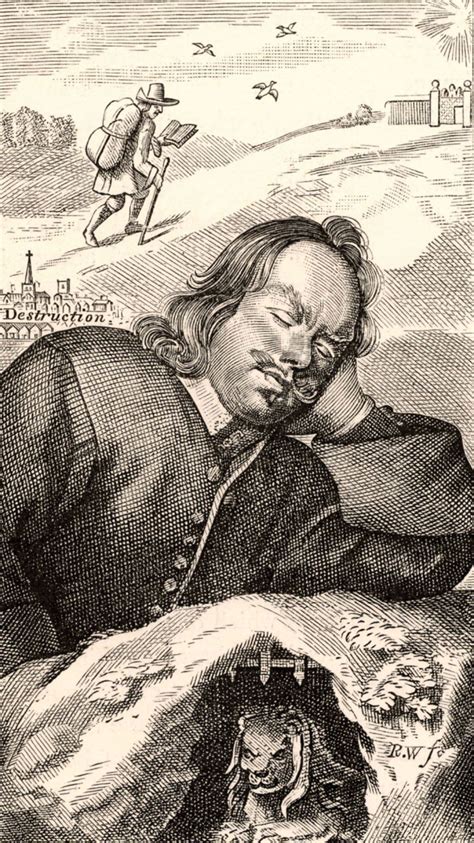
Sidney did not silence the critics, however, which proved a problem for Puritan John Bunyan when he wrote Pilgrim’s Progress. This in spite of the fact that the story of Christian wending his way to the Celestial City would become a staple in Christian education for centuries afterwards. The widow Watkins even uses it on Huck Finn, who notes that it is
about a man that left his family, it didn’t say why. I read considerable in it now and then. The statements was interesting, but tough.
Interesting it certainly is, with images that have become part of our cultural heritage. These include Christian’s pack of sins, the Slough of Despond, the Wicket Gate, the “straight and narrow path,” Mr. Worldly Wiseman, and Vanity Fair. It is also, however, a work of fiction, forcing Bunyan to preface it with an extended apology.
Written in verse, the apology begins with Bunyan informing us that he did not start off with the intention to write it. It just came to him as he was writing a more forthright book about the lives of saints:
I, writing of the way
And race of saints, in this our gospel day,
Fell suddenly into an allegory
About their journey, and the way to glory,
In more than twenty things which I set down.
This done, I twenty more had in my crown;
And they again began to multiply,
Like sparks that from the coals of fire do fly.
Claiming that he wrote as a diversion to please himself (in other words, he assures us he’s not taking it seriously), the result was a book that he wasn’t sure what to do with it. Showing it around, he encountered some readers who wanted him to publish and others not. The chief objections were that it was “dark” and “feigned.”
“Dark” means indirect. Protestantism’s insistence on the word of God coming to humankind directly, not in Latin or hidden in figurative language (such a metaphor), meant that even allegory was viewed with suspicion. Meanwhile feigned narrative, as Gosson had noted, was “the master of lies.” No “telling the truth through lies” for this bunch.
Gosson’s “effeminate” charge also makes its way into Bunyan’s concerns (and remains with us to this day, with far more women than men in book clubs). “Lacks solidness” is the way that Bunyan’s imagined interlocutor puts it:
‘Well, yet I am not fully satisfied,
That this your book will stand, when soundly tried.’
Why, what’s the matter? ‘It is dark.’ What though?
‘But it is feigned.’ What of that? I trow?
Some men, by feigned words, as dark as mine,
Make truth to spangle and its rays to shine.’‘But they want solidness.’ Speak, man, thy mind.
‘They drown the weak; metaphors make us blind.’Solidity, indeed, becomes the pen
Of him that writeth things divine to men;
But must I needs want solidness, because
By metaphors I speak? Were not God’s laws,
His gospel laws, in olden times held forth
By types, shadows, and metaphors?…
Bunyan responds that the Bible is filled with instances “where the cases/ Do call for one thing, to set forth another.” Not least of these is Jesus’s use of parables to communicate his vision:
I find that holy writ in many places
Hath semblance with this method, where the cases
Do call for one thing, to set forth another;
Use it I may, then, and yet nothing smother
Truth’s golden beams: nay, by this method may
Make it cast forth its rays as light as day….
By the end of his apology, Bunyan is feeling fairly confident. He has written a delightful dream vision and is inviting his reader in:
This book is writ in such a dialect
As may the minds of listless men affect:
It seems a novelty, and yet contains
Nothing but sound and honest gospel strains.
Wouldst thou divert thyself from melancholy?
Wouldst thou be pleasant, yet be far from folly?
Wouldst thou read riddles, and their explanation?
…[W]ouldst thou see
A man in the clouds, and hear him speak to thee?
Wouldst thou be in a dream, and yet not sleep?
Or wouldst thou in a moment laugh and weep?
Wouldest thou lose thyself and catch no harm,
And find thyself again without a charm?
Wouldst read thyself, and read thou knowest not what,
And yet know whether thou art blest or not,
By reading the same lines? Oh, then come hither,
And lay my book, thy head, and heart together.
To give you a little taste, here’s his account of Satan and his henchmen setting up Vanity Fair:
[P]erceiving by the path that the pilgrims made, that their way to the city lay through this town of Vanity, they contrived here to set up a fair; a fair wherein, should be sold all sorts of vanity, and that it should last all the year long: therefore at this fair are all such merchandise sold, as houses, lands, trades, places, honours, preferments, titles, countries, kingdoms, lusts, pleasures, and delights of all sorts, as whores, bawds, wives, husbands, children, masters, servants, lives, blood, bodies, souls, silver, gold, pearls, precious stones, and what not.
And, moreover, at this fair there is at all times to be seen juggling cheats, games, plays, fools, apes, knaves, and rogues, and that of every kind.
Although Bunyan’s allegory was a hit and although many present-day fundamentalists make use of allegory to teach the Bible (including The Chronicles of Narnia), the suspicion of fiction has never entirely gone away amongst such types. Fear of narrative drives book-censoring groups like Moms for Liberty because they can’t control what readers will take away from the experience. Even seemingly straightforward allegory can sometimes slip their grasp.
Which of course is why people like me are in love with fiction. We love hearing a voice in the clouds, love being in a dream and yet not sleeping, losing ourselves in a story yet catching no harm. Earnest Puritan though he may have been, Bunyan understood the magic of story.