Wednesday – April Fools’ Day
Before turning to today’s April Fools’ Day poem, I take a news break to mention that the Tennessee librarian I lauded as a free speech hero last week has been fired by her library board, dominated as it is by homophobic Christians. The fascist assault on public and school libraries continues. I learned about the news too late to retool today’s post so I apologize for the discordant note as I move on to something lighter. If you want an April Fools’ Day essay that calls out oppressive authorities, however, check out the one on Jonathan Swift’s “Modest Proposal” in the appended links.
Today’s poem has a personal story behind it. Humorist Morris Bishop’s poem “How to Treat Elves” captured the sardonic sense of humor that appealed to my college self. To amuse Julia—this was during the summer after we met—I sent it to her. Her romantic sister melted upon reading it until… But I’ll let you read it first before saying more:
How To Treat Elves
By Morris Bishop
I met an elf man in the woods,
The wee-est little elf!
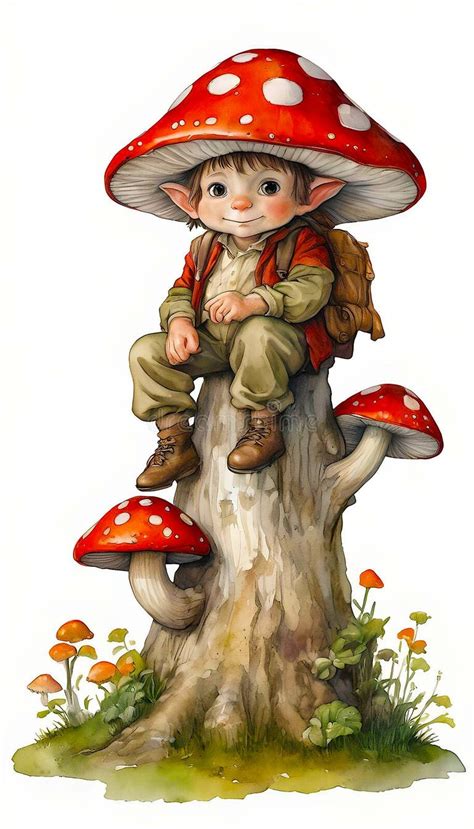
Sitting under a mushroom tall–
‘Twas taller than himself!
“How do you do, little elf,” I said,
“And what do you do all day?”
“I dance ‘n fwolic about,” said he,
“‘N scuttle about and play;”
“I s’prise the butterflies, ‘n when
A katydid I see,
‘Katy didn’t’ I say, and he
Says ‘Katy did!’ to me!
“I hide behind my mushroom stalk
When Mister Mole comes froo,
‘N only jus’ to fwighten him
I jump out’n say ‘Boo!’
“‘N then I swing on a cobweb swing
Up in the air so high,
‘N the cwickets chirp to hear me sing
‘Upsy-daisy-die!’
“‘N then I play with the baby chicks,
I call them, chick chick chick!
‘N what do you think of that?” said he.
I said, “It makes me sick.
“It gives me sharp and shooting pains
To listen to such drool.”
I lifted up my foot, and squashed
The God damn little fool.
Have you recovered yet? Once you have, you can follow me into my story.
First, Wikipedia’s entry on Bishop informs me that novelist Allison Lurie has described the poem as “a brilliant counterattack” against “a particularly cloying sort of supernatural whimsy” that was fashionable in the early 20th century. I know, from having been steeped in Edwardian children’s literature, that readers of the period were fascinated by childhood innocence. In A.S. Byatt’s The Children’s Book, a novel about the period, we see families taking delight in performing the fairy scenes in Midsummer Night’s Dream.
That being said, I’m not sure what Bishop’s satiric target would have been when he wrote the poem in the 1940s or 1950s.
Humor such as this, Freud points out, can be a way of throwing up defenses, which may explain why I found the poem hilarious. Perhaps my love for Julia was making me feel dangerously vulnerable. After all, as one who was proud of his reasoning powers, I saw the realm of the emotions as treacherous ground. Maybe I regained my balance by laughing at Morris crushing this caricature of unalloyed sweetness.
Italian semiotician and novelist Umberto Eco captures a similar dynamic in his discussion of postmodernism’s suspicion of sentimentality. There too one shies away from naked acknowledgements of deep emotion:
I think of the postmodern attitude as that of a man who loves a very cultivated woman and knows he cannot say to her “I love you madly,” because he knows that she knows (and that she knows he knows) that these words have already been written by Barbara Cartland. Still there is a solution. He can say, “As Barbara Cartland would put it, I love you madly,” At this point, having avoided false innocence, having said clearly it is no longer possible to speak innocently, he will nevertheless say what he wanted to say to the woman: that he loves her in an age of lost innocence.
I’ve written how the movie Princess Bride operates out of this postmodernist stance.
Anyway, although Julia’s sister was appalled, Julia herself made allowances and married me anyway. Perhaps she sensed that repressed intellectuals respond weirdly when they meet the love of their life.
Previous April Fools’ Day Posts
Oliver Goldsmith, “On the Death of a Mad Dog”
William Combe, The First of April or the Triumph of Folly
Jonathan Swift, The Isaac Bickerstaff Papers
Jonathan Swift, Meditation upon a Broomstick
Jonathan Swift, “The Last Speech and Dying Words of Ebenezer Elliston”
Jonathan Swift, “A Modest Proposal”
Joan Drew Ritchings, “April Fool”