Thursday
My dear friend Valerie Hotchkiss just alerted me to a review of Naomi Kanakia’s recent book, What’s So Great About the Great Books?: Why You Should Read Classic Literature (Even Though It Might Destroy You). Kanakia definitely sounds like a kindred soul.
As I’m currently traveling, I’ll confine myself to sharing some passages from Todd Shy’s review and then obtain the book when I return home. Shy notes that Kanakia tracks politically and culturally left (as do I) and observes that she’s not afraid to offer up political critiques of some of the masterpieces (as do I from time to time). In the end, however, the works transcend whatever their politics may be, a point that Wayne Booth, my favorite contemporary theorist, also makes. As Shy puts it,
Kanakia contends that Great Books have earned their status because of their integrity. They are, she writes, “unflinchingly honest.” They have self-searching “rigor,” “a certain seriousness,” and “sensitivity.” Reading them can cultivate the same in us. More refreshing and, for me, unexpected, is her insistence that our commitment to diversity should include the diversity of other times. This “conversation with the past” adds depth and dimension to our own perceptions of the world. Indeed, reading these classics helps us to better understand our embeddedness in a long and complex context.
Shy then cites the following passage from the book:
The moment we come into contact with other people, we realize that the world precedes us. We come into a rich world that’s already full of preexisting ideas, which we discover through conversation, through the media, and through books. We determine our morality not in isolation but in relation to this world and to the choices it offers us.
Kanakia apparently isn’t afraid to admit that great books can require committing to a project that is long and arduous. “Everyone who’s ever approached a difficult book has had the experience of not getting it at first and then suddenly getting it,” she writes. “That experience is exactly why you read these books.” To which Shy adds, “Why move on from Gone Girl to War and Peace? It’s not because Tolstoy is a better airplane or beach read.”
As our department’s specialist in 18th British literature, I regularly taught Henry Fielding’s challenging Tom Jones and saw many of my students (unfortunately not all) eventually come around to it. The same occurred with Jane Austen’s Mansfield Park, a tougher read than Pride and Prejudice. And I required that my survey students grapple with Paradise Lost (although I admit we skipped over the long angelic lectures and the battle in heaven). The prolonged engagement with these classics ended up rewiring the student’s minds, acculturating them to the different rhythms and language patterns of older works.
Therefore, I entirely agree with Shy when he says that the real literary battle at the moment “is not whether Milton or Melville or Morrison belongs on a high school or college syllabus.” Or as culture war conservatives used to say, “Austen, not Alice Walker.” Rather, it is whether we can preserve the very practice of “patient reading.” “In high school,” he laments, “reading is too often treated as a skill to master rather than a lifelong habit to instill and inspire.”
Shy concludes,
What’s So Great About the Great Books? is a spirited, welcome argument about the value of reading—reading on your own time, with your own appetites and needs, with your desire to make something meaningful of your life after your formal education is behind you. It is an appeal for reading whole books, challenging books, old books, books that have survived scrutiny and even contempt, books that affirm without simplifying, books Kanakia is willing to call “great.” Here is a defense of ideas of goodness that aren’t pure preference, ideas of greatness that aren’t punching bags for critique.
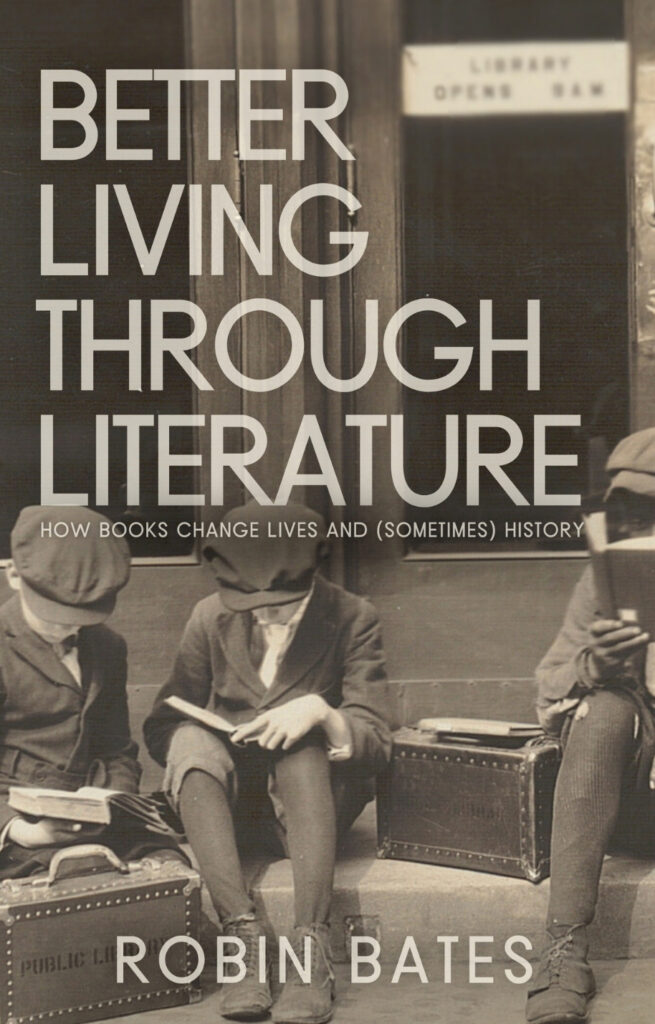
In my own book I conclude by quoting a 2018 New Yorker article by the British-Indian author Salman Rushdie, who responded to the torrent of lies emanating from the Donald Trump White House by pointing out that the classics will always remain relevant because of their commitment to truth. Rushdie essentially sees the classics as a “no bullshit” zone. I suspect Kanakia would agree.