Monday
“Worse than Kafka” wrote Heather Parton (“Digby”) on a recent deportation atrocity, and the facts of the case certainly bear her out. The case, reported in The New York Times, involved a Cuban exile.
After living peacefully in the United States for over 30 years, Roberto Mosquera suddenly found himself imprisoned in Eswatini, a tiny, landlocked country in southern Africa (formerly known as Swaziland). Given that versions of this are happening to hundreds if not thousands of people, I thought it worth refreshing the descriptor “Kafkaesque.”
First, here’s from the New York Times’ report:
As he stepped out of the American military cargo plane, Roberto Mosquera still couldn’t tell where he was or why he had been taken there. When federal immigration agents forced him onto a secret flight 30 hours earlier, it was a hot July afternoon in Texas. Now, after traveling thousands of miles, he felt a cold winter’s morning in the air
Apparently, when he was in his twenties Mosquera was in a gang and shot a rival gang member in the leg. He couldn’t be deported then because Cuba didn’t accept exiles. Instead, he cleaned up his life, becoming a specialty plumber and a born-again Christian. He also married and had four daughters. The United States only required him to check in with the authorities once a year.
Then, in June, he entered Kafka’s world. Showing up at the immigration office to renew his work permit, he found himself arrested and taken first to Krome Detention Center, “a notorious holding facility for deportees in Miami,” and then to El Paso, Texas. After that he and four others were flown to Eswatini, at which point they were forced inside a metal cage that was fitted onto a transport truck.
The Department of Homeland Security, meanwhile, was proclaiming him and the others to be “depraved monsters” who were “so uniquely barbaric their home countries refuse to take them back.” He has been in that prison for over a year now with no charges and no method of appeal.
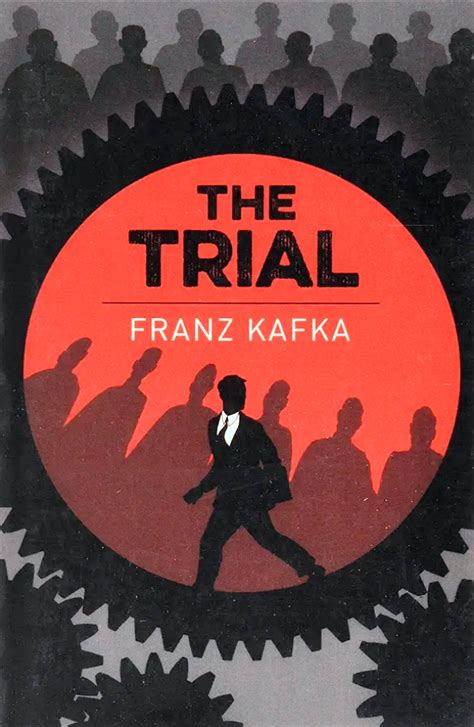
In The Trial, K is arrested without being informed what for. The first inkling he gets that anything is amiss is when, instead of his landlady bringing him his breakfast, a strange man enters:
There was immediately a knock at the door and a man entered. He had never seen the man in this house before. He was slim but firmly built, his clothes were black and close-fitting, with many folds and pockets, buckles and buttons and a belt, all of which gave the impression of being very practical but without making it very clear what they were actually for. “Who are you?” asked K., sitting half upright in his bed. The man, however, ignored the question as if his arrival simply had to be accepted.
Like Mosquera, K is never informed what he is being charged with:
“No,” said the man at the window, who threw his book down on a coffee table and stood up. “You can’t go away when you’re under arrest.” “That’s how it seems,” said K. “And why am I under arrest?” he then asked. “That’s something we’re not allowed to tell you. Go into your room and wait there. Proceedings are underway and you’ll learn about everything all in good time.”
When K presses for answers, the agents toy with him, just as ICE agents are toying with people across the country:
“We don’t answer questions like that.” “You will have to answer them,” said K. “Here are my identification papers, now show me yours and I certainly want to see the arrest warrant.” “Oh, my God!” said the policeman. “In a position like yours, and you think you can start giving orders, do you. It won’t do you any good to get us on the wrong side, even if you think it will–we’re probably more on your side that anyone else you know!”
And further on:
[K] slapped his hand down on his papers and said, “Here are my identity documents.” “And what do you want us to do about it?” replied the big policeman, loudly. “The way you’re carrying on, it’s worse than a child. What is it you want? Do you want to get this great, bloody trial of yours over with quickly by talking about ID and arrest warrants with us?”
Like many of us these days, K discovers he doesn’t recognize the country he thought he knew:
What sort of people were these? What were they talking about? What office did they belong to? K. was living in a free country, after all, everywhere was at peace, all laws were decent and were upheld, who was it who dared accost him in his own home. He was always inclined to take life as lightly as he could, to cross bridges when he came to them, pay no heed for the future, even when everything seemed under threat. But here that did not seem the right thing to do.
The rest of the novel is more of the same, where all that K thought was solid melts into air. By the end, he has been so jerked around as to be utterly stripped of his humanity. When, on the last page, two burly men show up, take him to a quarry, and execute him, he thinks of himself as an animal:
But the hands of one of the gentleman were laid on K.’s throat, while the other pushed the knife deep into his heart and twisted it there, twice. As his eyesight failed, K. saw the two gentlemen cheek by cheek, close in front of his face, watching the result. “Like a dog!” he said, it was as if the shame of it should outlive him.
DJT, Stephen Miller, and the Department of Homeland Security are turning us into Amerika. The shame will outlive this administration.