Note: If you wish to receive, via e-mail, (1) my weekly newsletter or (2) daily copies of these posts, write to me at rrbates1951@gmail.com. Comments may also be sent to this addss. I promise not to share your e-mail with anyone. To unsubscribe, write here as well.
Tuesday
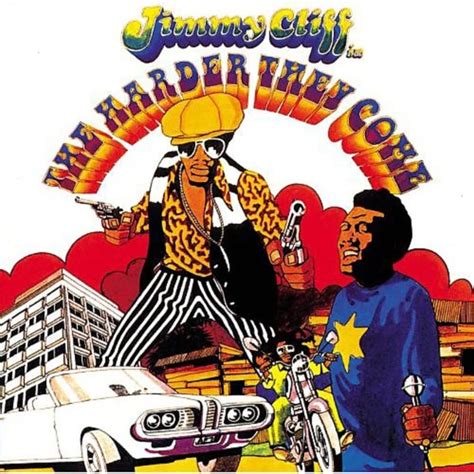
When I learned yesterday that legendary reggae singer Jimmy Cliff had died, I was surprised to learn that he was still alive. That’s in part because his performance as a reggae singer whom the authorities gun down in The Harder They Come is so compelling that I had unconsciously conflated character and actor. Perhaps I also conflated him a little with Bob Marley, who did in fact die young. In real life, Cliff would go on continuing to perform—he won a Grammy for best reggae album in 2013—and died a peaceful death at 81.
The film was important to me in that he made me realize how vital the arts are in a culture’s sense of itself. The two arts highlighted in Harder They Come are music (of course) but also cinema. The title song and a Cliff Eastwood western where a lone gunman overcomes impossible odds provide the urban poor a consoling narrative. Those dwelling in shanty towns may be powerless and doomed but these art forms leave them with some measure of dignity.
In Cliff’s honor, I share a poem by Kwame Dawes, who while from Ghana grew up in Jamaica and says he writes out of a reggae aesthetic. As he puts it in his poem “Recall,” “reggae’s insinuating bass cleaves to my bloodline.” In the poem I share today, Dawes says that it is Jamaica’s artists, including its reggae musicians, who transformed Kingston from a “makeshift dwelling” of “dust and stone” into a holy city. Dawes calls these artists “prophets and seers” and says that they provided him a language for truly seeing Jamaica. Until he heard reggae “psalming its apocalypse across this city,” he
could not call it holy, until the names of this constantly
new land, broken and wrecked by storms and neglect, and then
restored in riotous green within days, without aid,
without urging, until then, I had no language for the holiness
of this Kingston…
Poets like himself play their own role in devising a language to express all that makes up Jamaica, and he looks back at himself as a young boy “walking ‘bout” neighborhoods and soaking up the sights and sounds. When he began recording these memories, he suddenly achieved a broad perspective, which he likens to climbing a mountain road and looking down to see Kingston laid out below him. “A city requires psalms, songs, and the distilled language,” he writes. And although he “can’t say I knew this then,” he knows it now. “In such clear holy prophecy,” he writes, “the impregnation of need did happen.”
Reggae played a key role in the process, and in acknowledging this, we pay honor to Jimmy Cliff:
Walking ’Bout
By Kwame Dawes
Bless my eyes this morning.
—Bob Marley, “So Much Trouble”
Marcus Garvey prophecize say
“One mus’ live 10 miles away,” yeah.
I-man satta at the mountain top,
Watching Babylon burning red hot, red hot.
—Max Romeo, “War Ina Babylon”
It was the prophets and the seers, they were the ones
who anointed my city holy—Kingston of dust and stone,
Kingston haunted by the ghosts loitering in the pens,
the enslaved and the enslavers, the homeless and lost,
the flesh and stench of people who have not learned
the language of futures of hope. Before the prophets and seers
the city is a makeshift dwelling, a shelter for the exploiters
and the exploited, a village of gutters and middens,
where coins are exchanged, where blood is shed,
where the dead are an inconvenience. It is words
that construct the cathedrals of memory, how a boy,
restless and seduced by the culturing of secrets growing
in his mind, forgets the difference between words
spoken and words rattling about in the soul’s case, a boy
walking through lanes and alleys, only to arrive at familiar
places, the empty cricket field, the deserted yards
and classrooms of his primary school, arriving
there to stand still and listen to the birds, the hum
of engines, the hollow echoing of memory, every
desire, every revelation, the stories in books in the ticking
library, the clandestine looks at the girls leaping
over ropes, the vocabulary of love and lust and rejection.
The wheezing boy, his nose stuffed with mucus, his skin
tender with seething mosquito bites, his shoes
worn down by the deformity of an old ankle wound,
stands there considering the sky, considering the taste
of green mangoes, considering the chaos of memory
as if there may be a holy writ to be retained. Perhaps
this terror of forgetting is the making of the prophet,
the scribe who longs to name each street, each scent
arriving and departing, this is where fear is fostered,
and perhaps art is made. Until I heard the sound
of reggae, psalming its apocalypse across this city,
I could not call it holy, until the names of this constantly
new land, broken and wrecked by storms and neglect, and then
restored in riotous green within days, without aid,
without urging, until then, I had no language for the holiness
of this Kingston—“It sipple out there,” says the griot.
“It slide out there,” says the roots man, calling me up
to the hills, and me walking, child astray, up Jack’s Hill,
aimlessly moving toward a certain absence, and then
arriving at a turn in the road, from where I see
the city laid out before me, contained by sea and mountain;
far enough to become art, glorious enough to calm
my terror of predators and temptations, from there,
a city requires psalms, songs, and the distilled language.
I can’t say I knew this then, not in such clear holy
prophecy, but the impregnation of need did happen,
the disquiet of the anticipation of an unseen forming, a kind
of lamentation long before the amassed dead drew
closer to my door. Bless my eyes, oh God, bless my eyes.