Sunday
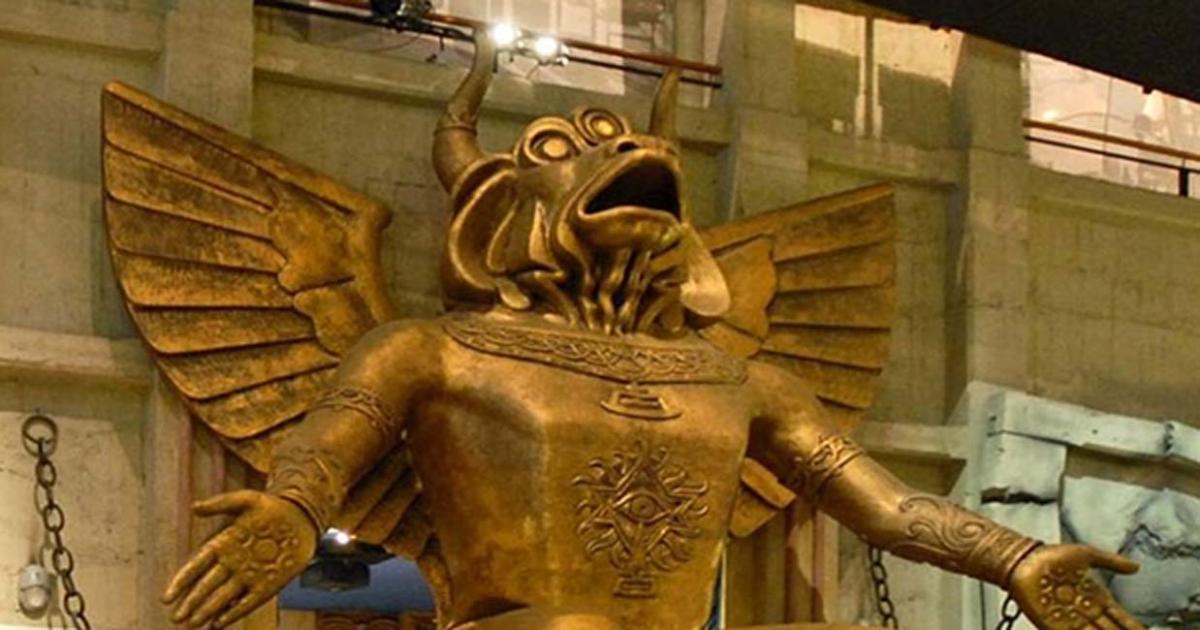
It’s no surprise that the Christian right is losing its mind over Texas senate candidate James Talarico. Liberals aren’t supposed to quote Jesus when they campaign (or, for that matter, ever). Still, even I was taken aback when Mike Lee, a vitriolic Mormon senator from Utah, accused him of being in thrall to Moloch, the Palestinian god to whom babies were supposedly sacrificed. The accusation sends me back to Alan Ginsberg’s “Howl,” written in 1955-56, where Moloch stands in for an America that is destroying “the best minds of my generation.” From the poet’s perspective, the real Moloch is the America that Trump & Co. want to return us to.
The Moloch accusation arises from Talarico’s support for a woman’s right to an abortion. As Talarico said to Stephen Colbert in an interview that CBS banned after pressure from Trump,
[T]he religious right … convinced a lot of our fellow Christians that the most important issues were abortion and gay marriage, two issues that aren’t mentioned in the Bible. Two issues that Jesus never talked about. Jesus in Matthew 25 tells us exactly how you and I and … our fellow believers [are] going to be judged and how we’re going to be saved: by feeding the hungry, by healing the sick, by welcoming the stranger. Nothing about going to church. Nothing about voting Republican. It was all about how you treat other people.
Talarico believes that creation is a matter of freedom and consent and that abortion is consistent with Christian values. After all, he argues, God asked for, and received, Mary’s permission to impregnate her. John Stoehr at Editorial Board, to whom I owe this information, notes that this used to be taken for granted by Protestants. And although Catholics have always been against abortion, Pope Leo recently made the same point, that Christians make a mistake when they prioritize abortion over the Sermon on the Mount or Matthew 25:40-45 (“whatever you did for one of the least of these brothers and sisters of mine, you did for me”).
In my opinion, the right wing’s “right to life” obsession has more to do with controlling women than with honoring life, for which they show little interest. As Stoehr observes, they believe they must slime Talarico in every way possible since, if he “is allowed to explain himself and his theological views, free of the slander against him, the most conservative religious voter might come to the conclusion that despite being a Democrat, he’s still a good Christian.” Stoehr adds,
As was the case during Donald Trump’s three campaigns, what matters to many voters isn’t leadership or policy or character. What matters is the collective desire to punch down on people whom the mob believes are deserving of it. (In this case, Talarico is associated with LGBTQ folks.) GOP campaigns are now like Vegas: what’s done there stays there. They are vacations from morality, excuses to indulge in deviance and depravity. That Texans would suffer by electing [Republican candidate Ken] Paxton doesn’t change the fact that they think slandering “Soy Boy” is fun.
Given that Trump and rightwing Christians want to return America to their idealized view of the 1950s, it’s interesting to look at Ginsberg’s depiction from that period. As he saw it, the machinery of modern America consisted of money, war, government and soul-crushing conformity. In his long howl of a poem, he gives us images that we recognize:
What sphinx of cement and aluminum bashed open their skulls and ate up their brains and imagination?
Moloch! Solitude! Filth! Ugliness! Ashcans and unobtainable dollars! Children screaming under the stairways! Boys sobbing in armies! Old men weeping in the parks!
Moloch! Moloch! Nightmare of Moloch! Moloch the loveless! Mental Moloch! Moloch the heavy judger of men!
Moloch the incomprehensible prison! Moloch the crossbone soulless jailhouse and Congress of sorrows! Moloch whose buildings are judgment! Moloch the vast stone of war! Moloch the stunned governments!
Moloch whose mind is pure machinery! Moloch whose blood is running money! Moloch whose fingers are ten armies! Moloch whose breast is a cannibal dynamo! Moloch whose ear is a smoking tomb!
Moloch whose eyes are a thousand blind windows! Moloch whose skyscrapers stand in the long streets like endless Jehovahs! Moloch whose factories dream and croak in the fog! Moloch whose smokestacks and antennae crown the cities!
Moloch whose love is endless oil and stone! Moloch whose soul is electricity and banks! Moloch whose poverty is the specter of genius! Moloch whose fate is a cloud of sexless hydrogen! Moloch whose name is the Mind!…
Moloch! Moloch! Robot apartments! invisible suburbs! skeleton treasuries! blind capitals! demonic industries! spectral nations! invincible madhouses! granite cocks! monstrous bombs!
What with the Trump family’s boundless greed and pay-to-play corruption, along with the president’s love of bombing, his attacks on environmental regulation, his promotion of fossil fuels (smokestacks that “crown the cities”), his paving over the rose garden and the White House lawn, his soulless skyscrapers and other “cement and aluminum” temples to himself (“granite cocks” sounds about right), his “crossbone soulless”prisons, his desecration of national parks and other hallowed institutions, his “Congress of sorrows,” Ginsberg could well be describing the aspirations of Project 2025.
“Moloch whose love is endless oil and stone! Moloch whose soul is electricity and banks!” Check and check.
For all its apocalyptic despair, however, “Howl” ends on a note of hope as Ginsberg imagines America awakening to its potential. Although despair over the American dream has driven one of the “best minds”–his socialist friend Carl Solomon–to drugs and to incarceration at the Rockland Psychiatric Center, Ginsberg imagines that dream triumphing in the end. It will resurrect like Jesus “from the superhuman tomb” and we will “wake up electrified out of the coma.” In an inversion of war imagery, our “own souls’ airplanes” will drop angelic bombs,” the imaginary walls will collapse (what William Blake called “the mind forg’d manacles”), and we will run outside in our underwear, free at last. “O starry spangled shock of mercy the eternal war is here”:
I’m with you in Rockland
where you will split the heavens of Long Island and resurrect your living human Jesus from the superhuman tomb
I’m with you in Rockland
where there are twentyfive thousand mad comrades all together singing the final stanzas of the Internationale
I’m with you in Rockland
where we hug and kiss the United States under our bedsheets the United States that coughs all night and won’t let us sleep
I’m with you in Rockland
where we wake up electrified out of the coma by our own souls’ airplanes roaring over the roof they’ve come to drop angelic bombs the hospital illuminates itself imaginary walls collapse O skinny legions run outside O starry-spangled shock of mercy the eternal war is here O victory forget your underwear we’re free
I’m with you in Rockland
in my dreams you walk dripping from a sea-journey on the highway across America in tears to the door of my cottage in the Western night
Although dreaming in the face of a suffocating reality (or, for that matter, Trumpism) may lead to madness, Ginsberg tells us that it can also lead to freedom. The poem ends with that archetypal journey, the western Odyssey, where new possibilities open up. The American dream doesn’t die just because there are setbacks.
My Ginsberg experience: I was invited to a dinner with Ginsberg when he came to St. Mary’s College of Maryland to see his friend Lucille Clifton and can report that he was interested in everything. When I told him that my research field was 18th century British literature, he rhapsodized about the mad poet Christopher Smart, author of the very Ginsbergian poem “Jubilate Agno.” (“For I will consider my Cat Jeoffry./ For he is the servant of the Living God duly and daily serving him.”) When I mentioned that I was writing an article on Jean Renoir’s 1939 film Rules of the Game, he reported that he saw the film in the 1940s with Neal Cassady. Later that evening, he mesmerized a packed auditorium by having us sing a stanza from Blake’s “Nurse’s Song” repeatedly for 20+ minutes as he accompanied us on a harmonium.
It was a memorable evening.