Thursday
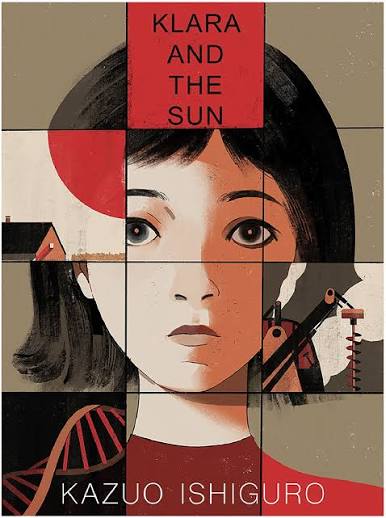
One of my Postcolonial Literature students is writing on Kazuo Ishiguro’s Klara and the Sun, and the more we talk, the more interesting I find the novel to be.
At first I wondered whether it would fit the course since neither England nor Japan colonized the other. Indeed, an Indian reader sent me an article recently in which the author imagines an alternate history for India: rather than modernizing the country, what if England hampered it through conquest. After all, Japan did very well for itself without being occupied by a colonial power. True, it was forced into modernity by western powers, but after that, it figured out things for itself.
But returning to Ishiguro, the postcolonial concepts of hybridity and mimicry apply nicely to his works. For instance, we see characters engaged in various forms of mimicry in the following works:
–in Remains of the Day, the butler seeks to be the perfect servant butler, even though it means denying his humanity in the process;
–in Never Let Me Go, the clones think of themselves as real people, even though they have only been engineered to supply replacement organs for others;
–in Klara and the Sun, a care robot is instructed to resemble a child so that she can replace the girl when she dies.
I can imagine why mimicry would be an important theme for Ishiguro. Having moved with his family to England at age six, he must have struggled to fit in with his classmates. While he might have thought of himself as English, he would have been perceived as having a hybrid Anglo-Japanese identity.
His sci-fi novels in which engineered humans struggle with being partly machine, partly human, allow him to explore his own identity struggles.
He has chosen his issue well because hybrid-identities are becoming increasingly common in our globalized world. I expect that many of the rightwing nationalist movements have anxiety about this issue at their very core, including white nationalists in America and Slovenian nationalist where I am presently. (Slovenia’s current rightwing president is a Trump fan.)
I now understand why, last time I was here a Slovenian-Serbian student found her own identity struggle depicted in Klara. Carrying as she did a Serbian last name, she encountered anti-Serb prejudice but had a chance (or so she thought) to remove the stigma if she took the Slovenian name of her fiancé. She hesitated making the move, however, because she worried that, by fitting in seamlessly, she would be sacrificing some essential part of herself.
The book asks whether one can in fact fit in seamlessly. By choosing to make the narrator a robot, Ishiguo dramatizes the issue. The book features a girl, Josie, who is dying because her parents (Chrissie and Paul) chose to have her neurologically enhanced (“lifted”) so that she would be able to compete in an increasingly competitive world. The operation carries risks and Josie is bedridden. To keep her company, her parents buy her Klara, an AF or Artificial Friend.
The mother has a secondary agenda. Having already lost one child because of the lifting process, she wants Klara to become Josie so that she will have a replacement for Josie should Josie die.
Because she is a robot, Klara believes she can do it since she is continually evolving:
As I say, these were helpful lessons for me [interacting with Josie]. Not only had I learnt that changes were a part of Josie, and that I should be ready to accommodate them, I’d begun to understand also, that this wasn’t a trait peculiar just to Josie, that people often felt the need to prepare a side of themselves to display to passersby – as they might in a store window, and that such display needn’t be taken so seriously once the moment had passed.
Klara has a number of in-depth conversations with the father, who opposes his wife’s plan to create a second Josie but feels he can’t stop it. At one point he asks Klara whether she can capture Josie’s heart. Klara responds,
It might indeed be the hardest part of Josie to learn. It might be like a house with many rooms. Even so, a devoted AF, given time, could walk through each of those rooms, studying them carefully in turn, until they became like her own home.
Paul has doubts, responding,
But then suppose you stepped into one of those rooms and discovered another room within it. And inside that room, another room still. Rooms within rooms within rooms. Isn’t that how it might be, trying to learn Josie’s heart? No matter how long you wandered through those rooms, wouldn’t there always be others you’d not yet entered?”
He acknowledges, however, that he might be wrong. Talking of the engineer who has talked his wife in creating a Josie 2.0, he observes,
I think I hate Capaldi because deep down I suspect he may be right. That what he claims is true. That science has now proved beyond doubt there’s nothing so unique about my daughter, nothing there our modern tools can’t excavate, copy, transfer. That people have been living with one another all this time, centuries, loving and hating each other, and all on a mistaken premise. A kind of superstition we kept going while we didn’t know better.
And later:
Our generation still carry the old feelings. A part of us refuses to let go. The part that wants to keep believing there’s something unreachable inside each of us. Something that’s unique and won’t transfer. But there’s nothing like that, we know that now. You know that. For people our age it’s a hard one to let go.
It is Klara herself, however, that realizes that she will never be able to duplicate Josie. Whatever was special about Josie, she says, was not inside Josie but inside those who loved her. Humans are not stand-alone units but a network of relationships. Klara comes to this realization after Josie has recovered and she herself has been disposed of in a graveyard for robots whose solar batteries are running out. She tells this to the store manager who originally sold her and who has set up the graveyard:
Manager, I did all I could to learn Josie and had it become necessary, I would have done my utmost. But I don’t think it would have worked out so well. Not because I wouldn’t have achieved accuracy. But however hard I tried, I believe now there would have remained something beyond my reach. The Mother, Rick, Melania Housekeeper, the Father. I’d never have reached what they felt for Josie in their hearts. I’m now sure of this, Manager.
I wonder if my Serbian-Slovenian student sensed this when she chose to keep her Serbian name: that her identity wasn’t only about her but about others who knew her. The same is true for minorities and new immigrant groups who desire to erase their previous identities. Those in America who desire to “become white”—who attempt to cut themselves off from their communities and families and histories—will always be defined by those networks even in the act of rejecting them.
In the worst cases—I think of Stephen Miller, whose ancestors came to America fleeing eastern European pogroms–they feel they must prove to themselves they belong by embracing draconian measures against others seeking to become American. They are so fearful of not fitting in that they become fanatical.
Postcolonialist theory has another concept—ambivalence—that gets at this inner turmoil. One sees it also in a figure like Supreme Court Justice Clarence Thomas, an African American who has spent his entire time on the court ruling against Civil Rights measures. His life and his legacy have been defined by rejection.
One last thought: As I talked to my students about their essays, I pointed out how Ishiguro’s book also had something to say about the use of AI. It’s not only that an AI generated paper will deprive them of the learning and the brain growth that comes with struggling to develop one’s ideas, I told them. They will also be denying their own heart and their own humanity, becoming instead undifferentiated replicas. My daughter-in-law, a film studies professor, has received some of these essays and talks about how deadening they are.
In a world filled with large classes and grade pressures, it can be difficult to persuade students that they owe it to Self and Soul to grapple with ideas the hard way. A novel like Klara and the Sun can help a teacher make the case.