Monday
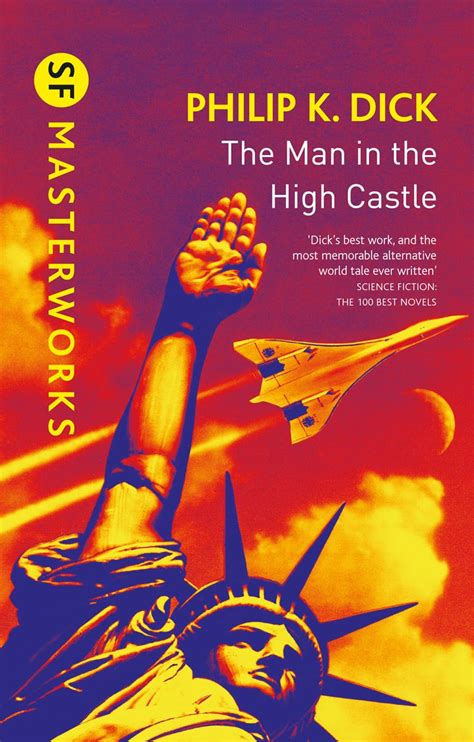
I sometimes think that the books we need will find us. They will call out to us from bookstore or library shelves and suddenly we will find our lives being impacted in unexpected ways. Timothy Snyder, noted author of On Tyranny and On Freedom, recently described how this happened to him with a Philip K. Dick novel:
The other night in Prague I had a few minutes to myself, and chanced to see the mint-colored spine of The Man in the High Castle. Something moved my hand. I was planning to run the next morning on a hill called “Vyšehrad,” which means “upper castle.” Was it that? I was about to go on stage and speak about freedom; perhaps I sensed that Dick had something to say about the subject.
From the novel Snyder got a clearer sense of how people will change their behavior and their thinking when autocrats are in charge. He also saw more clearly some of the forms resistance can take.
Snyder’s article sent me back to the novel, which I last read in the 1980s. I came out thinking that it speaks more to our present moment than it did either in 1962, when it first appeared, or in the 1980s, after the film Blade Runner caused people to rediscover Dick. It certainly illustrates a number of points that Snyder makes in his own writing.
High Castle is based on the premise that the Germans and Japanese won World War II and divided America between them. Within this novel is a writer—the man in the high castle—whose novel The Grasshopper Lies Heavy is an alternative history, speculating on how the world would be different if the U.S. had won the war.
Throughout High Castle we see that, under Japanese and German domination, Americans have adapted to their oppressors. Recognizing only too well how various Americans have changed their thinking to fit Trump’s delusions, Snyder notes, “We don’t need defeat to a foreign power to adapt to everyday authority or to invite atrocious violence; we Americans might do this without any excuse beyond self-delusion.”
For instance, we see people in the novel casually discussing a plan to exterminate American Jews and return African Americans to slavery, as if the fact that the Germans won the war makes it okay. The same casualness applies to German plans to commit mass genocide in Africa. We learn that they have run into some problems with this latter project—we don’t learn exactly what—but it is rationalized away in the mind of a Germanophile businessman:
Africa had almost been successful . . . but in a project of that sort, almost was an ominous word to begin to hear. Rosenberg’s well-known powerful pamphlet issued in 1958; the word had first shown up, then. As to the Final Solution of the African Problem, we have almost achieved our objectives. Unfortunately, however —
Still, it had taken two hundred years to dispose of the American aborigines, and Germany had almost done it in Africa in fifteen years. So no criticism was legitimately in order. Childan had, in fact, argued it out recently while having lunch with certain of those other merchants. They expected miracles, evidently, as if the Nazis could remold the world by magic. No, it was science and technology and that fabulous talent for hard work; the Germans never stopped applying themselves.And when they did a task, they did it right.
And anyhow, the flights to Mars had distracted world attention from the difficulty in Africa. So it all came back to what he had told his fellow store owners; what the Nazis have which we lack is — nobility. Admire them for their love of work or their efficiency . . . but it’s the dream that stirs one. Space flights first to the moon, then to Mars; if that isn’t the oldest yearning of mankind, our finest hope for glory.
Hmm. Where have we encountered using dreams of rockets to Mars to distract us from horrors committed in Africa? One wonders whether the Hitler-admiring Elon Musk is using High Castle as a guidebook. (NPR last year reported that his Musk’s DOGE dismantling of USAID could ultimately result in 14 million people dying who otherwise would have lived.)
High Castle also captures an autocrat spiraling off into incoherence and yet continuing to be taken seriously by his cult followers:
Old Adolf, supposed to be in a sanitarium somewhere, living out his life of senile paresis. Syphilis of the brain…
And the horrible part was that the present-day German Empire was a product of that brain. First a political party, then a nation, then half the world. And the Nazis themselves had diagnosed it, identified it; that quack herbal medicine man who had treated Hitler, that Dr. Morell who had dosed Hitler with a patent medicine called Dr. Koester’s Antigas Pills — he had originally been a specialist in venereal disease. The entire world knew it, and yet the Leader’s gabble was still sacred, still Holy Writ. The views had infected a civilization by now, and, like evil spores, the blind blond Nazi queens were swishing out from Earth to the other planets, spreading the contamination.
It’s not only this Hitler who brings Trump to mind. Germany in the book is undergoing a succession struggle, with one of the leading figures being Herr Göring. As described by Dick, he bears more than a little resemblance (except for his military service) to the grifter in the White House who yesterday staged a modern version of a gladiatorial combat:
The Fat One, so-called, due to body, originally courageous air ace in First World War, founded Gestapo and held post in Prussian Government of vast power. One of the most ruthless early Nazis, yet later sybaritic excesses gave rise to misguiding picture of amiable wine-tippling disposition which our government urges you to reject. This man although said to be unhealthy, possibly even morbidly so in terms of appetites, resembles more the self-gratifying ancient Roman Caesars whose power grew rather than abated as age progressed. Lurid picture of this person in toga with pet lions, owning immense castle filled with trophies and art objects, is no doubt accurate. Freight trains of stolen valuables made way to his private estates over military needs in wartime. Our evaluation: this man craves enormous power, and is capable of obtaining it. Most self-indulgent of all Nazis, and is in sharp contrast to late H. Himmler, who lived in personal want at low salary. Herr Göring representative of spoils mentality, using power as means of acquiring personal wealth. Priinitive mentality, even vulgar, but quite intelligent man, possibly most intelligent of all Nazi chiefs. Object Of his drives; self-glorification in ancient emperor fashion.
Like Drumpf Trump, the Germans in the novel use spectacle to distract from their economic failures—which is why incompetents like Göring and Goebbels are leading contenders to be the next Fuhrer. An industrialist reports on what he’s hearing about Hitler’s inner circle:
‘It is a sleight-of-hand business,’ the Non-Ferrous Ores man said. ‘Mainly, their uses of atomic energy have kept things together. And the diversion of their circus-like rocket travel to-Mars and Venus. He pointed out that for all their thrilling import, such traffic have yielded nothing of economic worth.’
‘But they are dramatic,’ Mr. Tagomi said.
‘His prognosis was gloomy. He feels that most high-placed Nazis are refusing to face facts vis-à- vis their economic plight. By doing so, they accelerate the tendency toward greater tour de force adventures, less predictability, less stability in general. The cycle of manic enthusiasm, then fear, then Party solutions of a desperate type — well, the point he got across was that all this tends to bring the most irresponsible and reckless aspirants to the top.’Mr. Tagomi nodded.
‘So we must presume that the worst, rather than the best, choice will be made. The sober and responsible elements will be defeated in the present clash.’
One lesson that Snyder draws from the novel is how easily Americans can surrender to autocracy. We might think of ourselves as freedom-loving citizens who wouldn’t stand for oppression, but Dick’s novel offers us a plausible scenario. Snyder observes that “various prejudices can be mobilized to the same effect, different hierarchies can be enforced into the practical invisibility of everyday life, and we would take it all for granted.”
“Most of the culture, he adds, “would simply bend.” Americans, he gloomily observes, can be “their own Japanese and their own Germans.”
Liberals wonder how the GOP has come around to Trump’s view that January 6 take over the Capital was legitimate protest and that the 2020 election was stolen. Dick’s novel shows that, when an autocrat is in power, many accept his reality.
But not all is lost. The Grasshopper Lies Heavy, the novel within the novel, shows people how things could be different. “We would need something, a special kind of art, perhaps a book of a different sort, to help us see through our own reality to some sort of other possibility,” Snyder writes. While his own highly influential books show us both how tyranny works and how freedom can fight back, novels can convey this in their own special way.
So for all the ways that High Castle shows Americans surrendering to autocracy, Snyder also finds the story to be empowering. In the end, it reveals that “power over us depends on a certain kind of charisma, ultimately on a “bluff.” And if that’s the case, then we have agency. Once we see that “many of the restraints upon us are the ones that we choose”—once we imagine a world that is different—we can take practical action.
This does not mean, Snyder cautions, that everything will then be easy. The most effective characters in the novel are those that take “the chances they are given and are aware that every choice is fraught with risk.” What matters is “not so much who actually won and who actually lost… as what we do with ourselves afterwards.”