Wednesday
I recently stumbled across Ursula K. Le Guin’s “A Few Words to a Young Writer.” As it turns it, it’s only two paragraphs—nothing as extensive as Rilke’s “Letters to a Young Poet,” which may have inspired it—but still well worth revisiting at this time of non-stop political lying and the looming threat of essays composed by Artificial Intelligence. Here it is in its entirety:
Socrates said, “The misuse of language induces evil in the soul.” He wasn’t talking about grammar. To misuse language is to use it the way politicians and advertisers do, for profit, without taking responsibility for what the words mean. Language used as a means to get power or make money goes wrong: it lies. Language used as an end in itself, to sing a poem or tell a story, goes right, goes towards the truth.
A writer is a person who cares what words mean, what they say, how they say it. Writers know words are their way towards truth and freedom, and so they use them with care, with thought, with fear, with delight. By using words well they strengthen their souls. Storytellers and poets spend their lives learning that skill and art of using words well. And their words make the souls of their readers stronger, brighter, deeper.
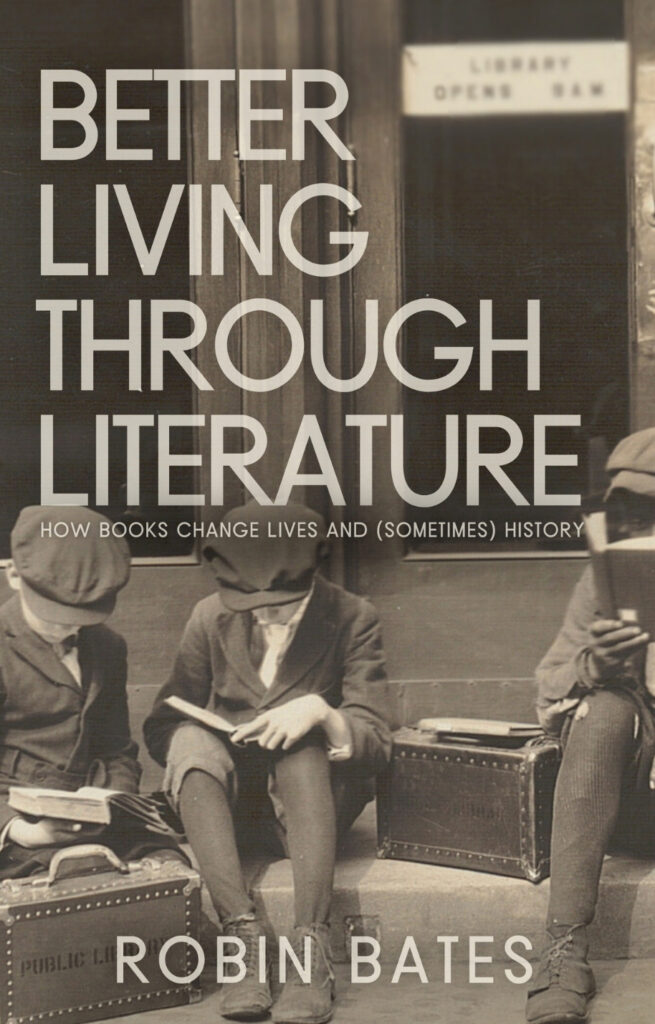
One reason why I don’t fear for the future of literature—even as enrollments in college literature classes decline and young people are absorbed by video games and social media—is that something deep within human beings craves literary truth. As I note in my book, author Salman Rushdie responded to the torrent of lies emanating from the Donald Trump White House in 2019 by pointing out that the classics will always remain relevant because of their commitment to authenticity. Seeing literature as essentially a “no bullshit” zone, Rushdie wrote that the job of contemporary writers was “rebuilding our readers’ belief in reality.” Le Guin tells us one does this by using words “with care, with thought, with fear, with delight.”
I think of how processed cheese, polyester clothing, and formica counter tops were once considered the future, only for people to revert back to real food, natural fabrics, and wood surfaces in their longing for something genuine. These are inexact analogies but you see my point. The inauthenticity of AI-generated prose will not “make the souls of their readers stronger, brighter, deeper.”
I like Le Guin’s point that misusing words is failing to take responsibility “for what the words mean.” Slowly but surely, abusing language hollows people out, as we see in too many politicians and their press secretaries. They think they have discovered a magic get out of jail card—all they have to do is lie and deflect to escape accountability—but instead they turn into T.S. Eliot’s hollow men:
We are the hollow men
We are the stuffed men
Leaning together
Headpiece filled with straw. Alas!
Our dried voices, when
We whisper together
Are quiet and meaningless
As wind in dry grass
Or rats’ feet over broken glass
In our dry cellar
Contrast these what those who seek the truth as described by poet William Cowper in Book V of The Task:
The only amaranthine flower on earth
Is virtue; the only lasting treasure, truth.
Or with those who arrive at Keats’s ringing conclusion to “Ode on a Grecian Urn”:
“Beauty is truth, truth beauty,—that is all
Ye know on earth, and all ye need to know.”
The abuse of language that we witnessed in last night’s State of the Union address was as far from truth and beauty as it’s possible to get.