Wednesday
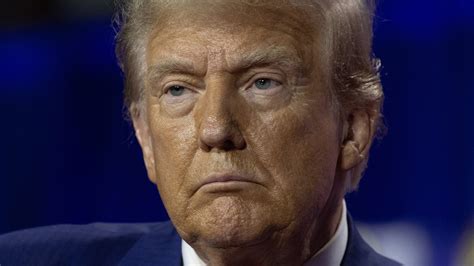
I know it’s only been six months since I applied Percy Shelley’s “England in 1819” to the Trump administration, but it’s even more relevant now than it was then. That’s because we now can add Trump’s bloated body and rapidly deteriorating mind to the wholesale damage he’s visiting on the nation. Here’s Ben Mesilas of the Meidas Touch making the connection:
I’ve been saying it for weeks now: Donald Trump looks like a man decomposing in real time….Meanwhile, businesses are reporting stagflation, empty trucking fleets, sugar prices surging thanks to his reckless tariffs, and orders drying up across industries. This isn’t the “golden age” Trump claims. It’s the economic apocalypse he designed.
And now here’s Shelley speaking specifically about George III and generally about the monarchy:
An old, mad, blind, despised, and dying king,—
Princes, the dregs of their dull race, who flow
Through public scorn, mud from a muddy spring,—
Rulers who neither see, nor feel, nor know,
But leech-like to their fainting country cling,
Till they drop, blind in blood, without a blow,—
When I wrote about the poem in March, it was not evident to me just how much money that Trump, his family, and his wealthy supporters would make off the presidency. Fascism historian Ruth Ben-Ghiat, however, predicted the billions they are raking in, noting that it is customary for the leaders of kleptocracies, mafia states, gangster governments, and dictatorships to persecute and steal from their people, impoverishing them as they themselves become fabulously wealthy. Clinging “leech-like” to a fainting country pretty much sums up Trump’s relationship to the nation that he’s supposed to be leading.
I also appreciate the “muddy spring” analogy. The description of the Hanoverian kings as the dregs of a muddy spring—the muck has drifted to the bottom—fits as well today’s GOP. Even if our own old, mad, and despised president were to die, there’s no sign that those Republicans waiting in the wings would be any cleaner. The Supreme Court allowing Republicans to gut the Clean Water Act seems symbolic, and J.D. Vance offers no more hope of a new day than George III’s dissolute Prince Regent, the future George IV.
There are other ways in which Shelley’s poem resonates more now than it did in March. His tariffs and his “Big Beautiful Bill” are starting to send food and medical prices skyrocketing; his rightwing Supreme Court is still enabling his “golden and sanguine [greedy and bloody] laws”; he has been imposing the National Guard and sometimes even the military on Democratic cities; and a GOP-controlled Congress (“Senate” in Shelley’s poem) has just given a blank check to ICE, which increasingly resembles a lawless paramilitary force. Shelley describes the army as a two-edged sword—after all, it had just saved England from Napoleon, even though it was now being used to massacre workers in Manchester (Waterloo/Peterloo)—and we see Trump similarly attempting to twist America’s well-regarded armed forces to his own ends.
Oh, and much of this is being done in the name of a Christianity that has abandoned Christ and doesn’t appear to have opened the Bible. Or as Shelley puts it, “Religion Christless, Godless, a book sealed”:
A people starved and stabbed in the untilled field,—
An army which liberticide and prey
Makes as a two-edged sword to all who wield,—
Golden and sanguine laws which tempt and slay;
Religion Christless, Godless, a book sealed,—A Senate—Time’s worst statute unrepealed…
Shelley, writing in an age of revolutions, ends his poem by imagining that out of the wreckage will arise a glorious Phantom. The monarchy’s victims, he imagines,
Are graves from which a glorious Phantom may
Burst to illumine our tempestuous day.
It is an image that Shelley-admiring Karl Marx would use in The Communist Manifesto, sending a warning shot to monarchs of Europe with the declaration, “A specter is haunting Europe—the specter of Communism.”
In yesterday’s post I wrote about how fascism expert Timothy Snyder, drawing on another Shelley poem, predicts that Shelley’s hoped-for renewal could happen here in tempestuous America as well:
It can seem difficult to resist merchants of calamity such as Trump and Vance. No one action seems to stop them. But every act of resistance creates the possibility that the country itself can survive, and every moment of hope creates the foundation for a better republic. The actions we take have to be actions against, against what is being done to us now. But by their nature every strike, every protest, every act of organization, every act of kindness and solidarity are also actions for, for a future in which the United States continues to exist, and in which the learning from resistance becomes the politics of freedom.
If insightful poets, writing in desperate times, can imagine better days, so can we.