ICE Agents and Falstaff’s Army

Falstaff recruiting in Henry IV, Part II

Note: If you wish to receive, via e-mail, (1) my weekly newsletter or (2) daily copies of these posts, write to me at rrbates1951@gmail.com. Comments may also be sent to this address. I promise not to share your e-mail with anyone. To unsubscribe, write here as well.

Wednesday

Here’s a news item with a silver lining. As reported by The Atlantic,

President Donald Trump’s plan to double the size of the ICE workforce has met a foe more powerful than any activist group….It is the ICE personal-fitness test.

Apparently more than a third of the applicants are failing. To pass, they must do 15 push-ups and 32 sit-ups and run 1.5 miles in 14 minutes. One career ICE official described the situation as “pathetic.”

A long-time observer of ICE videos, meanwhile, told an NBC reporter, “They’re out there looking like Buzz Lightyear …they’re fat…just ridiculous. They’re quirky, they’re dorky, they can’t run, they fumble their guns…they can even chase after their own cars.

Nor is the physical the only problem. Some of the new hires are also dropping out of the special federal-law-enforcement training academy after flunking exams on immigration law and Fourth Amendment limits on officers’ search authority. (And this even though they had access to their notes.)

There are even people with backgrounds in criminal behavior and drug use applying to ICE, along with Proud Boys and men who play at weekend warriors.

It sounds like Shakespeare’s Falstaff has been put in charge of recruiting.

In Henry IV, Part II Falstaff is drafting men to go fight in the latest war. Being Falstaff, however, he’s open to accepting bribes from those who don’t want to serve. Bullcalf initially pleads a version of Trump’s bone spurs excuse, contending he caught a cold while celebrating the king’s coronation. When this doesn’t work, he then offers “ten shillings in French crowns.” Mouldy does the same, and they get the result they desire:

Falstaff: Mouldy and Bullcalf: for you, Mouldy, stay at home till you are past service: and for your part, Bullcalf, grow till you come unto it: I will none of you.

When Justice Shallow observes that these two are far superior to Wart, Feeble, and Shadow, Falstaff replies,

Will you tell me, Master Shallow, how to choose a man? Care I for the limb, the thewes [sinews], the stature,bulk, and big assemblance of a man! Give me the spirit, Master Shallow. 

He determines that Wart has this spirit, even though he proves entirely incompetent when it comes to wielding a firearm. Although Shallow, in a masterpiece of understatement, diplomatically observes, “He is not his craft’s master,” Falstaff claims to be satisfied:

Come, manage me your caliver [arquebus]. So: very well: go to: very good, exceeding good. O, give me always a little, lean, old, chapt, bald shot. Well said, i’ faith, Wart; thou’rt a good scab: hold, there’s a tester [silver coin] for thee.

Shadow, meanwhile, is so skinny that Faustus notes, “He presents no mark to the enemy; the foeman may with as great aim level at the edge of a penknife.”

And finally, Feeble:

And for a retreat; how swiftly will this Feeble the woman’s tailor run off! O, give me the spare men, and spare me the great ones. 

According to the Atlantic article, official police departments have higher standards and pay higher standards. So there you have it: those who can, work for the police; those who can’t, for ICE.

Falstaff’s army.

Posted in Uncategorized | Tagged , , , , | Comments closed

Imploding Edifices, in D.C. and in Lit

The demolition of the East Wing

Note: If you wish to receive, via e-mail, (1) my weekly newsletter or (2) daily copies of these posts, write to me at rrbates1951@gmail.com. Comments may also be sent to this address. I promise not to share your e-mail with anyone. To unsubscribe, write here as well.

Tuesday

Sometimes I imagine that some deity has designed a special test for Republican lawmakers. What will it take, this figure asks them, to reject the man you chose to be your leader? How about if I have him send a mob to attack the U.S. Capitol? What if I have him openly take bribes to enrich himself in office? How about if I have him violate basic articles of the Constitution? Or send out a video of himself as a king in an airplane defecating on the American public? If all that is not enough for you, how about if I have him take a wrecking ball to the White House?

If there’s a more graphic way of depicting Trump’s assault on America than photos of a demolished East Wing, I can’t think of it. The demolition brings to mind the climactic finales of a number of stories, including One Hundred Years of Solitude, The Fall of the House of Usher, and (a childhood favorite of mine) George MacDonald’s The Princess and Curdie.

Warning: Today’s post is darker than recent ones as it conjures up worst case scenarios. For a more hopeful outlook, read yesterday’s essay about Percy Shelley’s Masque of Anarchy.

In Gabriel Garcia Márquez’s novel, the last descendant of the Buendia family has finally managed to decipher the predictions made by an old Roma man back when they were founding the town. As Aureliano nears the end of the manuscript, he encounters himself in its pages. “He was so absorbed,” we are told, “that he did not feel the second surge of wind either as its cyclonic strength tore the doors and windows off their hinges, pulled off the roof of the east wing, and uprooted the foundations.” (my emphasis)

And a little later:

Macondo was already a fearful whirlwind of dust and rubble being spun about by the wrath of the biblical hurricane when Aureliano skipped eleven pages so as not to lose time with facts he knew only too well, and he began to decipher the instant that he was living, deciphering it as he lived it, prophesying himself in the act of deciphering the last page of the parchments, as if he were looking into a speaking mirror.🪞

Then comes the novel’s famous ending:

Before reaching the final line, however, he had already understood that he would never leave that room, for it was foreseen that the city of mirrors (or mirages) would be wiped out by the wind and exiled from the memory of men at the precise moment when Aureliano Babilonia would finish deciphering the parchments, and that everything written on them was unrepeatable since time immemorial forever more, because races condemned to one hundred years of solitude did not have a second opportunity on earth.

Climate change is already giving us apocalyptic weather events (Hurricane Melissa, bearing down on Jamaica with 175 mph winds, is the latest), but who needs climate change when one has Donald Trump. Garcia Marquez captures the sense of dread that many feel about the fate of our 250-year experiment in democracy. The focus on the self and on immediate gratification, with no concern for generations to come, is our own version of Garcia Márquez’s solitude. While Trump is speeding it up, this forecast of our demise has been evident for some time.

MacDonald’s novel also contains images of apocalyptic collapse, with greed the primary driver. Curdie has exposed and driven from the court the corrupt ministers who have been keeping the king sedated, and he manages to rouse his sovereign to action so that they can restore order. (The king is a lion rising from his slumber, as Shelley would put it.) After the king and Curdie emerge victorious, Curdie’s father and fellow miners discover gold under the city, which they carefully mine to restore the kingdom’s plundered coffers. Irene and Curdie then marry, become king and queen, and we are told that Gwyntystorm becomes a better city and that “good people grew in it.” Then, however, Trumpism takes over:

But they had no children, and when they died the people chose a king. And the new king went mining and mining in the rock under the city, and grew more and more eager after the gold, and paid less and less heed to his people. Rapidly they sank toward their old wickedness. But still the king went on mining, and coining gold by the pailful, until the people were worse even than in the old time. And so greedy was the king after gold, that when at last the ore began to fail, he caused the miners to reduce the pillars which Peter and they that followed him had left standing to bear the city. And from the girth of an oak of a thousand years, they chipped them down to that of a fir tree of fifty.

What happens next is as predictable as the effect of giving tax breaks to billionaires:

One day at noon, when life was at its highest, the whole city fell with a roaring crash. The cries of men and the shrieks of women went up with its dust, and then there was a great silence.

Where the mighty rock once towered, crowded with homes and crowned with a palace, now rushes and raves a stone-obstructed rapid of the river. All around spreads a wilderness of wild deer, and the very name of Gwyntystorm had ceased from the lips of men.

Trump and his minions are chopping away at America’s foundations as though there’s no tomorrow, whether it’s ballooning the deficit, attacking vaccines, taking an axe to renewable energy, corrupting the Department of Justice, or … (The list goes on and on.)

I turn finally to Edgar Allan Poe, whose stories reveal a sickness at the heart of the republic. (I wrote recently how Poe is a counter to the triumphant individualism of Ralph Waldo Emerson and Walt Whitman.) With the incestuous relationship between Roderick and Madeleine we have an emblem of how America, in its self-absorption, creates a solipsistic bubble that eventually craters in on itself. Think of the relationship that Trump is setting up with his billionaire enablers—they see nothing but their own bottom line—as captured in Roderick’s and Madeleine’s deadly final dance:

For a moment she remained trembling and reeling to and fro upon the threshold, then, with a low moaning cry, fell heavily inward upon the person of her brother, and in her violent and now final death-agonies, bore him to the floor a corpse, and a victim to the terrors he had anticipated.

When warning against the danger of slavery expansion in his 1858 Senate campaign, Abraham Lincoln famously said that a house divided against itself cannot stand. Poe’s narrator has earlier noticed a subtle crack running through the Usher mansion—one that Roderick is oblivious to—and in the final scene, the crack takes the entire house down:

From that chamber, and from that mansion, I fled aghast. The storm was still abroad in all its wrath as I found myself crossing the old causeway. Suddenly there shot along the path a wild light, and I turned to see whence a gleam so unusual could we have issued; for the vast house and its shadows were alone behind me. The radiance was that of the full, setting, and blood-red moon which now shone vividly through that once barely-discernible fissure of which I have before spoken as extending from the roof of the building, in a zigzag direction, to the base. While I gazed, this fissure rapidly widened—there came a fierce breath of the whirlwind—the entire orb of the satellite burst at once upon my sight—my brain reeled as I saw the mighty walls rushing asunder—there was a long tumultuous shouting sound like the voice of a thousand waters—and the deep and dank tarn at my feet closed sullenly and silently over the fragments of the “HOUSE OF USHER.”

Contra Barack Obama’s contention that there is not a red America or a blue America but only the United States of America, we are seeing our own significant cracks. The imploding edifices that we encounter in Garcia Márquez, MacDonald, and Poe are metaphors for societies that have lost their way as they become stagnant or ingrown or corrupt. With the demolition of the East Wing, Trump has provided us with our own metaphor.

Further thought: In focusing on Trump’s demolition, I didn’t mention the palatial ballroom that he is building in its place, an addition that will dwarf the entire White House while providing Trump (or so he envisions it) with a place where the wealthy will come to pay obeisance and offer up bribes. For a description of this dynamic, one can turn to Poe’s “Masque of the Red Death,” where Prince Prospero builds an “extensive and magnificent structure, the creation of the prince’s own eccentric yet august taste.” In it the prince parties with the rich and famous while the rest of the population are shut out.

Recall that the White House is supposedly “the people’s house.” 

And yet another thought: Speaking of fault lines that can bring down a house, a new book by Paul Starr—American Contradiction: Revolution and Revenge—sees the American experiment as having faced the danger from the very beginning. “Ever since its birth,” he writes,

the American republic has been like a city built on a geological fault, shaken often by tremors and periodically by earthquakes. The tremors have gotten stronger in recent decades. The question that troubles Americans now is whether the earthquake they are experiencing will reduce their republic to rubble.

And this reminds me of another work, written by Poe’s literary heir and one who, like Poe, dreams America’s nightmares. In Stephen King’s novel IT, where small town America experiences periodic acts of mass violence directed at vulnerable populations, we see the town of Derry, Maine split in two by a vast crevice. Here’s a passage describing the devastation:

As the rumbling built steadily up and up, windows began to shatter, plaster ceilings began to fall, and the inhuman cry of twisting beams and foundations swelled into a frightening chorus. Cracks raced up the bullet-pocked brick face of Machen’s like grasping hands. The cables holding the marquee of the Aladdin Theater out over the street snapped and the marquee came crashing down. Richard’s Alley, which ran behind the Center Street Drug, suddenly filled up with an avalanche of yellow brick as the Brian Dowd Professional Building, erected in 1952, came crashing down. A huge screen of jaundice-colored dust rose in the air and was snatched away like a veil….

And then, at 10:02 A.M., downtown Derry simply collapsed….Cracks raced across the surface of Main Street. They were narrow at first…and then they began to gape like hungry mouths and the sound of the Canal floated up, not muffled now but frighteningly loud. Everything began to shake.

Posted in Uncategorized | Tagged , , , , , , , | Comments closed

Trump’s Anarchy vs. No Kings Rallies

Note: If you wish to receive, via e-mail, (1) my weekly newsletter or (2) daily copies of these posts, write to me at rrbates1951@gmail.com. Comments may also be sent to this address. I promise not to share your e-mail with anyone. To unsubscribe, write here as well.

Monday

At the recommendation of blogger Greg Olear, I’ve been reading Percy Shelley’s Masque of Anarchy: Written on the Occasion of the Massacre at Manchester, which both describes our current political situation and advises us on how to respond. That response, you’ll be heartened to know, resembles the No Kings marches and other acts of peaceful resistance we’ve been witnessing to the ICE raids and other assaults on the Constitution.

In drawing historical parallels, it’s true we haven’t seen anything quite as dramatic as the 1819 Manchester massacre, when British cavalry charged into a crowd of around 60,000 people who had peacefully assembled—many in Sunday attire with wives and children—to demand reform of parliamentary representation. 18 people were killed and 400-700 injured. Instead we are seeing a slow-rolling massacre, whether in the form of ICE raids tearing apart families and neighborhoods or extrajudicial killings in international waters. In both instances, however, we are witnessing anarchy, with Trump and his minions overriding law, decency and the Constitution as they impose their will. Anarchy, Shelley points out, has many enablers.

I will be choosing passages from this lengthy poem of George III’s England and Trump’s America matching up. The poem, Shelley tells us, comes to him in a vision—he was in Italy at the time—and goes on to describe a masquerade presided over by the skeletal figure of Anarchy. In his train are three of the major politicians that had a hand in the Manchester massacre, along with “bishops, lawyers, peers, and spies.” Or as we call them nowadays, pastors, lawyers, billionaires, and the surveillance state.

The figure of Anarchy presides over them all and has Trump-like pretensions. He even uses all-caps!

Last came Anarchy: he rode   
On a white horse, splashed with blood;
He was pale even to the lips,
Like Death in the Apocalypse.

And he wore a kingly crown;
And in his grasp a scepter shone;
On his brow this mark I saw–
‘I AM GOD, AND KING, AND LAW!’

Like Trump, Anarchy despoils everything he encounters, including his own followers (as many of those who voted for him are now discovering). The reference to Anarchy’s followers being “drunk as with intoxication/ Of the wine of desolation” brings to mind Stephen Miller, Kristi Noem, Robert Kennedy, Elon Musk, Russ Vought, Pam Bondi, Kash Patel, and other Trump minions, who are gleefully wreaking havoc: 

With a pace stately and fast,
Over English land he passed,
Trampling to a mire of blood,
The adoring multitude.

And a mighty troop around,
With their trampling shook the ground,
Waving each a bloody sword,
For the service of their Lord.

And with glorious triumph, they
Rode through England proud and gay,
Drunk as with intoxication
Of the wine of desolation.

O’er fields and towns, from sea to sea,
Passed the Pageant swift and free,
Tearing up, and trampling down;
Till they came to London town.

The first response to Anarchy’s assault is panic:

And each dweller, panic-stricken,
Felt his heart with terror sicken
Hearing the tempestuous cry
Of the triumph of Anarchy.

Meanwhile, Anarchy finds sympathetic ears amongst “hired murders” (let’s call them ICE agents), along with lawyers (the Supreme Court, law firms he has bullied) and priests (again, MAGA pastors):

For with pomp to meet him came,
Clothed in arms like blood and flame,
The hired murderers, who did sing
`Thou art God, and Law, and King.

We have waited, weak and lone
For thy coming, Mighty One!
Our purses are empty, our swords are cold,
Give us glory, and blood, and gold.’

Lawyers and priests, a motley crowd,
To the earth their pale brows bowed;
Like a bad prayer not over loud,
Whispering — `Thou art Law and God.’ —

Then all cried with one accord,
`Thou art King, and God, and Lord;
Anarchy, to thee we bow,
Be thy name made holy now!’

Anarchy, meanwhile, figures that everything in the nation is “rightly his”: the palaces (White House), the bank (the Treasury), the Tower (the Department of Justice), Parliament (Congress):

And Anarchy, the Skeleton,
Bowed and grinned to everyone,
As well as if his education
Had cost ten millions to the nation.

For he knew the Palaces
Of our Kings were rightly his;
His the scepter, crown, and globe,
And the gold-inwoven robe.

So he sent his slaves before
To seize upon the Bank and Tower,
And was proceeding with intent
To meet his pensioned Parliament

At this point, however, the poem takes a turn in a more positive direction, with Hope making an appearance. To be sure, at first the poet tells us that “she looked more like Despair,” and she’s unhappy that the passage of Time doesn’t appear to be improving matters. For the anti-Trump resistance, that’s certainly how it felt in the early months of Trump’s presidency:

When one fled past, a maniac maid,
And her name was Hope, she said:
But she looked more like Despair,
And she cried out in the air:

`My father Time is weak and gray
With waiting for a better day;
See how idiot-like he stands,
Fumbling with his palsied hands!

`He has had child after child,
And the dust of death is piled
Over every one but me–
Misery, oh, Misery!’

At this point, however, Hope engages in passive, non-violent resistance. It is this turn in the poem that caught the attention of Gandhi, who according to Wikipedia was so  inspired by the poem that he would quote passages to  vast audiences during the campaign for a free India. Language from the poem was also recited by students at the Tiananmen Square protests of 1989 and by protesters in Tahrir Square during the Egyptian revolution of 2011. Somewhat like the Chinese protester who placed himself before a line of tanks, Hope

         lay down in the street,
Right before the horses’ feet,
Expecting, with a patient eye,
Murder, Fraud, and Anarchy.

In our own country, I think of neighbors and townships, early on, coming to the aid of ICE victims. Since then, their resistance has blossomed into seven million rallying in protest. As Shelley describes it, what begins as a little mist grows into a towering cloud that resembles “a Shape arrayed in mail.” While the shape is not tangible—hope is not something that people can point to—nevertheless we feel its presence and are buoyed up by it. It awakens as flowers awaken in May, as stars appear in the sky, as “waves arise when loud winds call.”

When between her and her foes
A mist, a light, an image rose,
Small at first, and weak, and frail
Like the vapor of a vale:

Till as clouds grow on the blast,
Like tower-crowned giants striding fast,
And glare with lightnings as they fly,
And speak in thunder to the sky,

It grew — a Shape arrayed in mail
Brighter than the viper’s scale,
And upborne on wings whose grain
Was as the light of sunny rain.

On its helm, seen far away,
A planet, like the Morning’s, lay;
And those plumes its light rained through
Like a shower of crimson dew.

With step as soft as wind it passed
O’er the heads of men — so fast
That they knew the presence there,
And looked, — but all was empty air.

As flowers beneath May’s footstep waken,
As stars from Night’s loose hair are shaken,
As waves arise when loud winds call,
Thoughts sprung where’er that step did fall

Hope was marching along with the No Kings protesters:

And the prostrate multitude
Looked — and ankle-deep in blood,
Hope, that maiden most serene,
Was walking with a quiet mien…

Just as Hope reminds England of its commitment to freedom, so Hope reminds Americans of our roots in the American Revolution, the Declaration of Independence, and the Constitution:

Men of England, heirs of Glory,
Heroes of unwritten story,
Nurslings of one mighty Mother,
Hopes of her, and one another;

Rise like Lions after slumber
In unvanquishable number,
Shake your chains to earth like dew
Which in sleep had fallen on you —
Ye are many — they are few.

In reminding his readers of their roots, Shelley isn’t done with describing what slavery looks like. The next three passages describe perfectly the effects of the Big Beautiful Bill, with its tax cuts for billionaires and draconian cuts for everyone else. In the poem, people hunger for the scraps that the rich man throws to his dogs, while the money made from the toil of workers is beyond what tyrants of old could imagine. Crypto currency, meanwhile—which has turned the Trump family into billionaires—is today’s version of “paper coin”:

‘Tis to hunger for such diet
As the rich man in his riot
Casts to the fat dogs that lie
Surfeiting beneath his eye;

`Tis to let the Ghost of Gold
Take from Toil a thousandfold
More than e’er its substance could
In the tyrannies of old.

Paper coin — that forgery
Of the title-deeds, which ye
Hold to something of the worth
Of the inheritance of Earth.

In pushing back against such oppression, Shelley counsels protesters to be guided by “Science, Poetry, and Thought” and to gird themselves with “Spirit, Patience, and Gentleness.” His vision of a mass movement is very much what we saw with No Kings, where people came “from every hut, village and town”—say, from my own Winchester, Tennessee to New York, Chicago, and Los Angeles:

Science, Poetry, and Thought
Are thy lamps; they make the lot
Of the dwellers in a cot
So serene, they curse it not.

Spirit, Patience, Gentleness,
All that can adorn and bless
Art thou — let deeds, not words, express
Thine exceeding loveliness.

Let a great Assembly be
Of the fearless and the free
On some spot of English ground
Where the plains stretch wide around.

Let the blue sky overhead,
The green earth on which ye tread,
All that must eternal be
Witness the solemnity.

From the corners uttermost
Of the bonds of English coast;
From every hut, village, and town
Where those who live and suffer moan
For others’ misery or their own.

Further on, as he talks of our anger at seeing our country “bought and sold/ With a price of blood and gold,” he urges us to bring “strong and simple words.” One thinks of the signs that protesters carried with them:

Ye who suffer woes untold,
Or to feel, or to behold
Your lost country bought and sold
With a price of blood and gold–

Let a vast assembly be,
And with great solemnity
Declare with measured words that ye
Are, as God has made ye, free–

Be your strong and simple words
Keen to wound as sharpened swords,
And wide as targes let them be,
With their shade to cover ye.

 If we do this, Shelley predicts, we will be able to resist “the clash of clanging wheels,/ And the tramp of horses’ heels.” Anticipating Gandhi and Martin Luther King, he advocates meeting violence with non-violence:

With folded arms and steady eyes,
And little fear, and less surprise,
Look upon them as they slay
Till their rage has died away.

Then they will return with shame
To the place from which they came,
And the blood thus shed will speak
In hot blushes on their cheek.

Every woman in the land
Will point at them as they stand–
They will hardly dare to greet
Their acquaintance in the street.

And the bold, true warriors
Who have hugged Danger in wars
Will turn to those who would be free,
Ashamed of such base company.

We can resist panic, he says, because we have the rule of law—and in America, the Constitution—to buoy us up:

And let Panic, who outspeeds
The career of armèd steeds
Pass, a disregarded shade
Through your phalanx undismayed.

Let the laws of your own land,
Good or ill, between ye stand
Hand to hand, and foot to foot,
Arbiters of the dispute,

The old laws of England – they
Whose reverend heads with age are gray,
Children of a wiser day;
And whose solemn voice must be
Thine own echo — Liberty!

In the end, Shelley predicts, those who stand strong in the face of oppression—even those who die—will reap a final victory. Tertullian, an early Christian theologian, once asserted that “the blood of martyrs is the seed of the church,” and Shelley ends his poem with a similar sentiment, returning to the image of slumbering lions awakened:

And that slaughter to the Nation
Shall steam up like inspiration,
Eloquent, oracular;
A volcano heard afar.

And these words shall then become
Like Oppression’s thundered doom
Ringing through each heart and brain,
Heard again — again — again–

Rise like Lions after slumber
In unvanquishable number–
Shake your chains to earth like dew
Which in sleep had fallen on you–
Ye are many — they are few.

In our Winchester rally, at certain times we chanted, “We are the people!” I thought at the time that it was an audacious claim, given that Trump won 76% of the vote in our country. Yet I doubt that 76% of the people were voting for the anarchy that is being unleashed upon the country at the moment and that will start showing up in inflation, rising health insurance costs, cuts to programs upon which our Appalachian population rely, and so on. Our church’s free food program is already seeing a dramatic increase in applications. I suspect that most of us, Republicans as well as Democrats, would agree with the following definition of freedom:

For the laborer thou art bread,
And a comely table spread
From his daily labor come
In a neat and happy home.

Thou art clothes, and fire, and food
For the trampled multitude–
No — in countries that are free
Such starvation cannot be
As in England now we see.

Maybe our claim that we represent the nation isn’t so outrageous after all.

Posted in Uncategorized | Tagged , , , | Comments closed

On Visiting Old Churches

Old ruined church at Templemichael

Note: If you wish to receive, via e-mail, (1) my weekly newsletter or (2) daily copies of these posts, write to me at rrbates1951@gmail.com. Comments may also be sent to this address. I promise not to share your e-mail with anyone. To unsubscribe, write here as well.

Sunday

I came across this thoughtful Phil Larkin poem on Dan Clendenin’s Journey to Jesus blog about a quiet visit to an old country church. Although the poet doesn’t appear particularly religious—he says he wouldn’t enter if there was a service underway—nevertheless he finds something of significance in the place. While he is at a loss as to why he stops in at such churches, nevertheless he does, observing that “it pleases me to stand in silence here.”

At least part of the reason, he comes to realize, is that people have used such places of worship to grapple with their compulsions, which is to say, the forces that drive us. Religion, furthermore, provides us a narrative through which to frame those compulsions (“recognized and robed as destinies”). Thus, even though belief may fade, with churches being either turned into museums or allowed to fall apart (given over “rent-free to rain and sheep”), still people will find an undefinable something in the structures. 

When Larkin talks about how we are ever being surprised by serious hungers within ourselves, and how we are forever gravitating with those hungers “to this ground,” he is not only referring to the superstitious folk who visit these sites but also to himself. After all, if the dead in the adjacent cemetery once journeyed here, maybe they knew something.

We know this to be true from the way that churches fill up when tragedies happen. Even non-believers turn out.

Church Going
By Phil Larkin

Once I am sure there’s nothing going on
I step inside, letting the door thud shut.
Another church: matting, seats, and stone,
And little books; sprawlings of flowers, cut
For Sunday, brownish now; some brass and stuff
Up at the holy end; the small neat organ;
And a tense, musty, unignorable silence,
Brewed God knows how long. Hatless, I take off
My cycle-clips in awkward reverence.

Move forward, run my hand around the font.
From where I stand, the roof looks almost new –
Cleaned, or restored? Someone would know: I don’t.
Mounting the lectern, I peruse a few
Hectoring large-scale verses, and pronounce
‘Here endeth’ much more loudly than I’d meant.
The echoes snigger briefly. Back at the door
I sign the book, donate an Irish sixpence,
Reflect the place was not worth stopping for.

Yet stop I did: in fact I often do,
And always end much at a loss like this,
Wondering what to look for; wondering, too,
When churches will fall completely out of use
What we shall turn them into, if we shall keep
A few cathedrals chronically on show,
Their parchment, plate and pyx in locked cases,
And let the rest rent-free to rain and sheep.
Shall we avoid them as unlucky places?

Or, after dark, will dubious women come
To make their children touch a particular stone;
Pick simples for a cancer; or on some
Advised night see walking a dead one?
Power of some sort will go on
In games, in riddles, seemingly at random;
But superstition, like belief, must die,
And what remains when disbelief has gone?
Grass, weedy pavement, brambles, buttress, sky,

A shape less recognizable each week,
A purpose more obscure. I wonder who
Will be the last, the very last, to seek
This place for what it was; one of the crew
That tap and jot and know what rood-lofts were?
Some ruin-bibber, randy for antique,
Or Christmas-addict, counting on a whiff
Of gown-and-bands and organ-pipes and myrrh?
Or will he be my representative,

Bored, uninformed, knowing the ghostly silt
Dispersed, yet tending to this cross of ground
Through suburb scrub because it held unspilt
So long and equably what since is found
Only in separation—marriage, and birth,
And death, and thoughts of these—for which was built
This special shell? For, though I’ve no idea
What this accoutred frowsty barn is worth,
It pleases me to stand in silence here;

A serious house on serious earth it is,
In whose blent air all our compulsions meet,
Are recognized, and robed as destinies.
And that much never can be obsolete,
Since someone will forever be surprising
A hunger in himself to be more serious,
And gravitating with it to this ground,
Which, he once heard, was proper to grow wise in,
If only that so many dead lie round.

Posted in Uncategorized | Tagged , , , | Comments closed

My Time at Sewanee Military Academy

SMA’s officer corps (I’m not among them)

Note: If you wish to receive, via e-mail, (1) my weekly newsletter or (2) daily copies of these posts, write to me at rrbates1951@gmail.com. Comments may also be sent to this address. I promise not to share your e-mail with anyone. To unsubscribe, write here as well.

Friday

This is the latest post in my on-going series on “My Life in Literature,” which appears every Friday. Because an informal autobiography written by my great grandmother Eliza Scott means so much to me—she discusses the novels that were important to her as she grew up in Victorian England—I figured that I should do something similar for family members who come after me. Of course, the subject is also consistent with the mission of this blog, which is to explore the many ways that literature enhances and sometimes changes our lives.

My childhood ended abruptly in the fall of 1965, which is when I returned from an idyllic year in Paris and entered the Sewanee Military Academy. From its founding in 1868, SMA was closely affiliated with the University of South, which meant that it had the strongest academic program in the area. Unfortunately, as a military school it featured drilling, hazing, uniform inspections, marching with M-1 rifles, and ROTC classes. We even marched to church on Sundays—we were an oxymoronic Episcopalian military academy—as our band played “Onward, Christian Soldiers.”

While, as a dutiful son, I never questioned my parents sending me there, I was miserable, at least at first. I remember returning from the first day of orientation and sobbing uncontrollably on our living room couch after having been yelled at for hours for not properly executing the marching steps.

Just to offer a snippet of life at SMA, whenever a first-year cadet wanted to enter a room in which upperclassmen were present, he would have to stand at attention and say, “Sir, cadet [Bates] requests permission to enter the room, sir!” An upperclassman would say, “Enter,” at which point he would enter but still stand at attention. Then he would be told to “rest”—which meant shifting to “parade rest”—until a second “rest” allowed him to move freely. Sometimes we were thrown up against lockers for infractions.

There were compensations, however, which made the experience bearable. I loved my classes, especially English but also Ancient and Medieval History and advanced French (later to be followed by Latin). Having felt like a nonentity in grade school, I suddenly discovered I was one of the school’s highest academic achievers and was honored accordingly. (I would graduate salutatorian.) I was also on the tennis team (which I captained my senior year), wrote for the newspaper (I would be the editor my senior year), competed in first poetry contests and then debate on the school’s forensics team, and wrote Camus/Sartre type fiction for the school’s literary magazine. I even published an issue of an underground newspaper, which I slipped under everyone’s door my senior year, but was found out and told not to do it again. Despite these successes, however, I never felt comfortable with the military.

It’s somewhat ironic, then, that a military epic eased my entrance into the school.

In Sparky’s Edgin’s freshman English class, we started off with Richard Lattimore’s translation of The Iliad, much of which we read out loud. As I had loved Greek mythology as a child and had even read a child’s version of the Iliad, I was thrilled. This version, however, presented me with moral complexities that were new to me. Though I saw myself as firmly on the Greeks’ side, I was challenged by how both armies were capable of savage brutality. In spite of myself, I found myself mourning Hector. Simone Weil sees the epic as one of the world’s great anti-war works, and I had the sense that I was swimming in deep waters. For the first time in my life, I saw school teaching me something of substance.

The same thing happened with the forensics club. From a common poetry anthology we were to bring one poem of our choosing to the competition and have one assigned to us. I got to know all the poems on the list, which included Sir Walter Scott’s “Soldier, Rest,” Coleridge’s “Kubla Khan,” an excerpt from Pope’s Essay on Man, Keats’s “Lines on the Mermaid Tavern,” Robert Burns’s “Highland Mary,” and many others. I chose the Scott and was assigned the Pope, which disappointed me because the rhyming couplets felt like a seesaw. The real revelation was Coleridge, however, and in retrospect I was sorry that I hadn’t mysteriously whispered “caverns measureless to man.” I placed second in the district competition.

My sophomore English class was somewhat of a disappointment as I never warmed to American literature. But to that class I owe one memorable experience that I’ve written about in my book. Our teacher assigned Catcher in the Rye, and while many of my classmates loved it, I loathed it. It struck me as unspeakably dirty, what with the pedophile teacher, the encounter with the prostitute, and Holden’s smoking and swearing. The only part I liked was Holden’s interactions with his little sister Phoebe on the playground.

Only decades later did I reread the novel and analyze my adolescent aversion. I discovered that what I had hated about Holden was my own anxiety about growing up. Here I was, an insecure, acne-pocked, prep school adolescent dealing with a world over which I had no control. I wanted Tolkienesque fantasy that took me away from this world, not Salinger realism that plunged me into it.

I now admire Catcher in the Rye’s insight into adolescent insecurity such as mine. Only in my later reading did I realize that Holden too doesn’t want to grow up, that his desire to be a catcher who will save little children from loss of innocence is about himself as much as it is about Phoebe. The following passage is filled with projection as he sees himself in the little kids:

I keep picturing all these little kids playing some game in this big field of rye and all. Thousands of little kids, and nobody’s around–nobody big, I mean–except me. And I’m standing on the edge of some crazy cliff. What I have to do, I have to catch everybody if they start to go over the cliff–I mean if they’re running and they don’t look where they’re going I have to come out from somewhere and catch them. That’s all I’d do all day. I’d just be the catcher in the rye and all. I know it’s crazy, but that’s the only thing I’d really like to be.

Not much else stands out for me from sophomore English, other than memorizing the 23rd psalm; having a garbage can full of candy in the classroom which students could dip into whenever they wanted and which the teacher called agape (St. Paul’s word for Christian love); and having a fellow student inform me that “Kubla Khan” is a description of a wet dream. (Now that blew my mind.)

Sparky Edgin was my teacher again junior year, and his British Literature survey proved to be my favorite class of all time (as I would tell him years later). He had assigned us an anthology of British Lit, and after starting with contemporary lit, he took us back to the early stuff. I’m relying on memory here but I recall reading (are you ready?) Beowulf, Preface to Canterbury Tales and The Miller’s Tale, Christopher Marlowe’s “Passionate Shepherd to His Love” (along with Sir Walter Raleigh’s satiric response), Hamlet, sections of Paradise Lost, “L’Allegro” and “Il Penseroso” (Milton again), Goldsmith’s She Stoops to Conquer, Vicar of Wakefield (Goldsmith again), Blake’s lamb and tiger poems, Keats’s “Ode to a Nightingale” and “Upon First Reading Chapman’s Homer,” Shelley’s “Ode to the West Wind,” Tennyson’s “Flower in a Crannied Wall” and “Crossing the Bar,” Shaw’s Pygmalion, Dylan Thomas’s “Poem in October,” Saki’s short story “Louise,” Auden’s “Musée des Beaux Arts,” and James Stephens’s “The Shell.” I wish I still had our wonderfully illustrated textbook so that I could recall the other works but my internet search has come up empty. If you know the book—the front cover is bluish with waves crashing against a shore—please let me know.

While I can’t report any shattering experiences such as I had with Catcher in the Rye, I do remember really, really liking the two Goldsmith works we read, especially She Stoops to Conquer. Looking back at them now, I wonder whether they helped push me in the literary direction I would eventually take, which was a concentration in 18th century British literature.

But more importantly, the class gave me a sense that I was entering something a whole new world, one that was wider, deeper, and more varied than anything I had encountered before. My imagination, my intellect, and my senses were all fully engaged. While before the course I thrilled to individual works, now I thrilled to a whole field. To borrow shamelessly from Gatsby, I felt as though I were in the presence of a something vast and shimmering, something commensurate to my capacity for wonder.

Like Fitzgerald’s Dutch settlers, we lose some of that capacity as we grow older and become more familiar with the terrain, but to teenagers the world seems to have no boundaries. As Milton says of Adam and Eve as they leave Edenic innocence behind them, the world lies all before them.

The awe goes a long way towards offsetting much of the pain and insecurity we associate with adolescence. Literature saved my teenage self.

Posted in Uncategorized | Tagged , , , , , , | Comments closed

MAGA News Too Much? Be Mithridates

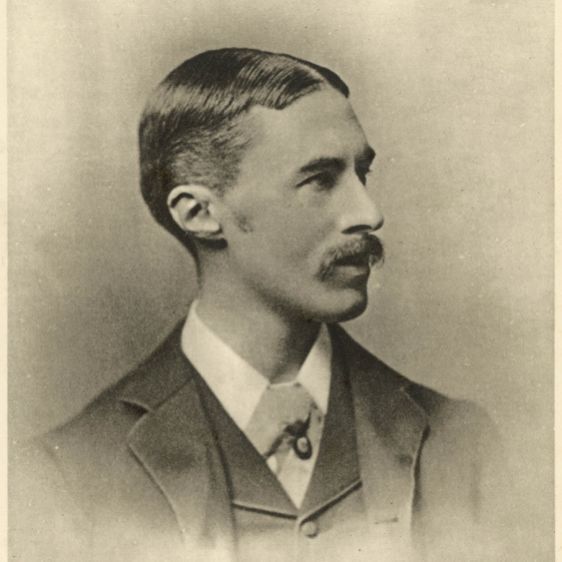
A. E. Housman

Note: If you wish to receive, via e-mail, (1) my weekly newsletter or (2) daily copies of these posts, write to me at rrbates1951@gmail.com. Comments may also be sent to this address. I promise not to share your e-mail with anyone. To unsubscribe, write here as well.

Thursday

Greg O’Lear, one of my favorite bloggers because of his wonderfully rambling essays about literature and politics, has posted another gem. The subject is a poem I loved as an adolescent, albeit one that I’ve never fully understood until now. Taking his cue from A.E. Housman’s “Terence, This Is Stupid Stuff,” Olear contends that the poet offers us important advice for surviving the Trump presidency.

Better yet, poetry is part of the answer.

The poem is a debate between a poet who writes depressing poems and one of his drinking mates. This mate wants something livelier that Terence’s usual fare. He begins by denigrating the poet’s melancholy poetry, seeing it at odds with the gusto with which he eats and drinks. The reference to the cow, Olear notes, is to a popular song from the time:

Terence, this is stupid stuff:
You eat your victuals fast enough;
There can’t be much amiss, ‘tis clear,
To see the rate you drink your beer.
But oh, good Lord, the verse you make,
It gives a chap the belly-ache.
The cow, the old cow, she is dead;
It sleeps well, the horned head:
We poor lads, ‘tis our turn now
To hear such tunes as killed the cow.

Perhaps this friend isn’t averse to all poetry, but he wants something more upbeat that the melancholy poetry that was characteristic of Housman, such as “To an Athlete Dying Young,” “Into my heart an air that kills,” and “Here dead we lie” :

Pretty friendship ‘tis to rhyme
Your friends to death before their time
Moping melancholy mad:
Come, pipe a tune to dance to, lad.’

Terence begins his counter argument by conceding that, yes, there are indeed more uplifting things than depressing poetry. Guinness, for instance:

Why, if ‘tis dancing you would be,
There’s brisker pipes than poetry.
Say, for what were hop-yards meant,
Or why was Burton built on Trent?
Oh many a peer of England brews
Livelier liquor than the Muse…

Then comes the most famous couplet from the poem:

And malt does more than Milton can
To justify God’s ways to man.

The reference, of course, is to the opening invocation of Paradise Lost, where Milton, blind and in jail following the collapse of the Commonwealth and restoration of the the monarchy—is trying to figure out God’s plan in all this. Imagining the Holy Spirit as his epic muse, Milton says that he writes his poem to restore his faith in “Eternal Providence,” which he has begun to doubt:

                                   What in me is dark
Illumine, what is low raise and support;
That to the height of this great Argument [the poem]
I may assert Eternal Providence,
And justify the ways of God to men.

Terence isn’t done acknowledging that beer has its virtues, but he begins to land some subtle jabs: beer works best with fellows “whom it hurts to think” and who would rather “see the world as the world’s not”:

Ale, man, ale’s the stuff to drink
For fellows whom it hurts to think:
Look into the pewter pot
To see the world as the world’s not.
And faith, ‘tis pleasant till ‘tis past:
The mischief is that ‘twill not last.
Oh I have been to Ludlow fair
And left my necktie God knows where,
And carried half way home, or near,
Pints and quarts of Ludlow beer:
Then the world seemed none so bad,
And I myself a sterling lad;
And down in lovely muck I’ve lain,
Happy till I woke again.

Now comes the counterargument, beginning with the inevitable hangover:

Then I saw the morning sky:
Heigho, the tale was all a lie;
The world, it was the old world yet,
I was I, my things were wet,
And nothing now remained to do
But begin the game anew.

Many use the internet, algorithmically programmed to confirm their fantasies, as Housman’s lads use beer. Because the tale that Trump tells is indeed “a lie,” sooner or later we wake up with wet clothes and a splitting headache. And while some do indeed “begin the game anew”—it’s how addiction works, after all—we all know where that leads.

Depressing poems provide a more substantive response to bad times. While Terence makes one last concession—”’Tis true, the stuff I bring for sale/ Is not so brisk a brew as ale”—he points out that he speaks from experience: the poetry “has been rung out in a weary land.” Although “the smack is sour,” all the better “for the embittered hour”:

Therefore, since the world has still
Much good, but much less good than ill,
And while the sun and moon endure
Luck’s a chance, but trouble’s sure,
I’d face it as a wise man would,
And train for ill and not for good.
‘Tis true, the stuff I bring for sale
Is not so brisk a brew as ale:
Out of a stem that scored the hand
I wrung it in a weary land.
But take it: if the smack is sour,
The better for the embittered hour;
It should do good to heart and head
When your soul is in my soul’s stead;
And I will friend you, if I may,
In the dark and cloudy day.

The poem ends with how to prepare for “the dark and cloudy day” that is sure to come. We should read poetry that alerts us to our condition because it can build up our immune systems. Terence’s example is King Mithridates, who rendered himself immune to poison by ingesting small amounts over time:

There was a king reigned in the East:
There, when kings will sit to feast,
They get their fill before they think
With poisoned meat and poisoned drink.
He gathered all the springs to birth
From the many-venomed earth;
First a little, thence to more,
He sampled all her killing store;
And easy, smiling, seasoned sound,
Sate the king when healths went round.
They put arsenic in his meat
And stared aghast to watch him eat;
They poured strychnine in his cup
And shook to see him drink it up:
They shook, they stared as white’s their shirt:
Them it was their poison hurt.

Terence ends his case with a climactic couplet:

I tell the tale that I heard told.
Mithridates, he died old.

From a poetic point of view, there are some problems here. First of all, do we really want to compare poetry to poison? Also, should we only read poetry in small amounts?

Obviously Terence—or at least Housman—is being humorous here, making what he knows to be an outlandish case for poetry. There’s real wisdom here as well, however. In the many ways I’ve explored over the years, literature provides us a powerful means for negotiating the slings and arrows of outrageous fortune, from the death of loved ones to shattering world events. It certainly provides deeper comfort and deeper understanding than a pint.

Back to Olear since he’s using Housman’s poem to provide ways, not just poetry, to handle Trumpism’s daily assaults. Terence offers us two important reminders. First, we can’t live in ignorance, eating, drinking, and being merry while Trumpism is wreaking havoc, because we’ll all end up in the muck. At the same time, however, we must get through these times “emotionally intact.” And to do that, we must find ways to “inure ourselves to bitterness, injustice, heartache, and woe—to steel ourselves to those inevitable negative outcomes.”

You can see where the Mithridates solution comes in. Because the newsfeed “is so toxic that we risk succumbing to its fascist poison,” we must, like the Persian king, “take it all in small doses.”

The goal, for us and for our democracy, is to die old. In order to keep fighting the good fight, limit the amount of time you spend tracking the latest outrages.

Also, keep reading poetry.  

Posted in Uncategorized | Tagged , , , , | Comments closed

Finn, the Woke King in Beowulf

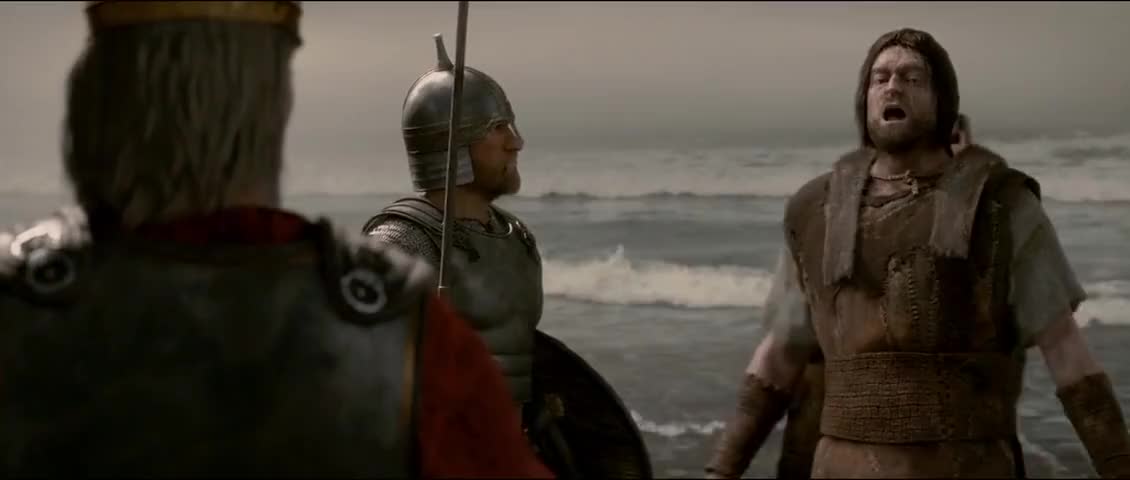
King Finn of Frisia

Note: If you wish to receive, via e-mail, (1) my weekly newsletter or (2) daily copies of these posts, write to me at rrbates1951@gmail.com. Comments may also be sent to this address. I promise not to share your e-mail with anyone. To unsubscribe, write here as well.

Wednesday

I’ve been teaching Beowulf as part of our church’s reading program and was struck, as I reread it, by the applicability of the Finn saga to America’s battles over “wokeism.” The woke character is Frisian king Finn in one of the stories within Beowulf that audiences would have known from elsewhere. It’s an episode that, in the past, I have applied to battles between Israelis and Palestinians, but unfortunately it fits our own internecine quarrels only too well.

The story is a little confusing to modern readers because it has gaps that the original audience could have filled in. Princess Hildeburh of the Danes has been married to the Frisian king in a diplomatic effort to patch up old quarrels. Unfortunately, these quarrels break out again when Hildeburh’s brother is visiting Finn, perhaps as part of continuing diplomatic efforts. Somehow some of the warriors in Finn’s court start taunting the Danes–or something along these lines–and a fight breaks out. In the end, both Hildeburh’s Danish brother on one side and her Frisian son on the other are killed.

Finn, who never wanted the fight in the first place—his desire for peace is the reason he married Hildeburh in the first place—now has a new problem on his hands. Neither side has prevailed and so, while a truce has been declared, he has on his hands angry Frisians and angry Danes. Furthermore, because it’s winter, the Danes can’t sail home, which means they all have to find a way to coexist peacefully. In other words, he’s ruling over fractious factions who, at the least provocation, are prepared to renew fighting. Is this beginning to sound familiar?

Finn’s solution is to go woke. Everyone will receive the same number of gold-wrought rings and no provocation, either by word (taunts or insults) or deed (punches thrown) will be permitted:

So a truce was offered
                                     as follows: first
separate quarters
                              to be cleared for the Danes,
hall and throne
                          to be shared with the Frisians.
Then, second:
                       every day
at the dole-out of gifts
                                      Finn, son of Focwald,
should honor the Danes,
                                          bestow with an even
hand to Hengest
                             and Hengest’s men
the wrought-gold rings
                                      bounty to match
the measure he gave
                                   his own Frisians—
to keep morale
                          in the beer-hall high.
Both sides then
                          the Danish
sealed their agreement
                                       with Oaths to Hengest       t
Finn swore
                  openly, solemnly,
that the battle survivors
                                         would be guaranteed
honor and status.
                              No infringement
by word or deed,
                             no provocation
would be permitted.

To back this up, Finn promises to execute his own warriors if they are at fault:

So if any Frisian
                           stirred up bad blood
with insinuations
                             or taunts about this,
the blade of the sword
                                       would arbitrate it.

As I noted in my previous post, the stranded Danish warriors are spread through Friesland in a situation not unlike Jewish settlements on the West bank. And both Israelis and Palestinians, the Danes are harboring grievances:

Warriors scattered
                               to homes and forts
all over Friesland
                               fewer now, feeling
loss of friends.

Meanwhile, Hengest, who has taken command of the Danes after the death of Hildebuhr’s brother, must live in Finn’s hall. He too broods:

Hengest stayed,
lived out that
                       resentful, blood-sullen
winter with Finn,
                             homesick and helpless.

We are told that he longs for vengeance and “to bring things to a head.” All it takes is for one of his men to drop a sword in his lap and for a couple of others to remind him of old grievances:

    So he did not balk
once Hunlafing
                         placed on his lap
Dazzle-the-Duel,
                           the best sword of all,
whose edges Jutes
                               knew only too well

And:

after Guthlaf and Oslaf
back from their voyage
                                        made old accusation:
the brutal ambush,
                                 the fate they had suffered,
all blamed on Finn.

It doesn’t take much for old rivalries to blaze into a conflagration, and that’s what happens:

                              The wildness in them
had to brim over.
                             The hall ran red
with blood of enemies.
                                       Finn was cut down,
the queen brought away
                                         and everything
the Shieldings could find
                                          inside Finn’s walls —
the Frisian king’s
                              gold collars and gemstones —
swept off to the ship.

This, to be sure, is Danish wish fulfillment, a fantasy of totally annihilating your enemy. The real lesson here, however, is that a diplomatic marriage has failed to work, which means that violence will continue on unabated. The Frisians may be down but they’re not out, and the Danes can expect reprisals.

Later on in the poem, Beowulf notes the tenuousness of diplomatic marriage, observing,

But generally the spear
is prompt to retaliate when a prince is killed,
no matter how admirable the bride may be.

He goes on to describe a scenario very much like the one Finn is banning hate speech to avoid: formerly warring parties, supposedly brought together by such an alliance, will be unable to forget past animosities. As I read the following passage, I think of bar talk where, say, racial grievances—whether real or imagined—inflame imaginations. (Perhaps a person of color has landed a job a white speaker thought was rightfully his.) Today, people reach for keyboards—or occasionally guns—rather than swords, but the effect is to keep the wounds ever fresh:

Then an old spearman will speak while they are drinking,
having glimpsed some heirloom that brings alive
memories of the massacre; his mood will darken
and heart-stricken, in the stress of his emotion,
he will begin to test a young man’s temper
and stir up trouble, starting like this:
“Now, my friend, don’t you recognize
your father’s sword, his favorite weapon,
the one he wore when he went out in his war-mask
to face the Danes on that final day?
After Withergeld died and his men were doomed,
the Shieldings quickly claimed the field;
and now here’s a son of one or other
of those same killers coming through our hall
overbearing us, mouthing boasts,
and rigged in armor that by right is yours.”
And so he keeps on, recalling and accusing,
working things up with bitter words
until one of the lady’s retainers lies
spattered in blood, split open
on his father’s account. 

So what would Beowulf do? At the very least, he provides his warrior society with a different model: he does not hold grudges, he shares what he gains freely, and he follows orderly procedure, awaiting his turn to be king rather than jumping the line. As the poet reports,

Thus Beowulf bore himself with valor;
he was formidable in battle yet behaved with honor
and took no advantage; never cut down
a comrade who was drunk, kept his temper
and, warrior that he was, watched and controlled
his God-sent strength and his outstanding
natural powers.

Once upon a time, Americans valued such qualities in a leader, although we might substitute “never cut down a comrade who was drunk” with “never used his office to unfairly enrich himself” or “never handed out corrupt pardons.”

The question is whether we will live into a modern version of the Beowulf model or whether we will suffer the fate of a Finn, who is unable to prevent the Danish-Frisian feud from killing everyone–brother, son, husband–that Hildeburgh loves. No one wins in the latter scenario.

Posted in Uncategorized | Tagged , , , | Comments closed

No Kings Day, Callooh, Callay!

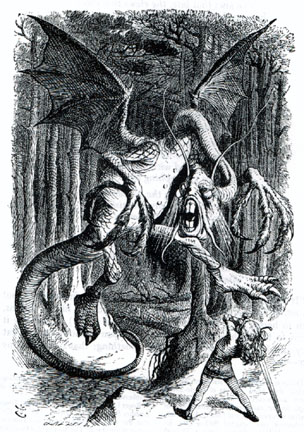
John Tenniel, the Jabberwock from Alice through the Looking Glass

Note: If you wish to receive, via e-mail, (1) my weekly newsletter or (2) daily copies of these posts, write to me at rrbates1951@gmail.com. Comments may also be sent to this address. I promise not to share your e-mail with anyone. To unsubscribe, write here as well.

Tuesday

Where does one find a word to describe one’s joy at over seven million Americans turning out for Sunday’s No Kings marches? (The seven million included 225 that gathered here in ruby red Winchester, Tennessee.) William Kristol, editor of the conservative Never-Trump Bulwark, turned to a nonsense classic for a work that would capture his elation: frabjous.

Revealing that he didn’t initially think he would be moved by the protests, he was caught off balance by them. As he found himself surrounded by prancing inflatable characters, witty signs, and honking horns, he thought of Lewis Carroll’s “Jabberwocky.”

The poem, which is stuffed full of nonsense words—more on these in a moment—describes a heroic quest in which a youth goes in search of the fearsome Jabberwock, which features eyes that flame, “jaws that bite,” and “claws that catch.” Fortunately he is carrying a “vorpal blade,” which he uses to good effect. Here’s the poem:

’Twas brillig, and the slithy toves
      Did gyre and gimble in the wabe:
All mimsy were the borogoves,
      And the mome raths outgrabe.

“Beware the Jabberwock, my son!
      The jaws that bite, the claws that catch!
Beware the Jubjub bird, and shun
      The frumious Bandersnatch!”

He took his vorpal sword in hand;
      Long time the manxome foe he sought—
So rested he by the Tumtum tree
      And stood awhile in thought.

And, as in uffish thought he stood,
      The Jabberwock, with eyes of flame,
Came whiffling through the tulgey wood,
      And burbled as it came!

One, two! One, two! And through and through
      The vorpal blade went snicker-snack!
He left it dead, and with its head
      He went galumphing back.

“And hast thou slain the Jabberwock?
      Come to my arms, my beamish boy!
O frabjous day! Callooh! Callay!”
      He chortled in his joy.

’Twas brillig, and the slithy toves
      Did gyre and gimble in the wabe:
All mimsy were the borogoves,
      And the mome raths outgrabe.

Alice comes across the poem in Looking Glass World but it takes Humpty Dumpty to explain the language. Many of the nonsense words, he says, are like a portmanteau, where “there are two meanings packed up into one word.” Unpacking “frabjous,” Kristol says that it’s a combination of “fabulous” and “joyous.” (Maybe “ferocious” can fit in that portmanteau as well.) The mood  in Maclean and around the country, he reports, “was certainly joyous. And it was fabulous that some seven million people assembled peacefully and patriotically to protest Donald Trump and reaffirm their allegiance to the American idea.”

“On Saturday,” he continues,

the American people assembled lawfully on behalf of the rule of law. On Saturday, the American people demonstrated their commitment to keeping this a free country. Mike Johnson and all his fellow pro-Kings propagandists hoped for violence, extremism, and evidence of hate for America. But instead they saw peace, patriotism, and loyalty to America.

It was a frabjous day.

For all of Saturday’s optimism, Kristol acknowledges that “there’s a long struggle ahead against the sustained attack on our freedom by those in charge.” The quest to defeat our jabberwock requires courage and determination. And venturing into the tulgey wood.

The first step, however, involves overcoming fatalism and lassitude. Saturday’s march helped with that. So far, anti-dictator marches have drawn three million, then five million, now over seven million. As MSNBC’s Rachel Maddow observed last night, at this rate we may reach the 12 million mark, which would be 3.5 % of the population. According to Erica Chenoweth of Harvard’s Kennedy School, who studies social movements, “Nonviolent protests are twice as likely to succeed as armed conflicts – and those engaging a threshold of 3.5% of the population have never failed to bring about change.”

Callooh! Callay!

Posted in Uncategorized | Tagged , , , | Comments closed

My Granddaughter and a Banned Book


Note: If you wish to receive, via e-mail, (1) my weekly newsletter or (2) daily copies of these posts, write to me at rrbates1951@gmail.com. Comments may also be sent to this address. I promise not to share your e-mail with anyone. To unsubscribe, write here as well.

Monday

Okay, schools banning books has just become personal for me. Not on account of a book that has been banned but on a book that could have been banned had my nine-year-old granddaughter Eve (not her real name) resided in a different school district. Here’s the story.

My four grandchildren are biracial, with a Trinidadian American mother. They live in Buford, Georgia, and while Gwinnett County was once Newt Gingrich’s congressional district, it is now wonderfully multicultural and regularly votes blue. Therefore it’s no surprise that the school library would carry Sharon Draper’s Blended, about a mixed-race 11-year-old dealing with various family and social issues.

My own biracial granddaughter is a precocious fourth grader who loves reading, math, tennis, and piano playing. I’m not surprised that she would be drawn to Blended when she saw it in the library because the girl on the cover sports an Afro puff, which Eve often does as well. When we video chat with our grandchildren on Sundays, we always ask them what they’re reading, which is how we learned about Eve’s excitement about Draper’s novel.

Goodreads describes Blended as follows:

“You’re so exotic!” “You look so unusual.” “But what are you really?”

Eleven-year-old Isabella is used to these kinds of comments – her father is black, her mother is white – but that doesn’t mean she likes them. And now that her parents are divorced (and getting along WORSE than ever), Isabella feels more like a push-me-pull-me toy. One week she’s Isabella with her dad, his girlfriend Anastasia, and her son Darren living in a fancy house where they are one of the only black families in the neighborhood. The next week she’s Izzy with her mom and her boyfriend John-Mark in a small, not-so-fancy house that she loves.

The description notes that the novel grapples with identity issues. “If you’re only seen as half of this and half of that,” it asks, “how can you ever feel whole?”

Eve was stimulated by Blended because she felt seen. I don’t know if she’s ever been asked, “But what are you really?”, although I know one of her older sisters was once informed (this by an African American kid who lives next door) that she wasn’t really Black. In any event, Eve, like her two older sisters, is very thoughtful, and the plot gave her a framework for thinking about her own life. The issues raised by the novel seemed familiar.

This goes also for police violence, which Eve has heard about. (The family marched around the neighborhood declaring “Black Lives Matter!” after the murder of George Floyd.) Protagonist Isabella is winged by a police bullet at one point, which momentarily brings the estranged parents together. Eve was riveted.

Had Eve, however, been attending school in Hamilton County, Tennessee; Indian River County or Clay County, Florida; Goddard County, Kansas; Eanes County or Clear Creek County, Texas; Cumberland County, North Carolina; or  Elkhorn Area School District, Wisconsin, she would not have come across the book. And while her parents are both professors, they wouldn’t necessarily have known about it. Thanks to a school library, she picked it up and read it.

In a library challenge to the book brought by a Wrightsboro, North Carolina parent, we get some sense of objections.  As reported by WHQR,

They wrote that this is “intentionally creating highly controversial topics and embedding them into the life events of a small child,” adding that the content is too mature and that while the book is written for children ages 8-12, “authors write and sell books, our job is to look out for kids.”

To its credit, the Wrightboro Public Library overrode the parental challenge, declaring that Blended has “an engaging storyline for young readers, relatable issues, covers issues our students experience such as the impact of divorce, racism, blended families, and positive role model characters who demonstrate resilience and empathy (something our students can benefit from).”

Given our conversation with nine-year-old Eve, I can testify that the librarians know what they are talking about.

In the recent Friends of the Library event we had at Sewanee on book banning, author Christina Soontornvat and librarian Keri Lambert repeatedly pointed out that libraries are not against parents supervising what their own children read; the parents just shouldn’t be able to deny books to other people’s children. In the question-and-answer period that followed, one young person talked about how John Green’s much banned Looking for Alaska “saved my life.” Another said the same about Green’s The Fault in Our Stars.

In other words, certain parents are against other people’s children having their lives saved.

While Blended hasn’t saved Eve’s life, it has spurred her to question and explore the world around her, along with her own developing self. What more can you hope for from a book?

Posted in Uncategorized | Tagged , , , , , | Comments closed

  • Sign up for my weekly newsletter