Note: If you wish to receive, via e-mail, (1) my weekly newsletter or (2) daily copies of these posts, write to me at rrbates1951@gmail.com. I’ll subscribe you via Mailchimp for the weekly or email you directly for the daily (your choice). Comments may also be sent to this address. I promise not to share your e-mail with anyone.
Sunday
In today’s Gospel lesson Jesus, knowing that those who love him will soon be bereft, gives them vital instruction. After delivering a discouraging message–“Where I am going, you cannot come”–he follows up with “a new commandment” intended to help them through the hard times–“that you love one another. Just as I have loved you, you also should love one another. By this everyone will know that you are my disciples, if you have love for one another.”
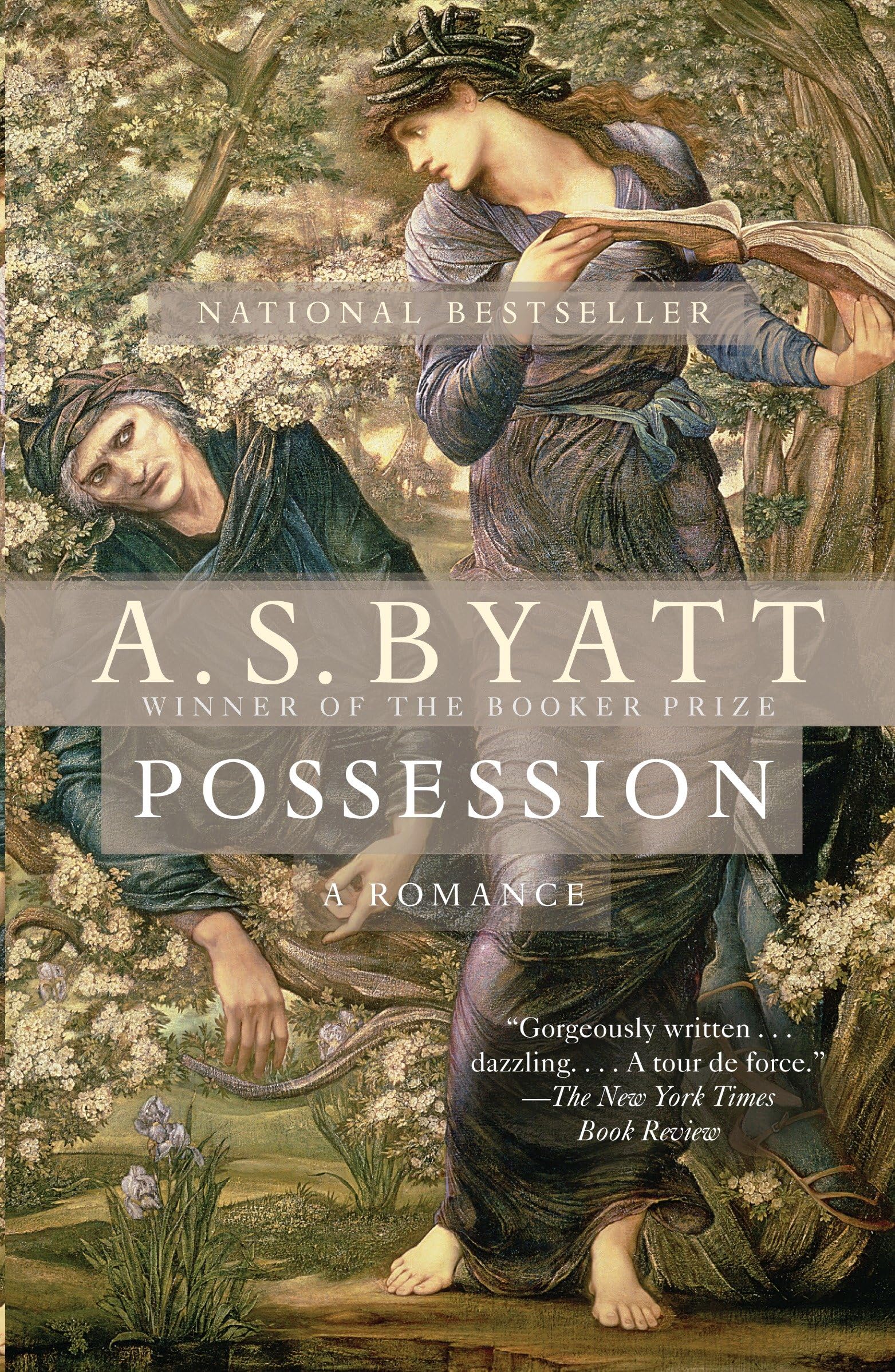
Because my mind has been on the Pre-Raphaelite poets recently–I’ve been rereading A.S. Byatt’s Possession for the first time in 40 years—the ending of Christina Rossetti’s Goblin Market comes to mind when I read Jesus’s words. Lizzy has heroically come to her sister’s rescue, sacrificing herself in a Christ-like manner to save Laura from goblin addiction and emptiness. The poem’s epilogue informs us that, years later, Laura recalls this great love for their children. The passage melts my heart every time I read it:
Days, weeks, months, years Afterwards, when both were wives With children of their own; Their mother-hearts beset with fears, Their lives bound up in tender lives; Laura would call the little ones And tell them of her early prime, Those pleasant days long gone Of not-returning time: Would talk about the haunted glen, The wicked, quaint fruit-merchant men, Their fruits like honey to the throat But poison in the blood; (Men sell not such in any town): Would tell them how her sister stood In deadly peril to do her good, And win the fiery antidote: Then joining hands to little hands Would bid them cling together, “For there is no friend like a sister In calm or stormy weather; To cheer one on the tedious way, To fetch one if one goes astray, To lift one if one totters down, To strengthen whilst one stands.”
Or as John puts it (15:13), “Greater love has no one than this: to lay down one’s life for one’s friends.”
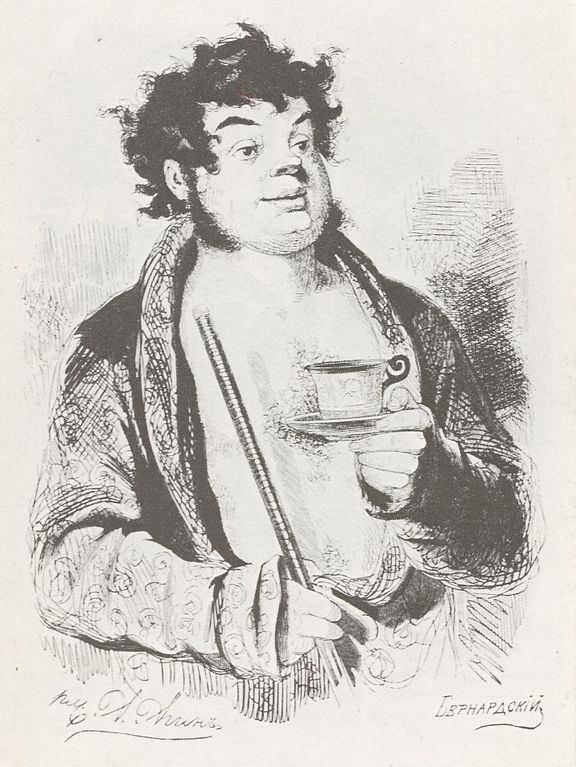
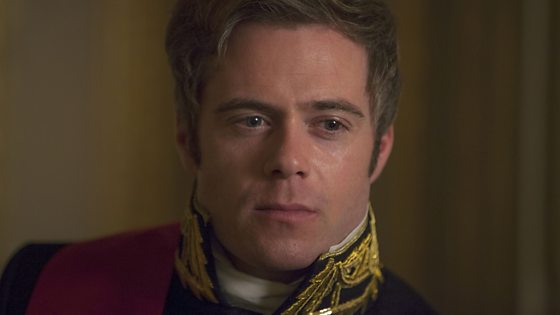
Nozdrev, the flamboyant conman in Gogol’s Dead Souls
Note: If you wish to receive, via e-mail, (1) my weekly newsletter or (2) daily copies of these posts, write to me at rrbates1951@gmail.com. I’ll subscribe you via Mailchimp for the weekly or email you directly for the daily (your choice). Comments may also be sent to this address. I promise not to share your e-mail with anyone.
Friday
Watching Donald Trump “negotiate” a tariff trade deal with China brings to mind my favorite character in Nikolai Gogol’s Dead Souls. I first compared Trump to Nozdrev in 2017 and then again in 2023, although the comparison evolved so that I came to see Trump less as a Nozdrev and more as a Chichikov, another Gogol conman but one far more noxious. Or rather, I saw Trump evolving from a Nozdrev to a Chichikov.
Like Trump, Chichikov eventually wrangles a government position that gives him opportunities for endless grift. The comparison ends there, however, as Trump has risen to a position beyond Chichikov’s wildest imaginings, one from where he is doing incalculable damage.
In my earlier post, when Trump was bilking real estate clients but operating at a fairly modest level, I cited a judge who had found Trump guilty of fraud. The judge observed,
In defendants’ world: rent regulated apartments are worth the same as unregulated apartments; restricted land is worth the same as unrestricted land; restrictions can evaporate into thin air; a disclaimer by one party casting responsibility on another party exonerates the other party’s lies. That is a fantasy world, not the real world.
The stakes are now higher but the craziness continues on. In his dealings with China, Trump at one point threatened 74% tariffs, then raised the figure to 145%, then reduced it to 80%, and now has brought it down to 30%, all without the Xi government doing much of anything. A CNN article noted that all of this have given the impression “that Trump was negotiating with himself,” while Georgetown political scientist Abraham Newman describes the situation as an “omnishambles” in which America “has just blinked.” For China, Newman writes,
the negotiations have revealed the weakness of America’s threats. Given that the U.S. was unable to maintain higher tariffs for more than a month, how credible is the proposed snap-back? In many ways, the bargaining dynamics mirror those between the U.S. government and bond markets a month ago. Repeatedly escalating to extremes and then backing down only further reveal U.S. pressure points. The initial round of negotiations thus has undermined much of the leverage that we have for future rounds.
Here an excerpt from my earlier post, revised to cover recent developments:
Gogol’s novel owes its name to a con played by one Chichikov, who is seeking to buy “dead souls”—which is to say, serfs who have died but who are still on the landowner’s tax rolls. Once he has acquired enough dead souls, he will take out a loan against them and pocket the money. While Chichikov is thoroughly unlikable, the same cannot be said of another conman, Nozdrev, who is so transparent (unlike Chichikov) that one can only gape in wonder. When I wrote my posts on Chichikov and Nozdrev back in 2017, I was trying to figure out which kind of con man Trump was, the vicious Chichikov or the relatively harmless Nozdrev. At the time, I associated Trump with the latter.
That’s because Nosdrev is mercurial and “a lover of fast living.” At one moment he seems to be your friend, at the next he is quarreling with you. Overall, he is “loquacious, dissipated, high-spirited, over-showy.”
Like Trump, Nosdrev must be constantly in the public eye, and, like Trump, he thrives on conflict. Chaos appears to energize him:
Never at any time could he remain at home for more than a single day, for his keen scent could range over scores and scores of verses, and detect any fair which promised balls and crowds. Consequently in a trice he would be there—quarreling, and creating disturbances over the gaming-table…
Nozdrez, it turns out, has the same regard for the truth that Trump has:
Moreover, the man lied without reason. For instance, he would begin telling a story to the effect that he possessed a blue-coated or a red-coated horse; until, in the end, his listeners would be forced to leave him with the remark, “You are giving us some fine stuff, old fellow!”
Had social media existed in Nozdrev’s time, one could imagine him wielding it as effectively as Trump:
Also, men like Nozdrev have a passion for insulting their neighbors without the least excuse afforded…The more he became friendly with a man, the sooner would he insult him, and be ready to spread calumnies as to his reputation. Yet all the while he would consider himself the insulted one’s friend, and, should he meet him again, would greet him in the most amicable style possible, and say, “You rascal, why have you given up coming to see me.” Thus, taken all round, Nozdrev was a person of many aspects and numerous potentialities.
Also like Trump, Nozdrev promotes everything he’s connected with, refusing to let facts stand in his way. Here’s only one instance from the many where he makes extravagant claims while refusing to yield to rational assessment:
The tour began with a view of the stables, where the party saw two mares (the one a grey, and the other a roan) and a colt; which latter animal, though far from showy, Nozdrev declared to have cost him ten thousand rubles. “You NEVER paid ten thousand rubles for the brute!” exclaimed the brother-in-law. “He isn’t worth even a thousand.” “By God, I DID pay ten thousand!” asserted Nozdrev. “You can swear that as much as you like,” retorted the other. “Will you bet that I did not?” asked Nozdrev, but the brother-in-law declined the offer.
Nozdrev trying to make deals is like Trump selling “Trump steaks” that have someone else’s sticker on them. Both men are so transparently fraudulent that sometimes you just want to sit back and enjoy the show, as the media did with Trump in 2016. Here is Nozdrev trying to sell some worthless dogs and then a worthless barrel organ to Chichikov:
“Then buy a few dogs,” said Nozdrev. “I can sell you a couple of hides a-quiver, ears well pricked, coats like quills, ribs barrel-shaped, and paws so tucked up as scarcely to graze the ground when they run.” “Of what use would those dogs be to me? I am not a sportsman.” “But I WANT you to have the dogs. Listen. If you won’t have the dogs, then buy my barrel-organ. ‘Tis a splendid instrument. As a man of honour I can tell you that, when new, it cost me fifteen hundred rubles. Well, you shall have it for nine hundred.” “Come, come! What should I want with a barrel-organ? I am not a German, to go hauling it about the roads and begging for coppers.” “But this is quite a different kind of organ from the one which Germans take about with them. You see, it is a REAL organ. Look at it for yourself. It is made of the best wood. I will take you to have another view of it.” And seizing Chichikov by the hand, Nozdrev drew him towards the other room, where, in spite of the fact that Chichikov, with his feet planted firmly on the floor, assured his host, again and again, that he knew exactly what the organ was like, he was forced once more to hear how Marlborough went to the war. “Then, since you don’t care to give me any money for it,” persisted Nozdrev, “listen to the following proposal. I will give you the barrel-organ and all the dead souls which I possess, and in return you shall give me your britchka, and another three hundred rubles into the bargain.”
For Nozdrev, deal making is a form of play. He is a bad dealmaker, as apparently Trump is as well, but one can’t help but admire his enthusiasm.
Chichikov, by contrast, is cold-blooded and calculating. When he figures that one can make a fortune by working in customs, he first figures out the lay of the land before cashing in. As I read Gogol’s account, I imagine Trump regretting, after his defeat in 2020, that he didn’t take more advantage of his money-making opportunities. He has been using his second term to to make up for that, figuring out new ways to accept bribes.
Chichikov, it should be noted, is more subtle: he first establishes himself as an exemplary employee before moving on to corruption. Trump, by contrast, is like Nozdrev in that he doesn’t even try to hide his grift:
But now he decided that, come what might, into the Customs he must make his way. And that way he made, and then applied himself to his new duties with a zeal born of the fact that he realized that fortune had specially marked him out for a Customs officer. Indeed, such activity, perspicuity, and ubiquity as his had never been seen or thought of.
Having established his credibility, Chichikov then makes the job pay off in a big way:
It happened that previously there had been formed a well-found association for smuggling on regular, carefully prepared lines, and that this daring scheme seemed to promise profit to the extent of some millions of money: yet, though he had long had knowledge of it, Chichikov had said to the association’s emissaries, when sent to buy him over, “The time is not yet.” But now that he had got all the reins into his hands, he sent word of the fact to the gang, and with it the remark, “The time is NOW.” Nor was he wrong in his calculations, for, within the space of a year, he had acquired what he could not have made during twenty years of non-fraudulent service.
For Trump, the time was NOW from the moment he was reelected, when billionaires paid huge amounts to finance his inauguration.
In the novel, Chichikov grows rich whereas Nozdrev bankrupts himself–just as Trump would be bankrupt were it not for a wealthy father, Russian gangsters and Arab sheiks looking for ways to launder money, and now anyone with money seeking favors (including Qatar, with its gift of a $250,000,000 jet.)
When I wrote about Gogol’s two conmen in 2017, I reflected that it made sense why rightwing voters would go for the flamboyant liar over the Chichikov-like politicians that he ran against. If many of Trump supporters despised the Paul Ryans and the Mitch McConnells almost as much as they did the Hillary Clintons, it’s because, like Chichikov, they carefully take the measure of every person in the system, add up their strengths and weaknesses, and act accordingly. If such types are assuring you that you will keep your healthcare in the very act of taking it away, I noted, why not just vote in Trump to blow everything up?
And because I didn’t know what to expect from Trump’s first presidency, I asked myself, who would I rather have running things: a blowhard that everyone knows to be a blowhard or a secretive conman who says all the right things but, as a result, is able to fleece us all the more effectively? At least when you get taken in by a Nozdrev or a Trump, I rationalized, we can’t say we weren’t warned.
What I failed to factor in is how a Nozdrev with presidential power would behave. What we have seen is Trump evolving into something far more insidious than Gogol’s light-hearted bungler. Not that Trump was ever as harmless as Nozdrev, as his assault victims will testify, but his second presidency is leading to a level of grift never before witnessed in the presidency, not to mention mass injustice and mass death.
People once laughed at Trump as they laugh at Nozdrev. They’re not laughing now.
Note: If you wish to receive, via e-mail, (1) my weekly newsletter or (2) daily copies of these posts, write to me at rrbates1951@gmail.com. I’ll subscribe you via Mailchimp for the weekly or email you directly for the daily (your choice). Comments may also be sent to this address. I promise not to share your e-mail with anyone.
Thursday
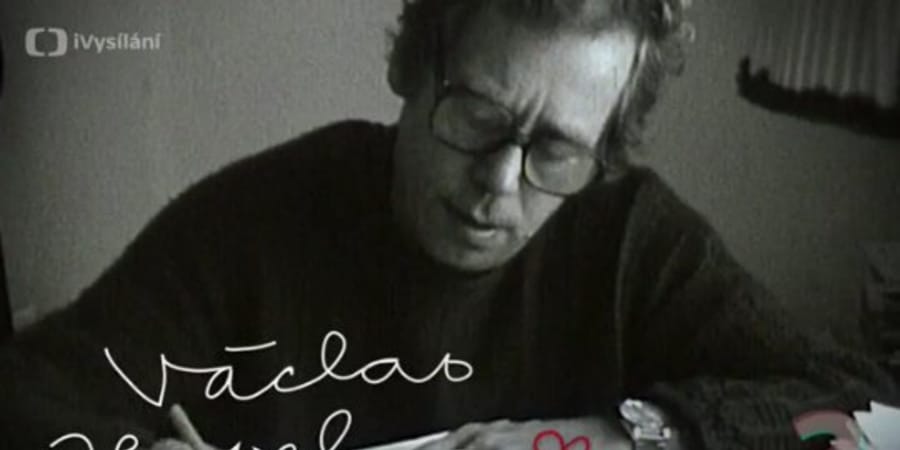
Former diplomat and Tolstoy enthusiast Fletcher Burton has just alerted me to the death of his State Department associate William H. Luers. As ambassador to Czechoslovakia in the early 1980s, Luers was instrumental in America’s support for playwright, dissident, and eventual president Václav Havel. According to Burton, Luers had the brilliant insight to recognize the historical significance of Havel as a writer-statesman.
Like many dissident writers in the Iron Curtain countries, Havel specialized in Theater of the Absurd, which captured the craziness and darkness of life under Soviet rule. I’ve noted recently that the Czech author Franz Kafka—the patron saint of absurdism—captures the way that Trump’s thugs have been disappearing people off the streets, and Havel very much followed in his countryman’s tradition. Absurdist theater is a particularly effective means of expressing dissent because it is allegorical: although it doesn’t directly point at the authoritarian regime (which can lead to prison), audience members learn to read its hidden messages.
Absurdism is also a way of laughing to keep from crying. As Havel said at one point ,
The only thing I can recommend at this stage is a sense of humor, an ability to see things in their ridiculous and absurd dimensions, to laugh at others and at ourselves, a sense of irony regarding everything that calls out for parody in this world. In other words, I can only recommend perspective and distance.
To be sure, not directly mentioning the repressive government didn’t aways protect dissident authors, and Havel himself spent some four years in prison.
Burton notes that Luers had the savvy to enroll many of America’s leading writers in support of Havel, thereby helping form a protective screen around him and ultimately playing a small role in the relatively smooth and bloodless Velvet Revolution of 1989. These authors included John Updike, Edward Albee, E.L. Doctorow, Kurt Vonnegut, Allen Ginsberg, and Philip Roth. Although petitions from authors have a mixed history when it comes to impacting history, in this case authors contributed to Havel’s stature, which in turn made him more politically effective.
We really could use a Havel today in America. Among his pronouncements were the following:
— I feel that the dormant goodwill in people needs to be stirred. People need to hear that it makes sense to behave decently or to help others, to place common interests above their own, to respect the elementary rules of human coexistence.
–You do not become a ”dissident” just because you decide one day to take up this most unusual career. You are thrown into it by your personal sense of responsibility, combined with a complex set of external circumstances. You are cast out of the existing structures and placed in a position of conflict with them. It begins as an attempt to do your work well and ends with being branded an enemy of society.
–Ideology is a specious way of relating to the world. It offers human beings the illusion of an identity, of dignity, and of morality while making it easier for them to part with them.
–Even a purely moral act that has no hope of any immediate and visible political effect can gradually and indirectly, over time, gain in political significance.
–If the main pillar of the system is living a lie, then it is not surprising that the fundamental threat to it is living the truth. This is why it must be suppressed more severely than anything else.
–Vision is not enough, it must be combined with venture. It is not enough to stare up the steps, we must step up the stairs.
There’s also his pronouncement about hope:
The kind of hope I often think about (especially in situations that are particularly hopeless, such as prison) I understand above all as a state of mind, not a state of the world. Either we have hope within us or we don’t; it’s a dimension of the soul; it’s not essentially dependent on some particular observation of the world or estimate of the situation. Hope is not prognostication. It is an orientation of the spirit, an orientation of the heart; it transcends the world that is immediately experienced, and is anchored somewhere beyond its horizons. Hope, in this deep and powerful sense, is not the same as joy that things are going well, or willingness to invest in enterprises that are obviously headed for early success, but, rather, an ability to work for something because it is good, not just because it stands a chance to succeed..
Burton told me that he had a chance to meet Luers this past February. Here’s his account of what happened:
I greeted him, “Good morning, Ambassador. You are a diplomatic legend.” This put a smile on his face.
As we parted, I asked him to name the highlight of his career.
His one-word answer: “Havel!”
Once our State Department had figures such Huers and Burton. If, despite all its faults, America has accomplished much good in the world since 1945, it is largely because of the work of its diplomats. Now, as in so many other areas, Trump and his enablers are in the process of driving such people out.
Note: If you wish to receive, via e-mail, (1) my weekly newsletter or (2) daily copies of these posts, write to me at rrbates1951@gmail.com. I’ll subscribe you via Mailchimp for the weekly and email you directly for the daily. Comments may also be sent to this address. I promise not to share your e-mail with anyone.
Wednesday
Earlier this year the blog lithub.com conducted a poll of their readers to determine the evilest character in literature. I’m not sure that George Orwell’s Big Brother would have won a couple of years ago, but with Donald Trump on everyone’s mind, the public chose the dictator. Orwell’s only mistake in his 1948 novel may be that he should have set his dystopian future 77 years into the future, not 36.
It was a fun contest with an impressive list of semi-finalists, representing respectively “Authority Figures” (Orwell’s O’Brien), “Monsters and Bogeymen” (Sauron), Manipulative Bastards (Hannibal Lecter), and Anti-Villains (Milton’s Satan). To reach that stage, O’Brien had to win out over Margaret Atwood’s Commander (in Handmaid’s Tale), Sauron over Joseph Conrad’s Kurtz, Lecter over Iago (who in turn had knocked out Lady Macbeth), and Satan over Euripides’s Medea. While, of this foursome, I would have chosen Satan because of the way he overrides the good that is in him, Big Brother O’Brien is a worthy winner.
Of my personal favorites that didn’t make the list, Richard Lovelace from Samuel Richardson’s Clarissa and John Fowles’s kidnapper from The Collector would rank high—in large part because I initially felt sympathetic towards them and so felt betrayed and doubly enraged for how they took me in. One character I would have ranked higher, pushing him at least to the semifinals, is John Holden from Cormac McCarthy’s Blood Meridian. Again, betrayal factors in here: in retelling American history as a story of bloodlust and genocidal slaughter, the Judge poses a major challenge to a cherished illusion that Americans have of themselves.
Interestingly, had he bested Stephen King’s Pennywise (from IT), the Judge would have faced Kurtz, who exploded Europe’s own cherished illusion that it was a civilizing Christian force. “This too has been one of the dark places,” narrator Marlow says. Maybe Holden seems more horrible to me than Kurtz because I’m an American so he strikes closer to home.
Most monstrous are those in whom we see something of ourselves. Walt Kelly famously wrote, “We have met the enemy and he is us,” and Freud revealed that what we consider uncanny or spooky is the shameful identification we sense and then repress. (“The return of the repressed” is how Freud explained it—or as the sci-fi film Forbidden Planet puts it, “monsters from the id.”) Literarily, this psychodrama may be most clearly laid out in The Strange Case of Dr. Jekyll and Mr. Hyde, where the good doctor’s attempt to repress his hydden self—“the maniac in the cellar”–only makes it stronger.
In Literary Hub’s playoff, incidentally, Hyde is ousted by King’s Randall Flagg (from The Stand) in the first round. I can’t really argue with that one, with Flagg operating essentially as America’s id. He attracts all the bad pandemic survivors to Las Vegas, after all, whereas all the good Americans gravitate to hippy heaven Boulder, Colorado.
When I taught fantasy literature, I used to challenge my students to examine the monster that scared or bothered them the most. There’s some part of that monster that is part of you and that will teach you about yourself, I told them. For me, I would recount, the scariest villain of all time has been Jack Torrance in The Shining, played by Jack Nicholson in the film. The reason: I had an inner anger that frightened me but that I denied was there. While I was never in danger of grabbing an axe and going after my wife and three sons, this repressed anger was something I needed to acknowledge and deal with. Once I did (through family counseling), the character lost his power over me and domestic life became more tranquil.
If the Literary Hub readers are any indication, we need to come to terms with the figure in our lives who keeps telling us that 2+2=5. The key is to see Trump for the insecure con man that he is rather than regarding him as an all-powerful and all-seeing Big Brother. The better we understand him, the more we are likely to find effective ways of combating him.
Note: If you wish to receive, via e-mail, (1) my weekly newsletter or (2) daily copies of these posts, write to me at rrbates1951@gmail.com. Comments may also be sent to this address. I promise not to share your e-mail with anyone. To unsubscribe, write here as well.
Tuesday
Today’s post rambles a bit as I follow multiple leads but I think they all join up at the end. First, Julia and I visited Carlsbad Caverns yesterday, which I have longed to see ever since I first learned about them from a child’s viewfinder. It was one of seven transparencies attached to a cardboard wheel labeled “the seven natural wonders of the world.” The cave appeared magical when seen through that medium, and I can now testify that the actual caverns surpass even those childhood memories.
While I walked around in speechless wonderment, my mind wasn’t the least bit silent but raised a string of theological questions. God’s creation continually astounds, I thought as I looked up at the soaring ceilings, the intricate stalactites and stalagmites, the never-ending geological surprises at what millions of years can produce. No less astounding to me was how, in order to do justice to such wonders, humans have developed the ability to be wowed. As Fitzgerald puts it at the end of The Great Gatsby—this to describe the first white settlers upon viewing New York–
For a transitory enchanted moment, man must have held his breath in the presence of this continent, compelled into an aesthetic contemplation he neither understood nor desired, face to face for the last time in history with something commensurate to his capacity for wonder.”
“The problem with those Christian literalists who contend that the world is six to ten thousand years old,” I thought, “is that they attempt to whittle God down to their own size.” Stories like the Genesis creation and Noah stories—which as Tim O’Brien in The Things They Carried would say contain story truth but not happening truth—are reduced by fundamentalists so as to make them feel in control. Gazing around Carlsbad Caverns reminded me that not only is creation bigger than we imagine but bigger than we can imagine.
One reason I may have been thinking this way is because, as we drove the five hours down from Santa Fe, Julia and I listened to A.S. Byatt’s Possession, which captures (among other things) how geological discoveries by Charles Lyell about the age of the world clashed with various Christian accounts. To be sure, Lyell himself sought to reconcile Christianity and science, as did Alfred Lord Tennyson, and we see the two Victorian principals in the novel doing the same. We see science-oriented poet Randolph Henry Ash reading and recommending Lyell and spiritually-oriented poet Christabel LaMotte arguing for Christian truth, but neither is narrowly dogmatic in their approach. Instead, both find deep wisdom in both approaches to the world.
As I don’t have the book before me, I can’t quote from their conversations, but they are not unlike what Tennyson says In Memoriam. Attempting like Milton to justify the ways of God to man—which is to say, to make sense of the death of his best friend Hallam—Tennyson grapples with the findings of Lyell and other scientists. At one point, the impersonal forces of the natural world—which seem more impersonal than ever once one discovers fossils of species that have been wiped out—seem to bring God into doubt. “Are God and Nature then at strife,” the poet asks early in the poem:
So careful of the type?” but no. From scarped cliff and quarried stone She cries, “A thousand types are gone: I care for nothing, all shall go.
“Thou makest thine appeal to me: I bring to life, I bring to death: The spirit does but mean the breath…”
Are we deceiving ourselves with false illusions when we believe that love will conquer death? What if Nature gets the last say and spirit is no more than breath and we end up no more than desert dust? Hallam, after all, trusted in God and look where that got him:
Who trusted God was love indeed And love Creation’s final law— Tho’ Nature, red in tooth and claw With ravine, shriek’d against his creed—
Who loved, who suffer’d countless ills, Who battled for the True, the Just, Be blown about the desert dust, Or seal’d within the iron hills?
Towards the end of the poem, however, Tennyson has rediscovered his faith. It’s not that he rejects science, which provides discoveries about world, sun, eagle wings and insect eyes. Rather, he has moved to a new understanding. While at one point his belief was sorely tested and he was in danger of tumbling into “Godless deep.” now his heart has entered in, thawing frozen reason’s belief in science and defiantly declaring, “I have felt.”
I found Him not in world or sun, Or eagle’s wing, or insect’s eye; Nor thro’ the questions men may try, The petty cobwebs we have spun:
If e’er when faith had fall’n asleep, I heard a voice, “Believe no more,” And heard an ever-breaking shore That tumbled in the Godless deep,
A warmth within the breast would melt The freezing reason’s colder part, And like a man in wrath the heart Stood up and answer’d, “I have felt.”
No, like a child in doubt and fear: But that blind clamor made me wise; Then was I as a child that cries, But crying, knows his father near;
And what I am beheld again What is, and no man understands; And out of darkness came the hands That reach thro’ nature, moulding men.
Note how Tennyson doesn’t reject questioning: it is the very “clamor” of inner doubt that makes him wise. We may not understand why we suffer and we cannot help but question, but then something greater than nature reaches through nature to mold the heart that feels.
So where does this leave me with Carlsbad Caverns? Just that the way it took me out of and beyond myself left me in awe of whatever force or forces have shaped the world. And that part of my awe was at human awe.
The cliff dwellings at Mesa Verde and described by Willa Cather
Note: If you wish to receive, via e-mail, (1) my weekly newsletter or (2) daily copies of these posts, write to me at rrbates1951@gmail.com. Comments may also be sent to this address. I promise not to share your e-mail with anyone. To unsubscribe, write here as well.
Monday
Julia and I are currently vacationing in New Mexico, in part because of a novel I read many years ago. Willa Cather describes ancient Pueblo cliff dwellings in The Professor’s House, and her description so captivated me that I resolved that one day we would go out to visit them. And now we have.
To be sure, Cather is describing Blue Mesa in Mesa Verde National Park whereas we visited two smaller sites, Puye and Bandolier. We fell in love with Puye for its intimacy and for our guide, Emeric Padilla, a member of the Santa Clara tribe. As such, he is a descendant of the original inhabitants.
Humbler though the site may be, we were nevertheless awed as Cather’s character Tom Outland is awed when he discovers Blue Mesa:
In stopping to take breath, I happened to glance up at the canyon wall. I wish I could tell you what I saw there, just as I saw it, on that first morning, through a veil of lightly falling snow. Far up above me, a thousand feet or so, set in a great cavern in the face of the cliff, I saw a little city of stone, asleep. It was as still as sculpture–and something like that. It all hung together, seemed to have a kind of composition: pale little houses of stone nestling close to one another, perched on top of each other, with flat roofs, narrow windows, straight walls, and in the middle of the group, a round tower.
We had another experience similar to Outland’s, which is that, once one has seen one cluster of stone houses, one can’t help but see hundreds of others—or if not houses, at least the marks in the cliffs where the wooden house beams were once embedded. When we drove from Puye to Bandolier, it seemed that every other cliff face we scanned had the telltale marks. We were witnessing what had once been high density two- and three-story condominiums:
When I at last turned away, I saw still another canyon branching out of this one, and in its wall still another arch, with another group of buildings. The notion struck me like a rifle ball that this mesa had once been like a beehive; it was full of little cliff-hung villages, it had been the home of a powerful tribe, a particular civilization.
Outland notes that immense care was taken in construction, and our guide, who had once done stonework in Santa Fe, agreed, explaining how the load-bearing walls had to be carefully calibrated in order to support a second and sometimes third story. Here’s Outland again:
One thing we knew about these people; they hadn’t built their town in a hurry. Everything proved their patience and deliberation. The cedar joists had been felled with stone axes and rubbed smooth with sand. The little poles that lay across them and held up the clay floor of the chamber above, were smoothly polished. The door lintels were carefully fitted (the doors were stone slabs held in place by wooden bars fitted into hasps). The clay dressing that covered the stone walls was tinted, and some of the chambers were frescoed in geometrical patterns, one color laid on another. In one room was a painted border, little tents, like Indian tepees, in brilliant red.
The views, both from the village atop the mesa and from the homes that had been built into its side, were spectacular. Padilla pointed out that this was ideal from a protection point of view, pointing out that we could see for miles when we looked down. Outland notes,
But the really splendid thing about our city, the thing that made it delightful to work there, and must have made it delightful to live there, was the setting. The town hung like a bird’s nest in the cliff, looking off into the box canyon below, and beyond into the wide valley we called Cow Canyon, facing an ocean of clear air. A people who had the hardihood to build there, and who lived day after day looking down upon such grandeur, who came and went by those hazardous trails, must have been, as we often told each other, a fine people.
Padilla tolds us that the Pueblo probably lived in the village atop the mesa in the summer and in the cliff dwellings in the winter. The caves they dug out of the rock, he noted, would have provided extra warmth, and, as they faced west, they also benefited from the afternoon sun.
After marveling at the village, Outland then asks the big question: “But what had become of them? What catastrophe had overwhelmed them?”
Our guide speculates that drought forced his own Pueblo tribe off the mesa and closer to the Rio Grande below, which while more fertile also made the tribes more vulnerable to attacks from Navajo, Apache, and Comanche raiders and ultimately from the Spanish.
In Professor’s House, wonder is followed by betrayal. Outland goes to Washington to see if he can interest the Smithsonian in an archaeological expedition and, when he returns, he finds that his partner has sold off many of the relics to German tourists. When, defending himself, his partner “reminded me about how we used to talk of getting big money from the Government,” Outland explodes:
I admitted I’d hoped we’d be paid for our work, and maybe get a bonus of some kind, for our discovery. But I never thought of selling them, because they weren’t mine to sell–nor yours! They belonged to this country, to the State, and to all the people. They belonged to boys like you and me, that have no other ancestors to inherit from. You’ve gone and sold them to a country that’s got plenty of relics of its own. You’ve gone and sold your country’s secrets…”
In Puye’s case, that sense of ownership has finally been settled. Everything found there belongs to the Santa Clara Pueblo, who either preserve it or leave it lying around. Padilla, who is constantly finding arrowheads, axe fragments, pottery shards, ornament fragments, and other items, has little piles scattered around the ruins, some of which he covers with a rock and others which he simply sets out for all to see. One rich source of artifacts, he pointed out to us, are anthills since the ants will surface items that have been buried. Looking down at one such hill, he picked up a small fragment of turquoise, which would have been conveyed into the area by traders. Any fragments we found we gave to Padilla.
Rereading the passages from Professor’s House, I felt sorry for Outland that he didn’t have such a guide to take him around and to tell him how Indians have never entirely abandoned the sites, even though they no longer live there. Padilla played there when a child and was well versed in the various pathways to the top of the mesa.
Even though Cather’s explorer lacks modern archaeological knowledge, however, he describes a spiritual connection with the mesa that I sensed Padilla has as well. When Outland returns alone after his unsuccessful trip to Washington, he reconnects at a deep level. He doesn’t even have to enter the abandoned ruins to do, contenting himself with just looking up:
The moon was up, though the sun hadn’t set, and it had that glittering silveriness the early stars have in high altitudes. The heavenly bodies look so much more remote from the bottom of a deep canyon than they do from the level. The climb of the walls helps out the eye, somehow. I lay down on a solitary rock that was like an island in the bottom of the valley, and looked up. The grey sage-brush and the blue-grey rock around me were already in shadow, but high above me the canyon walls were dyed flame-color with the sunset, and the Cliff City lay in a gold haze against its dark cavern. In a few minutes it, too, was grey, and only the rim rock at the top held the red light. When that was gone, I could still see the copper glow in the piñons along the edge of the top ledges. The arc of sky over the canyon was silvery blue, with its pale yellow moon, and presently stars shivered into it, like crystals dropped into perfectly clear water.
Outland reflects on what it all means:
I remember these things, because, in a sense, that was the first night I was ever really on the mesa at all–the first night that all of me was there. This was the first time I ever saw it as a whole. It all came together in my understanding, as a series of experiments do when you begin to see where they are leading. Something had happened in me that made it possible for me to co-ordinate and simplify, and that process, going on in my mind, brought with it great happiness. It was possession. The excitement of my first discovery was a very pale feeling compared to this one. For me the mesa was no longer an adventure, but a religious emotion. I had read of filial piety in the Latin poets, and I knew that was what I felt for this place. It had formerly been mixed up with other motives; but now that they were gone, I had my happiness unalloyed.
And finally:
I can scarcely hope that life will give me another summer like that one. It was my high tide. Every morning, when the sun’s rays first hit the mesa top, while the rest of the world was in shadow, I wakened with the feeling that I had found everything, instead of having lost everything. Nothing tired me. Up there alone, a close neighbor to the sun, I seemed to get the solar energy in some direct way. And at night, when I watched it drop down behind the edge of the plain below me, I used to feel that I couldn’t have borne another hour of that consuming light, that I was full to the brim, and needed dark and sleep.
Looking up at the steep cliff with their little hollows, I too felt a part of something bigger.
Note: If you wish to receive, via e-mail, (1) my weekly newsletter or (2) daily copies of these posts, write to me at rrbates1951@gmail.com. Comments may also be sent to this address. I promise not to share your e-mail with anyone. To unsubscribe, write here as well.
Sunday
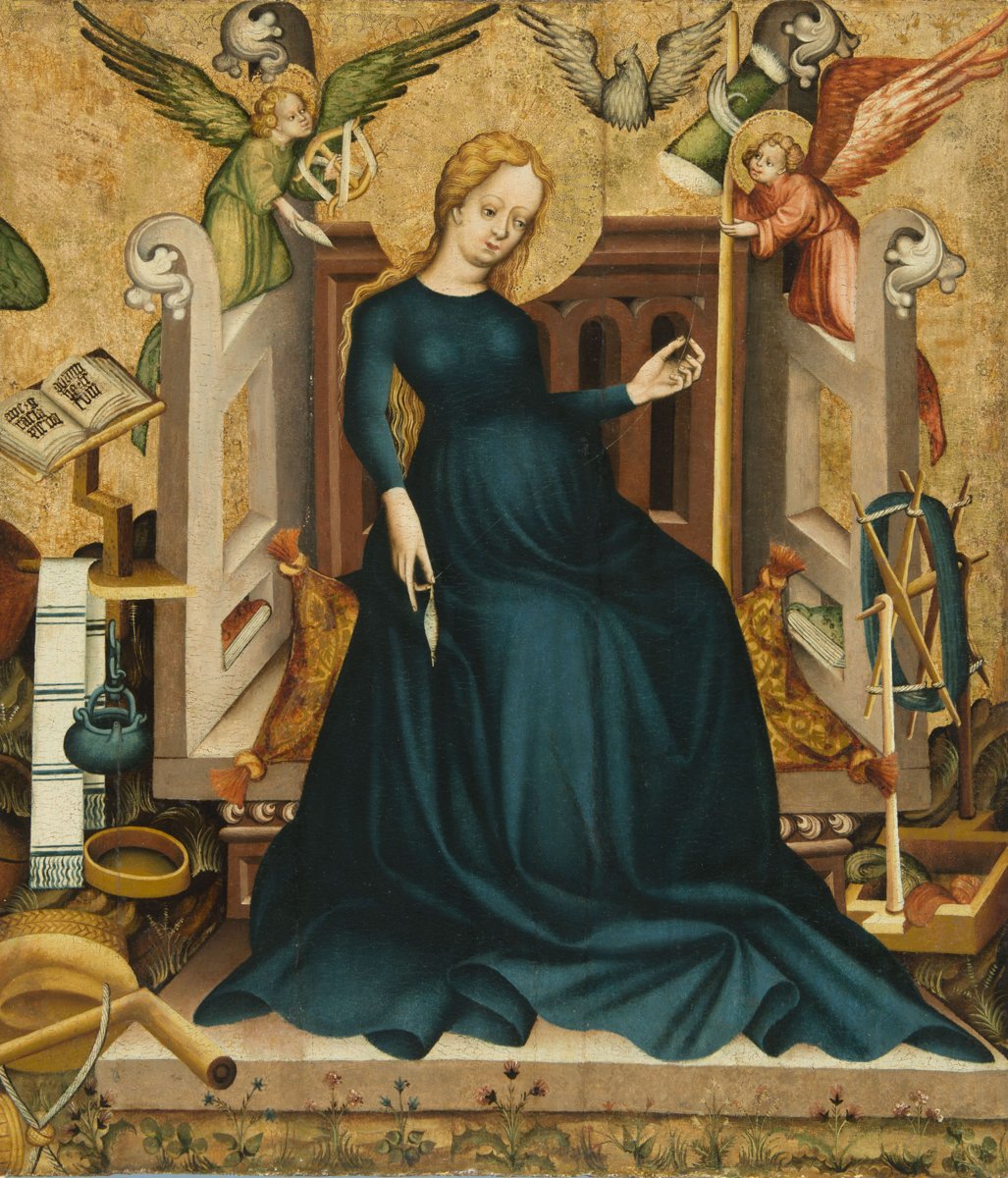
Victoria Jones at Art and Theology informs me that May is dedicated to Mary in the Roman Catholic Church, which Gerard Manley Hopkins takes as an invitation to essentially equate the mother of Jesus with the fertility of spring. While Mary’s “Magnificat” (“My soul glorifies the Lord” begins the “Canticle of Mary” in Luke 1:4-16) is normally associated with Advent, Hopkins sets his “May Magnificat” earlier in her pregnancy. After beginning his poem with a question—Why is May “Mary’s month?”—the poet goes on to answer, “Growth in every thing”:
All things rising, all things sizing Mary sees, sympathizing With that world of good, Nature’s motherhood.
Here’s the poem:
The May Magnificat By Gerard Manley Hopkins
May is Mary’s month, and I Muse at that and wonder why: Her feasts follow reason, Dated due to season—
Candlemas, Lady Day; But the Lady Month, May, Why fasten that upon her, With a feasting in her honor?
Is it only its being brighter Than the most are must delight her? Is it opportunist And flowers finds soonest?
Ask of her, the mighty mother: Her reply puts this other Question: What is Spring?— Growth in every thing—
Flesh and fleece, fur and feather, Grass and greenworld all together; Star-eyed strawberry-breasted Throstle above her nested
Cluster of bugleblue eggs thin Forms and warms the life within; And bird and blossom swell In sod or sheath or shell.
All things rising, all things sizing Mary sees, sympathizing With that world of good, Nature’s motherhood.
Their magnifying of each its kind With delight calls to mind How she did in her stored Magnify the Lord.
Well but there was more than this: Spring’s universal bliss Much, had much to say To offering Mary May.
When drop-of-blood-and-foam-dapple Bloom lights the orchard-apple And thicket and thorp are merry With silver-surfèd cherry
And azuring-over greybell makes Wood banks and brakeswash wet like lakes And magic cuckoocall Caps, clears, and clinches all—
This ecstasy all through mothering earth Tells Mary her mirth till Christ’s birth To remember and exultation In God who was her salvation.
The poem has me wondering whether “the red breasted throstle” that lays blue eggs is the “robin redbreast,” whose eggs are of the blue associated with Mary. (“Bugleblue” also signals the color of bugle weed.) The pregnant Mary is like an egg, forming and warming the life within, as all of spring’s swelling occurs within “sod or sheath or shell.” Her exultation in carrying Jesus, expressed so powerfully in Luke’s “Magnificat,” is the ecstasy that “mothering earth” experiences when spring is busting out all over.
With his reference to “the magic cuckoocall,” Hopkins may well be echoing the vibrant medieval lyric “Sumer Is Icumen In”:
Summer has arrived, Loudly sing, cuckoo! The seed is growing And the meadow is blooming, And the wood is coming into leaf now, Sing, cuckoo!
The ewe is bleating after her lamb, The cow is lowing after her calf; The bullock is prancing, The billy-goat farting, Sing merrily, cuckoo!
Perhaps there is also an echo of the ancient “Cherry Tree Carol” in “silver-surfèd cherry.” The story has it that Jesus, speaking from within Mary’s womb, bent down a cherry tree for Mary’s plucking after an angry Joseph refused her request. (“Let the father of the baby gather cherries for thee,” is how he puts it in the Joan Baez version.”) “Thicket and thorp”–woodland and hamlet–are merry, the poet informs us, while the “azuring greybell” (bluebell) causes the “woodlands and brakeswash” (bracken) to resemble “wet like lakes.”
Hopkins exults in May and he figures that Mary must be feeling the same.
Keenan as Russian ambassador Bilibin in War and Peace
Note: If you wish to receive, via e-mail, (1) my weekly newsletter or (2) daily copies of these posts, write to me at rrbates1951@gmail.com. Comments may also be sent to this address. I promise not to share your e-mail with anyone. To unsubscribe, write here as well.
Friday
In yesterday’s essay I wrote about how John Limbert, one of the Iranian hostages, found comfort in War and Peace when he was imprisoned in the American Embassy basement. “Amid chaos and insanity, humanity and family endure,” Limbert wrote.
Limbert shared his experience after reading an article on the novel’s insights into diplomats by former diplomat Fletcher Burton, my late brother’s best friend. “Practitioners of the diplomatic profession today can learn a lot about how a brilliant writer once viewed this profession and how many people still regard it,” Fletcher writes. “Diplomacy is the fascinating third strand of War and Peace.”
Fletcher notes that Tolstoy’s understanding of diplomats derived in part from the ambassadors who were among his ancestors, and Pierre, the novel’s protagonist and partial stand-in for Tolstoy, considers going into the diplomatic corps at one point. Fletcher speculates that perhaps Tolstoy himself contemplated diplomacy at one point.
Perhaps that’s why Tolstoy gives us a “sometimes bemused, sometimes mocking” depiction of diplomats. While they loom large in the novel, Fletcher says, their diplomacy is often “small-bore.”
The most prominent diplomat is Bilibin, a complexly drawn Russian ambassador who has both strengths and limitations. Fletcher says that he is not “one of the run-of-the-mill diplomats who advance solely by speaking French and keeping their head down” but a hard worker who “takes pains in producing memos and reports (what we would call tradecraft).” He has also a “facility with bon mots”:
Time and again, he launches them at social events. To signal their coming, Bilibin always screws up his face, as Tolstoy describes a dozen times in his most sustained satirical sally. Bilibin assumes they are so sparkling, they will be repeated often. If, however, he senses the company is not appreciative, he “treasures them up.” Mostly these are puns and wordplays, amusing but not profound, drawn from incidents of the day or—here a Tolstoyan zinger—from Bilibin’s own dispatches.
Bilibin’s major failing, Fletcher contends, is one that is common amongst diplomats: he “seems more concerned with the ‘how’ in chronicling events than the ‘why’ in comprehending them.” It’s a “resounding critique,” he says, because Tolstoy
is supremely interested in the big Why. He scoffs at discussions among his characters as to whether a diplomatic note was well or awkwardly composed. Trivial matters these, in his Olympian view. He dismisses the contention that a certain Diplomatic Note No. 178, through its poor wording, marked a turning point in the Napoleonic wars.
Tolstoy does not entirely reject skillful diplomacy. He even seems to relish diplomatic gamesmanship, such as how to address Napoleon in a way that doesn’t bestow upon him any undue status. Since “Emperor” or any other exalted question is out of the question, Bilibin comes up with an ingenious solution: “To the Chief of the French Government.” Yet for all such cleverness, Fletcher says, in the end Tolstoy “seems to whisper small potatoes.”
And even though Tolstoy seems impressed by how Bilibin responds to a Napoleon challenge, he has the same reaction. Napoleon drops his handkerchief in front of the ambassador, “a cunning test of both his manners and loyalty.” Realizing that “turning on his heel would be bad form, and bending to retrieve the article even worse,” Billibin quickly devises
a face-saving stratagem: He drops his own handkerchief on the same spot … and then picks it up … and leaves the other. Tolstoy seems to enjoy this rebuke to Napoleon…. Well done, ambassador. But again that whisper, just a piece of linen.
For all of Bilibin’s cleverness, Tolstoy has more respect for the peasant Karataev, Pierre’s prison companion, who exudes “earth sagacity and simple integrity.” He also prefers General Kutuzov, who doesn’t even bother “to read dispatches or absorb briefings, the very stuff of diplomacy.” Instead, the general “operates on a higher, or deeper level. He moves on a Tolstoyan plane.”
For instance, Kutuzov demonstrates a deeper understanding of diplomacy than Bilibin at one key moment, one which reminds me of the current jockeying between “Art of the Deal” Donald Trump and Chinese premiere Xi. First to Kutuzov:
Having clashed with Kutuzov at Borodino before advancing to occupy Moscow, Napoleon assumes the tsar would be ready for a peace settlement. To initiate talks, he sends him a note in St. Petersburg and awaits a reply. None is forthcoming, so another note is transmitted. Again, no answer from the imperial capital.
In the event, there would be no reply to Napoleon and no negotiations. Tolstoy portrays this diplomatic silence as a masterstroke, the very absence of diplomacy as a Russian triumph. Facing a burnt-down Moscow and an icily silent St. Petersburg, the French invader realizes the snare has sprung. After five weeks in Moscow, Napoleon orders the winter retreat of his Grande Armée out of Russia, back across the Nieman. It is one of the most harrowing retreats in history and most gripping in literature.
While I’m have no special insight into current trade talks, it appears that Xi is driving Trump crazy by simply not responding to his various threats. The more that Xi remains silent, the weaker Trump looks. Meanwhile, China is starting to forge new alliances with America’s former allies, including Japan, South Korea, and Europe, while America retreats across the Nieman.
Back to Bilibin, who has become no more than a sideshow by the end of the novel. Fletcher explains why:
Its memorable characters—Pierre, Natasha, Andrey—endure great suffering and, at the same time, achieve wisdom, a peace after war. This is an echo of Aeschylus that wisdom comes because of suffering, not in spite of it….Our dear Bilibin, the consummate diplomat, the paladin of high society, the spinner of gossamer witticisms, never suffers … that is, until he is forced to leave Vienna for a charmless village.
I love how Fletcher draws on a lifetime in the foreign service to examine War and Peace and how he uses the novel as a practical guide for diplomats. As he observes,
Puns are not policy. Cleverness is not wisdom. Intuition can be a better compass than information. Humility in the face of complexity is a virtue. Time and patience, Kutuzov’s two strategic principles, should be cultivated. The craft of How is inferior to the quest for Why….Sometimes silence is the best response. St. Petersburg is not Moscow. Nor is it Borodino, nor the vast countryside. The capital (read: the Beltway) may be the room where it happens, but it is not the front line, the realm where it happens, where History really happens.”
Fletcher concludes, “And literature, especially a magnificent epic, is a marvelous teacher. It can offer guidance. Maybe even deliverance.”
Note: If you wish to receive, via e-mail, (1) my weekly newsletter or (2) daily copies of these posts, write to me at rrbates1951@gmail.com. Comments may also be sent to this address. I promise not to share your e-mail with anyone. To unsubscribe, write here as well.
Thursday
While attending my brother David’s memorial service, I met his best friend, long-time diplomat Fletcher Burton, with whom I talked about literature’s life-changing potential. In the process, he told me about an email exchange he once had with retired Ambassador John Limbert, who in 1979 was a Foreign Service officer in Iran and one of the hostages. While imprisoned in the American embassy, Limbert read War and Peace, and Fletcher forwarded me their exchange two decades later about the novel.
Limbert shared the experience after reading a 2022 article that Fletcher had written for the Foreign Service Journal on what Tolstoy’s work teaches us about diplomats and diplomacy. Here’s the response Limbert wrote to FSJ, entitled, “Reading Tolstoy in Tehran: Family Endures”:
Reading Fletcher Burton’s excellent article on the diplomats in War and Peace (“Diplomacy, the Third Strand of War and Peace,” July-August 2022 FSJ) reminded me of my own encounters—17 years apart—with Tolstoy’s masterpiece.
I first read it in a college course, “Dostoyevsky and Tolstoy.” For whatever reason— perhaps my determination that classes not interfere with my education—I failed to get much from that reading. Discovery and appreciation came 17 years later, in a basement room at the U.S. embassy in Tehran. In December 1979, as our hopes for any resolution of the hostage crisis were disappearing fast, my family sent me a care package that included copies of War and Peace, The Brothers Karamazov, and George Eliot’s massive work, Middlemarch. Average length of each: 1,000 pages. The message was clear. “You aren’t going anywhere soon. You will have plenty of time to read these epics.”
The Russian novels were most welcome. I must confess, however, that I could never get beyond the first 150 pages of Middlemarch. Too boring for me, even under those circumstances. Re-reading War and Peace, however, was a revelation and delight. So many riches in its pages! I found myself so captivated that I had to put the book down and ration myself to reading only 30 pages a day.
What did I discover? Others have noted Tolstoy’s views of history, diplomacy, and historical personalities. For me, the attraction was different. It was his narrative of family and its power. I found myself riveted by the fortunes of the Rostovs, Bolkonskys, Bezhukovs, and, of course, the depraved Kuragins and Dolokhovs.
As war and destruction raged across the world, family became all. When the degenerate Anatole Kuragin’s friend, the villainous Fyodor Dolokhov (a character based on Tolstoy’s cousin Fyodor), cheats the young and naive officer Nikolai Rostov out of 43,000 rubles at cards, the boy’s father, Count Ilya Rostov, never hesitates. His family had already faced disgrace when the same Kuragin almost seduced the count’s daughter, the beautiful and innocent Natasha. But family honor is all. Debts are to be paid. The count never reproaches his son but sells and mortgages what he must to pay the debt and save his son (and his family’s) good name.
In 1979, amid the madness that ruled Tehran at the time, what better way to find sanity and fight despair than to savor slowly the nobility and depravity, the honor and dishonor, and the strengths and weaknesses of Tolstoy’s amazing characters and their families? Amid chaos and insanity, humanity and family endure.
John Limbert Ambassador, retired
The moment in the novel that Limbert mentions is the following:
The old count cast down his eyes on hearing his son’s words and began bustlingly searching for something.
“Yes, yes,” he muttered, “it will be difficult, I fear, difficult to raise… happens to everybody! Yes, who has not done it?”
And with a furtive glance at his son’s face, the count went out of the room…. Nicholas had been prepared for resistance, but had not at all expected this.
“Papa! Pa-pa!” he called after him, sobbing, “forgive me!” And seizing his father’s hand, he pressed it to his lips and burst into tears.
Before examining further Limbert’s response to War and Peace, allow me to comment briefly on his negative reaction to Middlemarch, arguably England’s greatest novel. Maybe the work failed to interest him because the challenge faced by Eliot’s characters is exactly the opposite of that faced by the Iranian hostages. Eliot begins her novel by contrasting her heroine Dorothea with St. Theresa of Avalon, whose “passionate, ideal nature demanded an epic life.” Dorothea, despite having a passionate, ideal nature of her own, doesn’t live in epic times, so the larger world never experiences her potential greatness. Limbert, by contrast, was living in epic times. Here’s Eliot:
Many Theresas have been born who found for themselves no epic life wherein there was a constant unfolding of far-resonant action; perhaps only a life of mistakes, the offspring of a certain spiritual grandeur ill-matched with the meanness of opportunity; perhaps a tragic failure which found no sacred poet and sank unwept into oblivion. With dim lights and tangled circumstance they tried to shape their thought and deed in noble agreement; but after all, to common eyes their struggles seemed mere inconsistency and formlessness…
There was nothing inconsistent or formless about the behavior of Limbert and his fellow hostages. Living as History was being made, he craved an epic work, and War and Peace ranks up there with The Iliad, The Aeneid, Paradise Lost, and Les Misérables as one of the world’s great epics.
I particularly like how Limbert focuses on a small moment occurring amidst world-shattering events. All of the epics I have just mentioned have a genius for doing this (I think of Achilles slaughtering multitudes at one point and sensitively comforting a grieving father at another), and Tolstoy’s ability to move seamlessly from cataclysmic warfare to intricate drawing room conversation is similarly dazzling. I can see why this dimension of War and Peace would have struck a nerve with Limbert: Napoleon’s invasion, like the Iranian revolution, may be upending society, but, to a prisoner, thoughts about family are likely to dominate. As the diplomat noted in a follow-up email to Fletcher, “At first I didn’t understand the source of its power, but gradually saw how Tolstoy is telling us how family protects us in a world gone mad. And our world had certainly gone mad.”
Elsewhere in their e-mail correspondence, Fletcher noted how Wall Street Journal correspondent Evan Gershkovich, who was released in 2024 after spending over a year in a Russian prison on trumped-up charges, also read War and Peace, along with other Russian novels. Fletcher wondered whether Gershkovich, like Limbert, drew strength from Tolstoy’s family depictions given that his mother Ella was “the prime mover” behind his release.
Fletcher noted that Gershkovich also read Vasily Grossman’s Life and Fate, another epic Russian novel, this one about the bloody Battle of Stalingrad. He informed Limbert that Ella became worried that her son was reading “too many dark and voluminous tomes drawn from Russia’s tragic past” and suggested lighter fare.
To this Limbert reported that he too had read another dark Russian novel, this one by Solzhenitsyn. If it was (as I suspect) A Day in the Live of Ivan Denisovich, then it might have helped him cope with his imprisonment. The novel, drawn from the author’s own experiences, is about a day spent in the Siberian gulag. Although grim, it is also surprisingly uplifting as we see the importance of tiny victories for prisoners.
Commenting on Ella’s concern, Limbert noted that he too had read and enjoyed lighter fare, especially the novels of Jane Austen. (In other words, he wasn’t bored by all novels set in rural England.) Learning this, I think of how Austen’s novels comfort combatants in the Rudyard Kipling story “The Janeites” (1924). Set in the World War I trenches, a group of soldiers founds “the Society of Jane,” which helps them fantasize about an orderly world. They even name their missile launchers after characters (Mr. Collins, General Tilney, and Lady Catherine de Bourgh).
Austen’s voice of ironic detachment provides Kipling’s narrator with a means to cope with the horrors that he witnesses as he adopts an emotionally distanced and slightly comic way of recalling events. And when, after all his comrades have been killed and he is wandering through the blasted landscape, he finds that his knowledge of Emma gets him a transport spot and an extra blanket from a nurse who is also a fan. “You take it from me,” he concludes, “there’s no one to touch Jane when you’re in a tight place.”
For Kipling’s Society of Jane as for Limbert, great literature can remind us of people back home at a time when we long for a return to normalcy. Here the narrator mentions characters in Pride and Prejudice and Emma:
They [Austen characters] was only just like people you run across any day. One of ’em was a curate—the Reverend Collins—always on the make an’ lookin’ to marry money. Well, when I was a Boy Scout, ’im or ’is twin brother was our troop leader. An’ there was an upstandin’ ’ard-mouthed Duchess or a Baronet’s wife that didn’t give a curse for any one ’oo wouldn’t do what she told ’em to; the Lady—Lady Catherine (I’ll get it in a minute) De Bugg. Before Ma bought the ’airdressin’ business in London I used to know of an ’olesale grocer’s wife near Leicester (I’m Leicestershire myself) that might ’ave been ’er duplicate. And—oh yes—there was a Miss Bates; just an old maid runnin’ about like a hen with ’er ’ead cut off, an’ her tongue loose at both ends. I’ve got an aunt like ’er. Good as gold—but, you know.’
For all the worry that literature is going the way of the dodo, during tough times it shows its worth over and over. The Iliad has been with us for almost three millennia, and if humans are around in another three thousand years, I predict that, like Limbert in that embassy basement, they will still be reading War and Peace and the novels of Jane Austen.