Monday
I’ve just finished listening to Dombey and Son, thereby completing my life list of Dickens novels. (I exempt the Mystery of Edwin Drood, which Dickens didn’t finish. And yes, I’ve read Barnaby Rudge and Martin Chuzzlewit.) While Dombey is far from the author’s best work, its depiction of a tyrannical boss and his smiling enabler pretty much captures what we’re seeing in the White House these days.
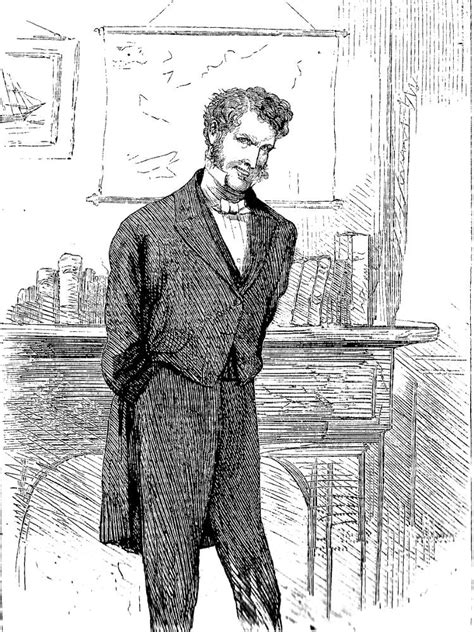
Dombey is the proud and autocratic head of a thriving business. After his first wife dies, he essentially buys a second, a beautiful woman who is just as proud, and sparks fly when she refuses to cater to his whims. Not confident of handling her himself, he turns to his sycophantic manager to sort out matters. Imagine Dombey as Trump and James Carker as Todd Blanche, Kash Patel, or, well, pretty much anyone in his current administration:
“Now, Carker,” said Mr Dombey, “I do not hesitate to say to you that I will carry my point. I am not to be trifled with. Mrs Dombey must understand that my will is law, and that I cannot allow of one exception to the whole rule of my life. You will have the goodness to undertake this charge, which, coming from me, is not unacceptable to you, I hope, whatever regret you may politely profess—for which I am obliged to you on behalf of Mrs Dombey; and you will have the goodness, I am persuaded, to discharge it as exactly as any other commission.”
“You know,” said Mr Carker, “that you have only to command me.”
“I know,” said Mr Dombey, with a majestic indication of assent, “that I have only to command you.”
Dombey goes to complain that Edith does not adequately appreciate him for having elevated her to the eminent position of his wife:
“[A]t present I do not conceive that Mrs Dombey does that credit to it, to which it is entitled. There is a principle of opposition in Mrs Dombey that must be eradicated; that must be overcome: Mrs Dombey does not appear to understand,” said Mr Dombey, forcibly, “that the idea of opposition to Me is monstrous and absurd.”
Compare this to how Trump is prepared to punish those in his own party who do not fully acknowledge his importance (Tom Massie, Bill Cassidy, John Cornyn). The results, as we have seen, are cabinet meetings that function like North Korea-style groveling sessions.
But enough of Trump as I’m more interested in the Carkers of the world. The manger, whose “two unbroken rows of glistening teeth” are always “on parade,” gets more than a paycheck and prestige from his association with Dombey. Like Stephen Miller, Pete Hegseth, and numerous others, he gets an opportunity to carry out his own sadistic fantasies.
In this instance, Dombey has instructed him to humble his wife, and Carker points out that his being employed as intermediary will itself be a form of humiliation as Edith detests him. When Dombey queries whether Carker will feel degraded in his role, the manager responds that degradation is impossible when he is carrying out his boss’ wishes. Dombey first:
“But I have not supposed, I confess, that any confidence I could entrust to you, would be likely to degrade you—”
“Oh! I degraded!” exclaimed Carker. “In your service!”
“—or to place you,” pursued Mr Dombey, “in a false position.”
“I in a false position!” exclaimed Carker. “I shall be proud—delighted—to execute your trust. I could have wished, I own, to have given the lady at whose feet I would lay my humble duty and devotion—for is she not your wife!—no new cause of dislike; but a wish from you is, of course, paramount to every other consideration on earth.”
He goes on to assure Dombey that Edith is sure to be “converted from these little errors of judgment,” which I suspect has its modern equivalent in Trump’s sycophants assuring him that the public will be brought around to seeing that we are indeed enjoying the greatest economic boom in American history.
One wonders whether they also harbor Carker’s secret resentment: his assumption that everyone in the office is hypocritical when they express concern at Dombey falling from a horse reveals his own hypocrisy. Inwardly, he seethes over how Dombey makes him bow and scrape and is only sorry that his boss doesn’t die in the accident. He gets his revenge, or so he thinks, when he kisses Edith and persuades her to run away with him, thereby thoroughly humiliating her husband. His own side hustles, made without Dombey’s knowledge, have given him financial independence.
Many note that standing up to Trump is the best response, and it is an effective way to handle his enablers as well. In an immensely satisfying scene, Edith faces down Carker, putting him in his place at the very moment when he thinks he has achieved power over her. He thinks she has run away from Dombey to be with him, but she sets him right:
“In every vaunt you make,” she said, “I have my triumph. I single out in you the meanest man I know, the parasite and tool of the proud tyrant, that his wound may go the deeper, and may rankle more. Boast, and revenge me on him! You know how you came here tonight; you know how you stand cowering there; you see yourself in colors quite as despicable, if not as odious, as those in which I see you.”
Dickens tells us that if Edith had faltered for an instant, Carker would have pinioned her but that “she was as firm as rock, and her searching eyes never left him”:
He would have sold his soul to root her, in her beauty, to the floor, and make her arms drop at her sides, and have her at his mercy. But he could not look at her, and not be afraid of her. He saw a strength within her that was resistless.
Carker dies when a nightmarish train runs him down, and, given the staggering levels of corruption we are seeing, a metaphorical train may have our current crop of sycophants in its sights. Rick Wilson’s maxim—“ETTD: Everything Trump Touches Dies”—has proved wondrously predictive so far.
Further thought: A friend of mine told me that her mother, raised in a fundamentalist household, was a book that provided examples from David Copperfield to teach her How To Be a Christian Woman. While David’s Dora was held up as positive in that she is ultra feminine, she was critiqued as being too infantile so that one should aspire instead to be like the more mature —and even more nurturing and self-sacrificing–Agnes. Both women, however, resemble the “angel in the house” celebrated in the Coventry Patmore poem of that period.
In Dombey and Son, I found myself wincing at how Dickens celebrates sweet Florence for essentially being, unlike her (more interesting) stepmother, a self-sacrificing doormat. The cloying portrayal helps explain why Dombey is not more highly regarded.
That being noted, however, I did find myself cheering characters who choose morality and sacrifice over convenience and self-gratification. I thought of all those civil servants who went into government because they love their country and now are being pressured to pledge allegiance to Trump. Dickens reminds us of what integrity under fire looks like and how one can choose to respond. Fundamentalists may hold up Dickens women as exemplars, but Dickens’s Christianity resembles that of Texas Democrat James Talarico much more than that of Trump’s fundamentalist idolaters.