Tuesday
Last month a Literary Hub article, “On the So-Called Reading Crisis as Class Warfare,” caught my attention because it highlighted the distinction between pleasure reading and utilitarian reading. While I’m not always sure what author Eunsong Kim is getting at—at one points she confusingly contrasts “the technification and devaluation of public arts education” with “the rise of the growth of exclusive and luxury branded literary salons”—I think she’s saying that there’s a concerted effort by the moneyed classes to dumb down the proles and elevate the elite. Waldorf education for me, underfunded public education for thee.
I’m reminded of Jonathan Swift, in one of his less admirable moments, arguing that servants shouldn’t be taught how to read because it would make them dissatisfied with their position in life. In Gulliver’s Travels he describes the Lilliputian palace catching on fire because a servant falls asleep while reading a novel by candlelight. (The satire gets better when Gulliver saves the palace but offends the queen by urinating on the fire. This is an allegorical account of Swift’s brilliant but scatological satire Tale of a Tub so scandalizing Queen Anne that she quashed the author’s political ambitions. In other words, satirists sometimes have to be unpleasant and take risks to save society.)
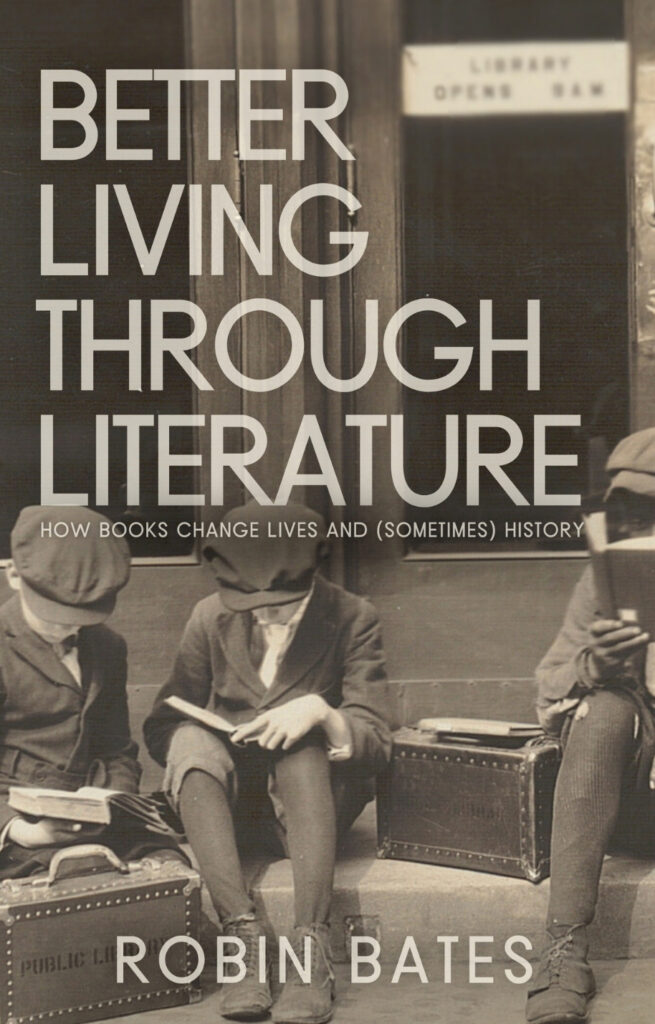
According to Kim, Andrew Carnegie, though famous for the libraries he funded, thought like Swift about workers. She says she herself has traced the rise of U.S. philanthropy—particularly with regard to museums and libraries—to 19th-century labor-busting. She cites historian Paul Krause on how steel magnate Carnegie, famous for founding libraries, would break a town’s union and then “gift” the town with a library. Carnegie, however, believed that such a library
should only contain useful knowledge. In a speech given to workers in Braddock 1889, after breaking the town’s steel union, Carnegie states, “If you want to make labor what it should be, educate yourself in useful knowledge. This is the moral I would emphasize.”
Kim says that Carnegie disparaged an education that taught Greek and Latin, arguing that workers assigned to read Homer, Aeschylus or Shakespeare were being educated “for life upon some other planet than this. . . . What they have obtained has served to imbue them with false ideas and to give them a distaste for practical life.”
Carnegie, however, embraced “impractical knowledge” for himself as he attempted to write literature and befriended Mark Twain and other luminaries. Carnegie distinguished the knowledge the workers should have from his own.
I don’t know the extent to which Kim’s elitists are getting their way, but I do know about efforts to push back against their efforts. Idealistic language arts teachers around the country attempt to excite their students with quality literature, and this blog is my own contribution. Furthermore, I spent my career at a public liberal arts college (St. Mary’s College of Maryland), whose goal was to break down the very barriers that Kim sees the rich as erecting. We figured that, just because you were poor or were a first-generation college student–i.e., you had parents who hadn’t gone to college–didn’t mean you should be deprived of a premier education. Half the states have such schools, which belong to the Consortium of Public Liberal Art Colleges (COPLAC).
On the other hand, I know that the Republicans running my current state of residency (Tennessee) have been pushing very hard to shift educational resources to charter schools, even though public teacher salaries are so low that the Appalachian high school in the county next to mine (Grundy) can’t get anyone to teach Algebra II. (Interested students have to study the subject on-line.) Meanwhile, nationwide, what could be called the proletarianization of the professoriat is occurring at state universities, with English introductory classes being increasingly taught by adjunct faculty. Eusong Kim, in other words, is on to something.
Defending quality public education requires all our efforts, and we must do all we can to keep alive the vision of a literate electorate. While a good education can’t break down class divisions entirely, it can do a lot. At St. Mary’s I saw many of my first generation college students go on to use their “impractical” English classes in very practical ways, possessing as they did the ability to adapt to a changing world. In this regard, a narrow vocational education can come up short. Only when you dehumanize the working class do you fail to see how Homer, Aeschylus, and Shakespeare will indeed prepare them for life on this planet.