Wednesday
I am updating a post I wrote six years ago to apply to a visit over the weekend from our four grandchildren. As we cavorted around in the lake by our house, I once again recalled Henry Wadsworth Longfellow’s “The Children’s Hour.” I’ve added some thoughts about devouring imagery in children’s literature.
The 1863 poem was one that, for decades, children were required to memorize. I encountered it first when my father read it to me as a child and later when I saw Don Martin’s Mad Magazine spoof of it. Martin, of course, took shots at its sentimentality.
But Mad wasn’t the first publication to question “The Children’s Hour.” Lillian Hellman in 1934 made ironic use of the poem by borrowing its title for her own play about a disaffected girl in a boarding school. In order to avoid being sent back to the school, she accuses two of her teachers of having a lesbian love affair, thereby destroying their lives. In other words, little girls are not as innocent as you think.
Sentimentalizing children doesn’t do justice to their full personhood. When one has rigid expectations of innocence, one doesn’t give children room to breathe. I use the analogy because of the images of devouring and imprisonment in the poem. If we trap children in angelic expectations, we have trouble handling those times when they are devils.
The Bishop of Bingen reference is to the folk tale of Bishop Hatto, who was eaten alive by the mice that invaded the tower where he was hoarding grain from the starving peasants. After feeling devoured by his children, Longfellow does his own version of devouring in return, imprisoning them in the fortress of his heart. Here’s the poem:
The Children’s Hour
By Henry Wadsworth Longfellow
Between the dark and the daylight,
When the night is beginning to lower,
Comes a pause in the day’s occupations,
That is known as the Children’s Hour.
I hear in the chamber above me
The patter of little feet,
The sound of a door that is opened,
And voices soft and sweet.
From my study I see in the lamplight,
Descending the broad hall stair,
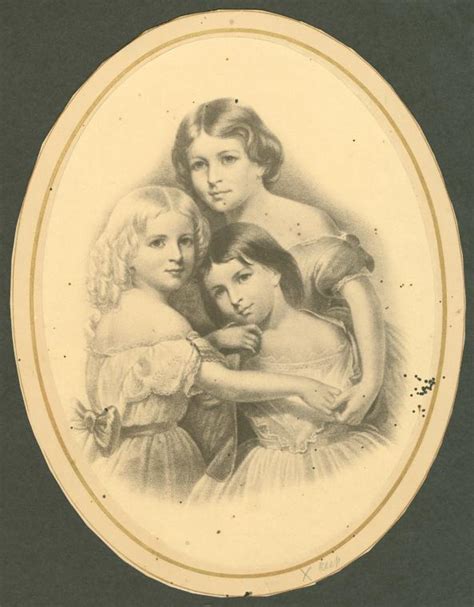
Grave Alice, and laughing Allegra,
And Edith with golden hair.
A whisper, and then a silence:
Yet I know by their merry eyes
They are plotting and planning together
To take me by surprise.
A sudden rush from the stairway,
A sudden raid from the hall!
By three doors left unguarded
They enter my castle wall!
They climb up into my turret
O’er the arms and back of my chair;
If I try to escape, they surround me;
They seem to be everywhere.
They almost devour me with kisses,
Their arms about me entwine,
Till I think of the Bishop of Bingen
In his Mouse-Tower on the Rhine!
Do you think, O blue-eyed banditti,
Because you have scaled the wall,
Such an old mustache as I am
Is not a match for you all!
I have you fast in my fortress,
And will not let you depart,
But put you down into the dungeon
In the round-tower of my heart.
And there will I keep you forever,
Yes, forever and a day,
Till the walls shall crumble to ruin,
And molder in dust away!
Sentimental though the poem may be, I fully understand the emotions at play. My grandchildren and I hugged each other long and hard as they were leaving. I wanted to swallow them up in my love and for a few moments they basked in the feeling, even as I was attuned to the moment when they would want to wriggle free. Feelings of wanting to be loved and feelings of wanting to be independet toggled back and forth.
We see some of the same back and forth in the stories I read to my own children. In Maurice Sendak’s The Night Kitchen, Mickey is swallowed in the cake batter of the night cooks before breaking free to assert his independence: “I’m not the cake and the cake’s not me, I”m Mickey!” he crows before flying off in an airplane he has constructed out of the batter.
In Helen Bannerman’s “Little Black Sambo,” the protagonist is threatened with devourment—“Little Black Sambo, I am going to eat you up,” threatens each of the tigers–only to have Sambo, somewhat like Anansi the Spider, use his wits to escape. In the end, through an unexpected plot twist, he devours them instead as they have churned themselves into butter, which his mother then uses for pancakes.
One other popular children’s book that includes includes emotional devouring is Margaret Wise Brown’s Runaway Bunny. No matter how much the bunny wants to break free of his mother’s loving embrace and establish his own identity, the mother assures him that she will always find him. The plot speaks both to the child’s desire for independence and the need to be reminded that he or she always has emotional backup. That reassurance also come in Brown’s Goodnight, Moon.
I saw the tension exhibited in each of my grandchildren over the weekend, with it working itself differently for the teenager, the middle schooler, and the two in elementary school. It was a gift.