Sunday
Reprinted from July 30, 2017, Slightly Altered
One of today’s lectionary readings has Jesus comparing the kingdom of heaven to a “pearl of great price.” The image shows up in a fine Hilda Doolittle (H.D.) poem, and knowing the allusion adds resonance to the poem.
First, here’s the passage. It’s one of a series of metaphors that Jesus uses to capture the process of spiritual search:
Again, the kingdom of heaven is like unto a merchant man, seeking goodly pearls. Who, when he had found one pearl of great price, went and sold all that he had, and bought it. (Matthew 3:45-46)
Elsewhere in the passage Jesus compares the kingdom of heaven to a mustard seed, to yeast, and to a treasure buried in a field.
H.D.’s poem is one of a series in her book The Walls Do Not Fall. H.D. belonged to the movement known as Imagism, noted for using images to capture complex emotional states, and in a way Jesus can be seen as an Imagist poet. Following Jesus’s lead, Doolittle starts with a humble object—a seashell—to find her way to that which puts her in touch with the divine, bringing the realm of the numinous—the kingdom of heaven–to earth.
The shell initially conveys how she goes through life with a hard exterior so that she won’t be hurt. This seems necessary because she sees herself as a “flabby amorphous hermit” who can be devoured by sharks or crushed by the weight of the sea. At this point, there seems to be little spiritual in the image, just as there seems little spiritual in a mustard seed or yeast. The poem could well be H.D. grappling with her depression, which was treated by Freud.
However, while she may shut herself off from the world, sometimes with a snap, she has a rich interior life which seems more valuable than anything the world has to offer. That is the spell that is to be found “in every sea-shell.” Therefore, do not be fooled by the hard exterior.
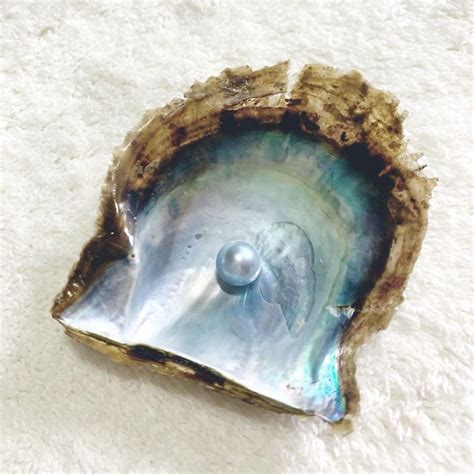
The reference to the pearl reminds us how pearls are created. A grain of sand gets inside the vulnerable oyster, which must build up a defense against this denizen from the world out there. In responding to this assault, the oyster, like the introverted poet, creates something of transcendent beauty, a pearl of great price.
Jesus calls upon us to seek out a comparable beauty. Poetry can be a means of connecting with the kingdom of heaven.
From The Walls Do Not Fall
By H.D.There is a spell, for instance,
in every sea-shell:continuous, the sea-thrust
is powerless against coral,bone, stone, marble
hewn from within by that craftsman,the shell-fish:
oyster, clam, molluscis master-mason planning
the stone-marvel:yet that flabby, amorphous hermit
within, like the planetsenses the finite,
it limits its orbitof being, its house,
temple, fane, shrine:it unlocks the portals
at stated intervals:prompted by hunger,
it opens to the tide-flow:but infinity? no,
of nothing-too-much:I sense my own limit,
my shell-jaws snap shutat invasion of the limitless,
ocean-weight; infinite watercan not crack me, egg in egg-shell;
closed in, complete, immortalfull-circle, I know the pull
of the tide, the lullas well as the moon;
the octopus-darknessis powerless against
her cold immortality;so I in my own way know
that the whalecan not digest me:
be firm in your own small, static, limitedorbit and the shark-jaws
of outer circumstancewill spit you forth:
be indigestible, hard, ungiving.so that, living within,
you beget, self-out-of-self,selfless,
that pearl-of-great-price.