Note: If you wish to receive, via e-mail, (1) my weekly newsletter or (2) daily copies of these posts, write to me at rrbates1951@gmail.com. Comments may also be sent to this address. I promise not to share your e-mail with anyone. To unsubscribe, write here as well.
Sunday
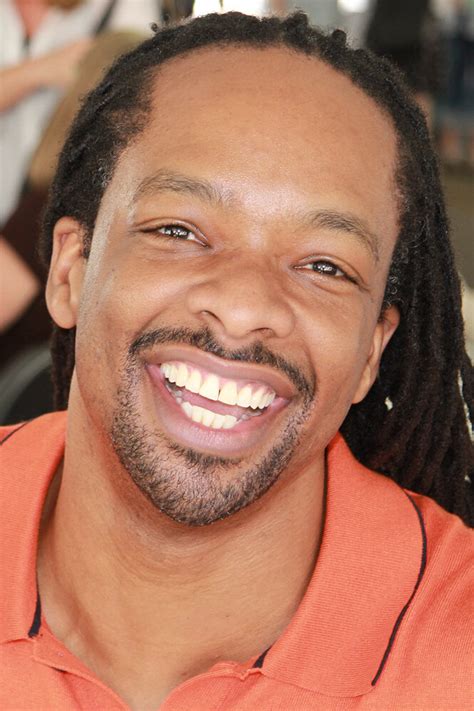
In a recent sermon, our curate Kelly Moody introduced me to the poetry of Jericho Brown, a poet steeped in the Bible whose collection The Tradition won the 2020 Pulitzer Prize for Poetry. Our desire to get closer to God, to experience the numinous, she found captured in a passage from Brown’s poem “I Know What I Love”:
I wanted what anyone with an ear wants–
to be touched,
and touched by a presence that has no hands
Kelly said that the passage “describes the universal longing and fear that we all have as humans to come closer to the holy.” She noted that the longing is particularly strong in contemporary society, where we’ve “become accustomed to everyday terrors in our culture as though they are acceptable: racism, gender-based violence, school shootings, the realities of death, and the like.”
Kelly detects a prophetic strain to Brown’s poetry, which may be linked to his religious upbringing in an African American church. According to Britannica, during services poems when he was growing up, poems by Maya Angelou, Nikki Giovanni, and other Black writers were read alongside Biblical passages. Brown also says that these church services
put me in contact with the fact that words can have a powerful effect on emotions. That the well said thing could very well lead to shouting and clapping and crying.
Unfortunately, Brown’s church did not accept his homosexuality, and many of his poems capture the separateness he feels in this culture as a gay Black man. Kelly quoted from the poem “Stake”—which invokes images of being tethered to a stake or staked on a cross–and describes what it is like to be a “they,” not a “we”:
I am a they in most of America,
Someone feels lost in the forest of we,
so he can’t imagine a single tree.
He can’t bear it.
A cross. A crucifixion.
In turning to Brown, Kelly was responding to Jeremiah 23:23-28, where the Lord tells the prophet,
Am I a God who is only close at hand? No, I am far away at the same time.
And further on:
Is not my word like fire, says the Lord, and like a hammer that breaks a rock in pieces?
When Kelly described Brown, like Jeremiah, using prophetic language, she meant “poetic imagery and experiential language that draws us in, deepening our understanding of God’s intimate presence in a world.”
Although we may long for such intimacy, however, it can also be unsettling. Kelly said that sometimes we “would rather imagine God as far away, like a clockmaker, keeping some heavenly peace in another dimension, safely uninvolved in our worldly kingdoms.” By contrast, the prophetic tradition believes that we must be made uncomfortable if we are to remain engaged with God.” After all, God’s word is “like fire and like a hammer that breaks a rock in pieces.” Prophets, she noted “are people who come so close to God, and God comes so close to them, that they know what is most important.”
And that, she said “is the invitation to all of us this morning: to come close, and to be transformed into people who can bear the nearness of God in a world that would rather keep God at arm’s length.”
After the sermon, I borrowed Brown’s Tradition from Kelly and looked up the poems she had cited. In “I Know What I Love,” I could see Brown engaging in the same back and forth with Love that Kelly described with God. After all, Love, like God, comes to us on its own terms, pulling us out of our comfort zones. Brown notes that it can enter at inconvenient times, and that, furthermore,
It can hurt me if it
Means to…because
That’s what in love
Means.
Here’s the poem:
I Know What Love Is
By Jericho Brown
It comes from the earth.
It is green with deceit.
Sometimes what I love
Shows up at three
In the morning and
Rushes in to turn me
Upside down. Some-
Times what I love just
Doesn’t show up at all.
It can hurt me if it
Means to…because
That’s what in love
Means. What I love
Understands itself
As properly scarce.
It knows I can’t need
What I don’t go without.
Some nights I hold
My breath. I turn as in
Go bad. When I die
A man or a woman will
Clean up the mess
A body makes. They’ll
Talk about gas prices
And the current drought
As they prepare the blue-
Black cadaver that still,
As the dead do, groans:
I wanted what anyone
With an ear wants—
To be touched and
Touched by a presence
That has no hands.
Love for Brown is foundational, rooted in the earth. But for all its promise, it is also “green with deceit,” which I interpret as attached to unreliable bodies. (In his poem “Fern Hill, Dylan Thomas writes about how “Time held me green and dying.”) Some of what Brown says about Love is more about the lover than about Love itself: when he says it is “properly scarce,” this just means that we find it difficult to be fully open to it at all times. I read the lines, “It knows I can’t need/ What I don’t go without,” as Love’s sarcastic refusal to show up on demand (as in, “You can’t really need me if you think this is how love works”).
To emphasize what is at stake, Brown turns to thoughts of his death at the end of poem, along with how unimportant it will seem to other people. Our lives may be transient but our longing for Love’s touch— “a presence”—is transcendent.
Back to Kelly’s sermon, where she proceeded to talk about the nature of such transcendence. “No kind of suffering, or failure, or terror,” she said, “can divide us from what is holy. And by our baptism into Christ’s death and resurrection, we are transformed into people who can bear the nearness of God, too—people who do not make peace with the everyday terrors of this world, but will not normalize or avoid them, either.” She also quoted Biblical scholar Walter Brugemann, who wrote that “prayer is the refusal to accept things as they are.”
Kelly concluded,
Prayer empowers us to name our longing to be touched by a presence that has no hands, to name the everyday terrors around us, and to come closer to both our longings and our fears with renewed faith that we will meet God there.
Brown has said that “poems are like prayers,” adding that, as prayers, “they’re also like chants and spells.” And while he doesn’t use a religious framework to explain poetry’s power in the following quotation, he is essentially saying that poetry can connect us with our inner divinity:
I think poetry evolved to save us from ourselves. It questions our understanding of what it means to be human and, in the process, deepens our humanity. History teaches us — and the daily news reminds us — how easily we forget what it means to be human. Probably no other art form is better than poetry at getting us directly inside another’s mind, experience, perspective. The ability to imagine someone else’s inner life is where compassion begins.
Amen.