Note: If you wish to receive, via e-mail, (1) my weekly newsletter or (2) daily copies of these posts, write to me at rrbates1951@gmail.com. Comments may also be sent to this address. I promise not to share your e-mail with anyone. To unsubscribe, write here as well.
Friday
Today’s post covers my interactions with literature from third through seventh grade since there are some particularly revealing moments. I look especially at those works where I can remember the exact time and place of our encounter.
For instance, I was standing in a large commons area in the old wooden apartment (Van Ness Hall) when I first heard about Narnia. The year was 1959 and I was eight at the time. Chris Mayfield, my best friend and the eldest daughter of the seminarian family that lived upstairs, was describing The Silver Chair. I remember her wanting us, like Jill and Eustace, to hold out our arms and invoke Aslan so that we would be whisked off to that magical land.
I also remember, that same year, sitting on our family couch, probably with my brother Jonathan, as my father read to us about the dwarfs piling into Bilbo’s house.
Partly because of that first encounter with C.S. Lewis, Silver Chair has always been my favorite Narnia book. Drawing on the Arthurian quest narrative, Lewis appealed to my childhood longing to live a meaningful life. It wasn’t only the adventures, the strange creatures, and the talking animals that pulled me in, however, but also Eustace and Jill. They weren’t sentimental fabrications but vividly and sometimes uncomfortably real, what with their quarreling and their missteps. Although they sometimes fail certain ethical tests, however, in the end they step up and do the right thing. Perhaps I saw Chris and me in them.
As one who was always concerned about doing the right thing, I didn’t like it when children came up short—Edmund betraying in siblings in Wardrobe, Digory overriding Polly and ringing the bell in Magician’s Nephew, Eustace being a jerk in Dawn Treader, Jill forgetting the signs in Silver Chair, Shasta and Aravis arguing in Horse and His Boy—but such unpleasant moments added dimensionality to my engagement. They prompted me to develop as a human being.
Thinking about it now, I was prepared for children wrestling with moral dilemmas from having been immersed in E. Nesbit’s Bastable books. I identified with Oswald, the eldest, who has a strong sense of morality, even though he and his four siblings, in their group projects, sometimes mess up in the performance (thus their self designation as “the Wouldbegoods”). There’s no magic in the Bastable books so they didn’t enthrall me the way Narnia did, but I can see their influence.
For instance, I enrolled my siblings and the neighborhood kids (all younger) in large group activities. We would play such games as freeze tag, capture the flag, red rover, wiffle ball, and something called ka-seep (spelling unclear), in which everyone ran from one line to the other, with anyone tagged joining the one in the middle until all are caught. Everyone got to pick a game and, to insure everyone participated in all the games, I had them step in something we called “the sacred circle.” This was a circle drawn in chalk on one of the paving stones leading up to the house. (We were no longer living in Van Ness Hall but now had a university-owned stone house a couple of blocks away.) By stepping into the circle, you signaled your commitment.
We also played a game I invented called “Romans and Barbarians” in which I now detect a masochistic streak. We would divide into two groups and, whenever the Romans captured a barbarian, they would tie him/her to our jungle gym and apply various tortures until he or she agreed to be a Roman. The challenge lay in how long you could hold out as we beat each other with plastic swords or hung each other up by the armpits. I always insisted on being a barbarian and, since I was the eldest, I was usually the last one caught. It was fairly mild, all things considered, but a fascination with B&D has always been with me. I hasten to add that I don’t act on my B&D fantasies. Doing so would be a disappointment as nothing in actuality can ever live up to the pictures in my head.
I note that, while I thought of us all participating equally in our games, my brother Jonathan, three years younger, notes that I always got my own way. This contributed significantly to our sibling rivalry, and he would go on to be far more in tune with the broader world than I was, whether it took the form of rock music, sex, drugs, or peer engagement. If, as I’ve noted earlier, I was trying to remain a child to please my father, Jonathan went storming into the world of traditional adolescence and so in some ways seemed older than I was.
Back to Lewis and Tolkien. If Lewis shook my world, Tolkien hit with the force of a tsunami. I sometimes say that Tolkien’s world-building fiction saved my childhood, and it was certainly the work (to borrow from Yeats) that had all my thought and love. I didn’t do what other boys did—play Little League baseball and football or engage in fights or hang around in guy groups—but Tolkien’s world was so immense and all-encompassing that, by entering it, I could imagine doing all the things a boy/man was supposed to do.
My favorite character was the dwarf Gimli, perhaps because he was short (as was I), perhaps because—in my low self-esteem—I saw myself as hunkered down and plodding (this in contrast to my more athletic peers). When those of whom not much is expected rise to the occasion—as Gimli does in his competition with Legolas at the Battle of Helm’s Deep and of course as Frodo does in destroying the ring—I could imagine myself triumphing against the odds.
After my father read us The Hobbit and The Fellowship of the Ring, we had to wait two months for Two Towers and Return of the King to be sent to us from Blackwell’s Bookstore in London since Tolkien didn’t yet have an American publisher. I also wrote a fan letter to Tolkien (this in 1961) and several months later received a reply. I have the letter, along with the famous signature, framed and hanging in my office.
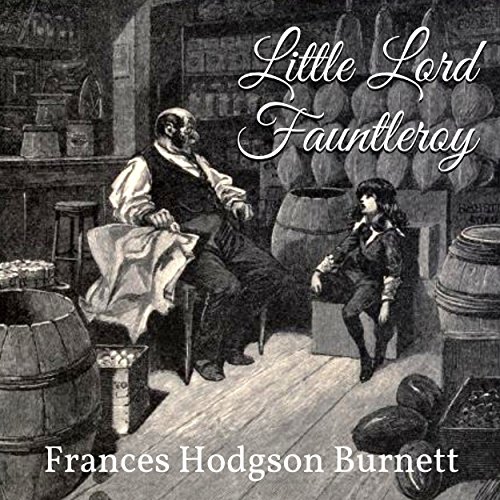
I’ll mention one other beloved set of works that help me see the boy I was then. I identified intensively with stories of boys who are girl-like or who even become girls. These included L. Frank Baum’s The Land of Oz, Francis Hodgson Burnett’s Little Lord Fauntleroy, a Superman comic in which a young Clark Kent is temporarily turned into a girl, and Shakespeare’s Twelfth Night (although in that one a woman passes herself off as a man).
My explanation for my fascination is that, in trying to figure out why I was so different from the other boys around me, I at times wondered whether some cosmic mistake had been made. (I remember thinking this as early as eight or nine.) Sometimes, when riding my bike down steep Curlicue Lane on my way to a piano lesson, I imagined having hair that streamed out behind me, even though this was 1960 and all the boys had buzz cuts back then. (I would have long hair when I was in college in 1969-73.) In Land of Oz, the boy Tip turns out to be Ozma under enchantment, and while Fauntleroy is very much a boy—he’s a fast runner, as was I—he wears velvet suits with lace collars while sporting long flowing locks.
As an aside, my grandmother would dress up my father as Fauntleroy in the late 1920s (he was born in 1923). While some boys kicked against it—”Mighty glad I ain’t a girl–ruther be a boy,/ Without them sashes, curls, an’ things that ‘s worn by Fauntleroy!” declares the defiant speaker in Eugene Field’s “Jest ’Fore Christmas”—my father reportedly loved it. I know that, as an adult, he always wanted a daughter (in which case my name would have been Ann), so maybe that’s partly where my longing came from, another way I wanted to please him. In any event, he read me the book as a child and I identified with Fauntleroy, even though I now see that the novel is overly thick with sentimentality. It’s nothing like Burnett’s far superior Secret Garden, which my father also read to us.
Of all these gender crossing works, Twelfth Night is the one that most stands out. In seventh grade I was home sick with a long bout of mono—probably brought on by stress over the civil rights turmoil (more on that next week)—and my father brought home Shakespeare records from Sewanee’s English Department. Twelfth Night was my favorite, with Taming of the Shrew second and Midsummer Night’s Dream third.
Shakespeare’s subtitle for Twelfth Night is As You Will, and much of the magic in the play lies in how one can enter it from multiple points. Whether you are gay or lesbian or a male who has inner female longings (me) or a female who has inner male longings (my wife Julia), you can find characters acting out your drama. I identified with Viola and was particularly struck by the scene where Sir Toby, taken in by her male guise, goads the cowardly Sir Andrew into challenging her to a duel. There she is, appearing to be a male while having a female interior.
I also found satisfying the later scene where Sebastian, Viola’s twin who has been separated from her, shows up and—upending Toby’s assumption that the person who looks like this is a wimp—thrashes both him and Sir Andrew. Perhaps it wasn’t so much that I wanted to be a girl as someone whose whole self was acknowledged and honored.
Incidentally, Julia as a girl had a different favorite scene. Viola has a relationship with Orsino where gender doesn’t get in the way (because he thinks she’s Cesario). “Men and women can’t be friends,” declares Billy Crystal in the movie When Harry Met Sally, but Orsino and Viola/Cesario are friends in this relationship. Gender doesn’t get in the way.
Gender confusion certainly made life hard for me. My sixth grade teacher once called me a sissy, and, in football-mad Tennessee, I can see how it was hard to categorize a boy like me. As I now interpret the lightning strike that destroys Viola and Sebastian’s ship, it is Shakespeare telling us that, very early, society divides us into two gender stereotypes. The division seems to come out of nowhere, it can be violent (society polices it in a variety of ways), and it appears irrevocable. Like Plato’s divided beings, we spend the rest of our lives longing for the missing twin.
Or so, I suspect, was the case with Shakespeare. It has certainly been the case with me.