Tuesday
An Israeli foreign-policy analyst writing for the New York Times has offered a literary explanation about why the American and Israeli administrations are blundering so badly in the Middle East: because they don’t read literature or history, they don’t understand their enemy.
Their mistaken belief is that, because they have access to extraordinary weapons and technology, they think they can impose their will. For instance, while their spy tools can penetrate Tehran’s traffic cameras and communications networks, the planners misread what comes through. Touval notes that both America and Israel’s leaders “remain strikingly obtuse about human beings — about their pride, shame, convictions and historical memory.” Or put another way, “never has so much been seen, so precisely, by so many people who understand so little of what they are seeing”:
A system can tell you where a man is. It cannot tell you what his death will mean for a nation. Such systems are trained on behavior, not on meaning — they can track what an adversary does but not what he fears, honors, remembers or would die for.
Then Touval wades into my territory:
What this war exposes, then, is a failure not only of strategy but of literacy. Literature and history, at their most serious, train precisely the faculties these leaders lack: the capacity to grant that other minds are not transparent to us and are governed by purposes not our own. A mind tutored by history and literature knows that actors in the grip of a sacred cause tend to mean what they say — and that bombing a founding myth is more likely to consecrate it than to dissolve it.
Observing that our culture “has increasingly ceded authority to systems that mistake information for understanding and speed for judgment,” Touval turns to Shakespeare, who “understood this blindness better than our strategists.” The Scottish play makes his point:
Macbeth is not merely a play about ambition. It is about a man who catches sight of a possible future and mistakes that glimpse for a license to force events to conform to his interpretation — and then watches that interpretation devour him. Soon he ceases even to pretend that action should wait on understanding. There are things in his head, he tells his wife, that “must be acted ere they may be scanned” — done before they can be thought through.
Just as Macbeth acts not after deliberation but in place of it, so modern targeting systems “promise the same fantasy in technological form: to collapse the interval between seeing and striking, to eliminate the pause in which judgment might still enter.” It is precisely this pattern, Touval declares, that the literary and historical imagination “exists to counter.”
Tolstoy, meanwhile, shows us how, even when military planners use their judgment, things can still go horribly wrong:
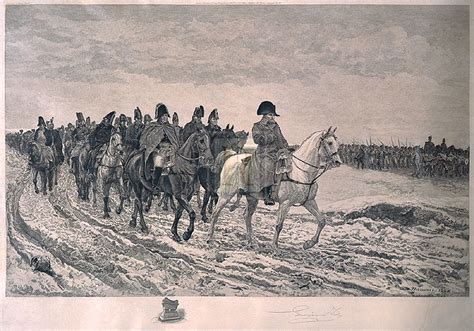
In War and Peace, he depicted Napoleon — nourished on Plutarch’s Lives and its portraits of greatness — who marched through Borodino to Moscow and still could not fathom a people who would let their city burn rather than submit. His error was not tactical. It was imaginative: He could not credit the Russians with a logic that was not his own. That is the mistake the architects of this campaign are repeating.
Touval concludes,
The more technologically sophisticated war becomes, the more dangerous it is to place it in the hands of people untrained in irony, contingency and the darker constants of human nature. Such leaders will speak fluently of capabilities, timelines and kill chains. They will have no language for resentment, dishonor, loyalty or grief — and they will discover, too late, that wars are made of these as much as of steel and fire. That is the illiteracy of this war. The algebra of the war makers will have been flawless. But what they cannot read, they will not have reckoned with.
On Nicole Wallace’s MS NOW show yesterday, a military analyst laid out the horror show that will follow if the United States sends “boots on the ground” to seize Kharg Island or, for that matter, Iran’s enriched uranium. Using his imagination, he was very clear about the extreme lengths to which Iran will go to defend itself and the casualties that will result.
Napoleon in Russia sounds about right, only without the snow.