Sunday – All Souls’ Day
Today is a national holiday for Slovenians, a time to gather the family and visit and tend to the graves of members who have passed. It’s a powerful way of balancing grief with the reassurance that life continues.
I borrow the image of balancing from Mary Oliver’s poem “Heavy.” “It’s not the weight you carry,” she reports a friend telling her, “but how you carry it.” Whether one is carrying books, bricks, or grief, it’s
all in the way
you embrace it, balance it, carry it
when you cannot, and would not,
put it down.
Carrying takes practice so Oliver practices. She learns to laugh again, and she lingers
to admire, admire, admire
the things of this world
that are kind, and maybe
also troubled—
This is what Jesus means by heaven on earth. Oliver is lifted up by images of fragility balanced with powerful natural forces, the last pairing being love and death:
roses in the wind,
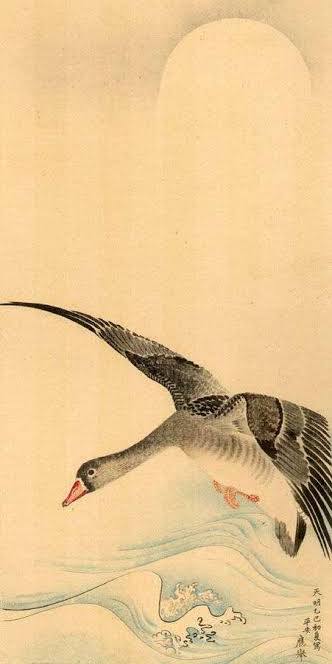
the sea geese on the steep waves,
a love
to which there is no reply?
Notice the question mark at the end, where she leaves it open whether love in fact belongs with the other two. This is the only stanza with five lines, which means that the poem ends not with her love but with the silence of the departed. She is unnerved by the fact that she cannot yet speak with complete assurance.
Before I share the poem, here’s one last thought. In a lecture on Beowulf to Slovenian students this past week, I noted how Beowulf (as I read his confrontation with Grendel’s Mother) walks up to her lake of grief and plunges in. Not all characters in the poem can do this, and we are told that a deer pursued by hounds would rather be torn apart on the shore than enter those waters. King Hrethel, to cite a human instance, retreats to his bed when he loses his eldest son and never gets up again. Like Oliver, he thinks that he “could not/ go any closer to grief/ without dying.”
It takes courage to face up to the heart’s anguish, the kind (here we get Oliver’s own image of being torn apart) that Daniel exhibits in the lions’ den. During her own grieving she learns, as Beowulf does, that she will not be ravaged upon close contact.
“Surely God/ had his hand in this,” she thinks before adding, “as well as friends.” She has Daniel, and Beowulf, when battling dragon depression, has Wiglaf. Overcoming the dragon leads to a shining moment:
[Wiglaf] saw too a standard, entirely of gold,
hanging high over the hoard,
a masterpiece of filigree; it glowed with light…
As is characteristic with Oliver, her own luminescent vision involves images from nature: a rose and wild geese.
And underlying it all, she hopes and prays, is love.
Heavy
By Mary Oliver
That time
I thought I could not
go any closer to grief
without dying
I went closer,
and I did not die.
Surely God
had his hand in this,
as well as friends.
Still, I was bent,
and my laughter,
as the poet said,
was nowhere to be found.
Then said my friend Daniel
(brave even among lions),
“It is not the weight you carry
but how you carry it—
books, bricks, grief—
it’s all in the way
you embrace it, balance it, carry it
when you cannot, and would not,
put it down.”
So I went practicing.
Have you noticed?
Have you heard
the laughter
that comes, now and again,
out of my startled mouth?
How I linger
to admire, admire, admire
the things of this world
that are kind, and maybe
also troubled—
roses in the wind,
the sea geese on the steep waves,
a love
to which there is no reply?