Friday Memories of Books That Shook My World
Last week I reported on my introduction to theater. I write today about another play, this one seen at the legendary Comédie Française. My father that year was conducting research into French poet Guillaume Apollinaire at the Bibliothèque Nationale while my brothers and I (except for Sam) attended a French School. At one point he got tickets for Edmund Rostand’s verse drama Cyrano de Bergerac (1897) and then gave me an English translation of the play to prepare me.
I was thirteen at the time and fell in love with first the play and then the performance. I don’t know whether it was Jean Piat or Paul-Émile Deiber playing Cyrano that night—both were legendary in the role—but the audience gave the actor at least seven curtain calls and perhaps more. I was one of those applauding and applauding as I watched audience members throw flowers on the stage. I will never forget the grand finale when the mortally wounded Cyrano inadvertently reveals to Roxana that it was he, not the handsome but inarticulate Christian, who declared his love.
More on that in a moment. First, however, I was enchanted (as are many) by the play’s best-known interchange, where Cyrano responds to a vicomte’s stupid insult—”You…you have… hmm ……a very large nose!”—with an eloquent response:
Cyrano Ah no! That’s too brief, young man!
You might have said…Oh!… a hundred things, to plan
by varying the tone … for example just suppose…
Aggressive: ‘I, Sir, if I had such a nose,
I’d have it amputated on the spot!’
Friendly: ‘But it must drown itself a lot,
you need a drinking-bowl of a special shape!’
Descriptive: ‘It’s a rock! … A peak! … A cape!
What’s that, it’s a cape?….. It’s a peninsular!’
Curious: ‘That oblong bag what’s it serve you for?
A sheath for scissors? Or a writing case?’
Gracious: ‘Do you love the winged race
so much, that you benignly set yourself
to provide their little claws with a shelf!’
Insolent: ‘Sir, when that pipe of yours glows
does the tobacco smoke rise from your nose
and make the neighbours cry, your chimney’s on fire?’
Considerate: ‘Have a care, … lest your head grow tired
of such a weight … and it’s the ground you sit on!’
Tender: ‘Have a small umbrella fashioned,
for fear lest in sunshine it lose all its colour!’
Pedantic: ‘That rare beast, Aristophanes, Sir,
named Hippocamp-elephanto-camelos,
must have on its head such flesh, such a solid boss!’
Familiar: ‘The latest fashion, my friend, that crook
for hanging your hat on? True, it’s a useful hook!’
Eloquent: ‘No winds at all, majestic nose
can give you colds! Except when the mistral blows!’
Dramatic: ‘When it bleeds it’s the Red Sea!’
Admiring: ‘What a sign for a perfumery!’
Lyric: ‘Is this a conch? … are you a Triton?’
Simple: ‘This monument, when does it open?’
Respectful: ‘Sir, allow me to congratulate you
that’s what we call owning a gabled view!’
Rustic: ‘Nah! That thing a nose? No way, not it!
That’s a dwarf pumpkin, or a giant turnip!’
Military: ‘Point that thing towards the cavalry!’
Practical: ‘Do you want it entered in the lottery!
Certainly, sir, it would be the biggest prize!’
Or lastly … parodying Pyramus’s sighs:
‘Behold the nose that mars its owner’s nature
destroying harmony! It blushes now, the traitor!’
As a child who loved words, I regarded this as the ultimate way to respond to a bully. My world expanded as I saw how language can be wielded to maintain one’s dignity. So many options!
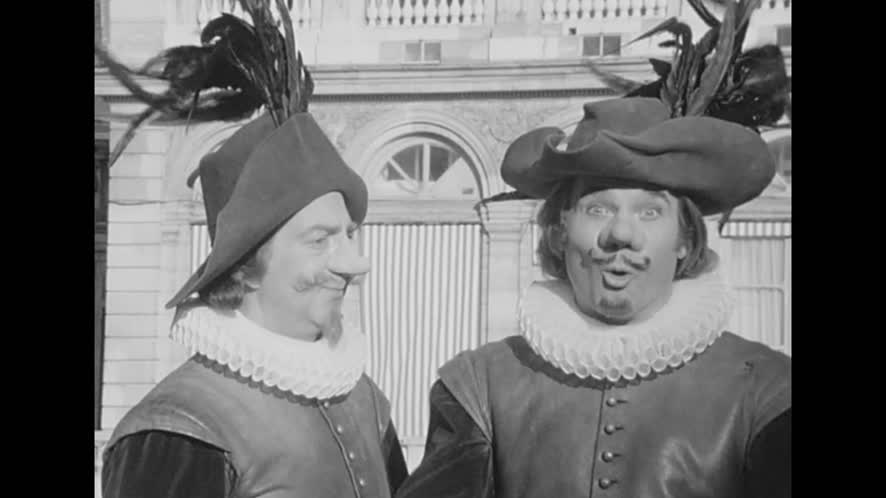
George Bernard Shaw, who as a critic advocated for the realist theatre of Henrik Ibsen, didn’t care for Cyrano. Its tale of swashbuckling bravado and unrequited love, set in rhyming couplets, was altogether too romantic for him. Not that Rostand cared. He set his play in the glorious age of the three musketeers (D’Artagnan even makes an appearance), and the audience at the Comédie Française was totally up for it. So was I as a youthful teenager aspiring to a noble life. Cyrano embiggened me, as Lisa Simpson would say.
I also felt embiggened by Cyrano’s heroic self-sacrifice for the woman he loved. Teenagers are discovering new worlds, and Cyrano’s love letter to Roxane (written, remember, in Christian’s name) was a new world:
Roxane, farewell, since I shall die!
I think my love that it will be tonight!
My soul still heavy with unspoken love, I pass!
No more, no longer, will my intoxicated eyes, alas,
my glances for which it meant tremulous delight,
be able to kiss the gestures you make, in flight:
and I see, again, that little familiar way
you have of touching your forehead, and wish to say
And say, again: Farewell.
My dear, my dear one, my treasure.
My love!
My heart has never forgotten you for one second,
and I am, and will be, even in the world beyond,
the one who loves you beyond measure, the one…
Some time later, after Christian has died and a mourning Roxane has retired to a convent, we see Cyrano stumbling to keep his regular weekly meeting with her. He has sustained a mortal blow from an assassin and imagines himself dueling with death. His exit is glorious:
No matter! I fight on! I fight! I fight again!
(He makes passes in the air, and stops, breathless.)
Yes you take all from me: the laurel and the rose!
Take them! Despite you there’s something though
I keep, that tonight, as I go to meet my Deity,
will brush the blue threshold beneath my feet,
something I bear, in spite of you all, that’s
free of hurt, or stain,
(He springs forward, his sword raised)
and that’s…
(The sword falls from his hand; he staggers, and falls back into the arms of Le Bret and Ragueneau.)
Roxane (bending and kissing his forehead)
That’s? …
Cyrano (opening his eyes, recognizing her, and smiling as he speaks: the actor must try to convey the multiple meanings of the word panache, a feather, the plume in his hat, display, swagger, attack, or just spirit.)
Mon panache!
I understood that Roxane is his white plume and I reveled in it.
“We are such stuff as dreams are made of,” Shakespeare writes in The Tempest, and those dreams begin expanding as we leave childhood. Adulthood will offer us opportunities to turn the dreams into reality so it’s important that the dreams be big. Looking back I can see ways in which Rostand’s story of creative wit, soaring love, and heroic self-sacrifice provided guidance for a life devoted to literature, service, and loved ones.
Previous Posts of Books That Shook My World
Androcles, My Intro to Theater (Nov. 20, 2026)
Why Flannery O’Connor Shook My World (Nov. 13, 2026)
A Teenager Pinned and Wriggling on the Wall (Nov. 6, 2026)
Tell-Tale Heart Terrified Me as a Teen (Oct. 30, 2026)
Why I Hated Catcher in the Rye (But Not Any More) (Oct. 23, 2026)
The Iliad Saved My Freshman Year (Oct. 16, 2026)
At 12 I Fell in Love with Taming of the Shrew (Oct. 9, 2026)
Alice Captured My Childhood Anxieties (Oct. 2, 2026)
How Tintin Gave Shape to My Sense of Wonder (Sept. 25, 2026)
E. Nesbit’s Formative Moral Influence on My Life (Sept. 18, 2026)
Lord of the Rings: Trudging up Mount Doom with Frodo (Aug. 28, 2026)
The Silver Chair and a Childhood Love (Aug. 21, 2026)
My Childhood Encounter with Wind in the Willows April 14, 2026)