How many a man has dated a new era in his life from the reading of a book. – Henry David Thoreau
Friday Memories of Books That Shook My World
I write today to figure out why I was captivated by a Shakespeare play I encountered in seventh grade. I spent several weeks in bed that year with a case of mono, perhaps brought about by the stress of civil rights battles. (As a sensitive child, I felt the force of the naked racism voiced by some of my peers.) My father brought home Shakespeare recordings from Sewanee’s English Department and two in particular pulled me in.
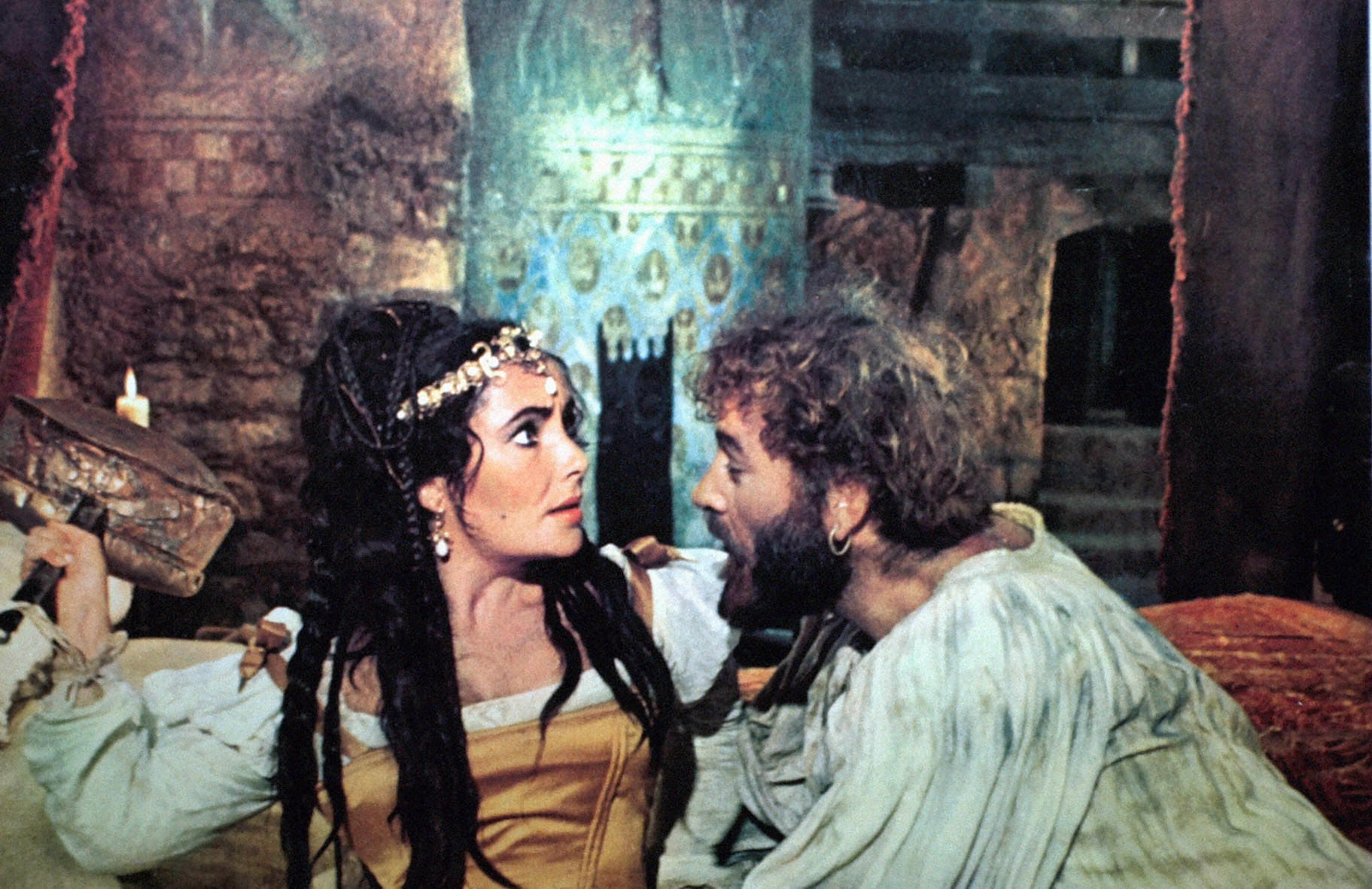
While I now understand why I loved Twelfth Night–it helped me negotiate gender confusion over my girl side (more below)–I’ve never figured out why I listened multiple times to the problematic Taming of the Shrew. In it, the father decrees that “good sister” Bianca, whom everyone desires, cannot be married until her older sister, shrewish Katherine, is married off. Fortune hunter Petruchio shows up, relieves the father by taking Katherine off his hands, and then proceeds to torture tame her so that, by the end, she is more docile than even her sister. There are few speeches more difficult for an actor to deliver in our feminist era than Katherine’s final admonition. Here’s an excerpt:
Petruchio: Katharina, I charge thee, tell these headstrong women
What duty they do owe their lords and husbands.
Kate: …Thy husband is thy lord, thy life, thy keeper,
Thy head, thy sovereign; one that cares for thee,
And for thy maintenance commits his body
To painful labour both by sea and land,
To watch the night in storms, the day in cold,
Whilst thou liest warm at home, secure and safe;
And craves no other tribute at thy hands
But love, fair looks and true obedience;
Too little payment for so great a debt.
Such duty as the subject owes the prince
Even such a woman oweth to her husband;
And when she is froward, peevish, sullen, sour,
And not obedient to his honest will,
What is she but a foul contending rebel
And graceless traitor to her loving lord?
I vaguely remember enjoying this scene, a happy conclusion to lives previously in tumult, but that’s not what most stood out. I was more impressed by Katherine’s battles with her sister, with the men who outwardly insult her, and with Petruchio. Although I was charmed by the secret love affair between Lucentio and Bianca, I was buoyed by Kate’s energy.
Modern audiences don’t like how this energy is quenched. Shakespeare is Shakespeare in large part because of his complex characterizations, which allow him to find humanity in even such monsters as Claudius, Macbeth, Richard III, and Shylock. He’s also noteworthy for transforming popular genres in spectacular ways, as he does with the revenge tragedy in Hamlet. What, then, are we to make of his trafficking in the popular shrew taming plot, which goes back at least as far as the medieval mystery plays (where Noah’s wife refusing to enter the ark entertained the masses).
The Folger Theater’s website speculates that the wife taming theme was popular in Elizabethan England because a “crisis of order” involving significant economic, demographic and political changes was producing “acute anxiety about conventional hierarchies.” To this can be added England’s female monarch. We’ve seen how, in repressive societies today, men will sometimes compensate for feelings of social powerlessness by asserting control in the domestic sphere.
In Shakespeare’s England, sometimes shrews were forced to wear iron gags, subjected to dunking stools, or paraded around on carts. In the 1580 English ballad entitled “A Merry Jest of a Shrewd and Curst Wife Lapped in Morel’s Skin for Her Good Behavior,” a man beats his wife with sharp rods until she bleeds and then wraps her in the salted skin of a dead horse to intensify the pain of her wounds. The result is a tamed wife. (Go here for more details.)
Embarrassing as it is to admit it now, I got some enjoyment from watching Katherine get tamed. A shy and effeminate boy, perhaps I felt a little more manly at watching Petruchio subdue his wife. I’ve detected some macho envy in my response to Twelfth Night so let me detour into that for a moment.
I identified fully with Viola in that play and have speculated that it was because she was male on the outside, female within. My favorite scenes were those where she is challenged to duels, which reminded me of encounters with football-playing bullies. But my favorite part of the duel sequence was when Sir Toby, mistaking Viola’s twin brother Sebastian for her, gets the crap beat out of him. (“He has broke my head across and has given Sir Toby a bloody coxcomb too,” moans the effeminate Sir Andrew Aguecheek, with whom I also partially identified). It was like the fantasy in comic book ads where the weakling, by purchasing weights, avenges himself on the toughs that once kicked sand in his face.
So yes, I can see why a drama about a strong man subduing an emasculating woman would have appealed to an American boy in 1963.
That was not the major reason for my enjoyment, however. Just as I had identified with Viola, so did I identify with Kate. It’s when Petruchio is subjecting her to food and sleep deprivation and humiliating her publicly that I felt closest to her. In the chaotic wedding scene, I remember feeling sorry for her as her father does, even though previously he has been a relentless critic:
Go, girl; I cannot blame thee now to weep;
For such an injury would vex a very saint,
Much more a shrew of thy impatient humor.
Some deep part of me felt that Kate was acting up because no one understood that she was different. I was more put off by the men around her that feel free to take potshots whenever they want. I was particularly repulsed by how everyone at the end bets on the new wives. This male fraternity was alien and distasteful to me. Therefore, I remember enjoying those moments when Kate fights back, as she does with her lute instructor:
Father: Why, then thou canst not break her to the lute?
Hortensio: Why, no; for she hath broke the lute to me.
I did but tell her she mistook her frets,
And bow’d her hand to teach her fingering;
When, with a most impatient devilish spirit,
‘Frets, call you these?’ quoth she; ‘I’ll fume with them:’
And, with that word, she struck me on the head,
And through the instrument my pate made way;
And there I stood amazed for a while,
As on a pillory, looking through the lute;
While she did call me rascal fiddler
And twangling Jack; with twenty such vile terms,
As had she studied to misuse me so.
Looking back, I realize that I related to her as I related to Shylock, another play I listened to at the time. It wasn’t only Shylock’s “if you prick me” speech that brought me to his side but also—perhaps more so–the way society gangs up on him. My experience with the civil rights battles familiarized me with how a smug society scapegoats people who don’t fit in, whether African-Americans, Jews, or forceful women.
I saw Petruchio as the one male exception, perhaps because he also is an outsider. As a result, he can see how Katherine is superior to Bianca. In fact, for all his gaslighting and other torture tactics, my major disappointment was when he joins the other men in their dick-waving contest. More important than proving himself the manliest man, I felt, was his special relationship with Kate. Why did he descend to their level?
Thus I unconsciously anticipated contemporary attempts to salvage the play, with some versions imagining Petruchio and Kate secretly or at least implicitly collaborating to mock their society.
Something about reading Taming at an early age may have entered into my later relationships with women, who were generally closer to forceful Kate than to “sweet Bianca.” Not that my wife and my close women friends are shrews, but they have an energy that sparks. If Petruchio is not just another guy trapped by patriarchy, he would treasure and encourage that spark in his wife, which in turn would allow Kate to shed her defensiveness and have fun with him. They could become Beatrice and Benedict in Much Ado about Nothing.
I questioned Shakespeare at the beginning of today’s post, wondering whether he serves up a caricature rather than a three-dimensional woman. I’ve talked myself round to a view that I instinctively grasped in seventh grade: that Kate has substance and worth, towering over the other characters and finding a match only in Petruchio. Her taming in this light can be seen as a sop thrown to audiences of the time. The real story is her magnificence.
Previous posts on memorable book encounters
Alice Captured My Childhood Anxieties (Oct. 2, 2026)
How Tintin Gave Shape to My Sense of Wonder (Sept. 25, 2026)
E. Nesbit’s Formative Moral Influence on My Life (Sept. 18, 2026)
Lord of the Rings: Trudging up Mount Doom with Frodo (Aug. 28, 2026)
The Silver Chair and a Childhood Love (Aug. 21, 2026)
My Childhood Encounter with Wind in the Willows April 14, 2026)