Note: If you wish to receive, via e-mail, (1) my weekly newsletter or (2) daily copies of these posts, write to me at rrbates1951@gmail.com. Comments may also be sent to this addss. I promise not to share your e-mail with anyone. To unsubscribe, write here as well.
Friday
This is the latest post in my on-going series on “My Life in Literature,” which appears every Friday. Because an informal autobiography written by my great grandmother Eliza Scott means so much to me—she discusses the novels that were important to her as she grew up in Victorian England—I figured I should do something similar for family members who come after me. Of course, the subject is also consistent with the mission of this blog, which is to explore the many ways that literature enhances and sometimes changes our lives.
Believe it or not, literature made it into the delivery room as Julia was giving birth to our first child. Her water broke when we were returning home from our childbirth class, and a few hours later we were in the Douglasville GA birthing center, at the time the only one that had midwives and that allowed husbands to be present at the delivery. When things got serious, Julia wanted to hear my voice so I started reciting, for what felt like hours, poems that came to mind.
I mostly remember reciting Victorian nonsense poetry, such as Louis Carroll’s “Jaberwocky” and Edward Lear’s “The Jumblies,” “The Owl and the Pussycat,” and, above all, “The Courtship of the Yonghy-Bonghy-Bo.” I incanted more than recited this last as it took on a hypnotic quality. Here’s how it opens:
On the Coast of Coromandel
Where the early pumpkins blow,
In the middle of the woods
Lived the Yonghy-Bonghy-Bo.
Two old chairs, and half a candle,
One old jug without a handle–
These were all his worldly goods,
In the middle of the woods,
These were all his worldly goods,
Of the Yonghy-Bonghy-Bo,
Of the Yonghy-Bonghy Bo.
Remembering back, Julia says that “Yonghy-Bonghy Bo” worked as a kind of lullaby, taking her into another space as the labor pains hit. Children’s nonsense poetry seemed somehow appropriate—a way of ushering our child into the world—and my incantation also assured her that I was fully present: we were working as a team. As I’ve noted in a past post, we first met over poetry and now, in the most meaningful moment so far in our young married lives, poetry was bringing us together in another way.
I am far from the only partner who left the birth experience awestruck by the power and resolve that women tap into while giving birth. I, who spend much of my life in my head, saw the world in an entirely new light. In addition, there was the rush that came from holding Justin in my arms. At that moment I realized my life had a new purpose. A passage from a Jean Paul Sartre play came to mind.
No doubt you’ll find it strange given that it involves death rather than birth. (“I had seen birth and death, but had thought they were different,” I hear T.S. Eliot saying.) It also seems inappropriate in that it involves a man lecturing a woman. Set that aside, however, because what I recall most from The Flies is a man determined to engage with life at a new level of seriousness.
The Flies is a retelling of the Orestes-Electra story. The two have avenged their murdered father by murdering their mother and her lover. After this, they are beset by the furies (or their lacerating guilt, if you want to get psychological). But where Electra freaks out and blames Orestes for having pulled her into the act, Orestes embraces the consequences:
Yes, my beloved, it’s true, I have taken all from you, and I have nothing to offer in return; nothing but my crime. But think how vast a gift that is! Believe me, it weighs on my heart like lead. We were too light, Electra; now our feet sink into the soil, like chariot-wheels in turf. So come with me; we will tread heavily on our way, bowed beneath our precious load. You shall give me your hand, and we will go–
Electra: Where?
Orestes: I don’t know. Towards ourselves. Beyond the rivers and mountains are an Orestes and an Electra waiting for us, and we must make our patient way towards them.
The lines that I stood out in those early days were “We were too light…; now our feet sink into the soil” and “bowed beneath our precious load.” Also, I thought of Julia and me walking, hand in hand, towards our true selves, which we were discovering on the fly.
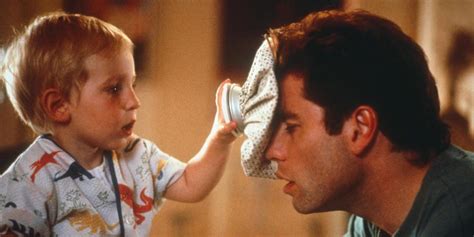
Justin was born March 12, which meant that there was a gap between Julia’s maternity leave and summer vacation. I too was teaching so I would take Justin with me to Emory, with fellow student Eliza Davis looking after him during class time. (Student conferences were often held with Justin in my lap.) I have two stories that stand out from those days.
In one, while descending the elevator with Justin asleep in my arms, I overheard a distraught student pouring out his heart to a fellow student. I think he had just failed an organic chemisty test, which meant that his dreams of becoming a doctor had been dashed. His interlocutor then exited, leaving just the three of us in the elevator—at which point he looked over at Justin and said, in the most plaintive and heartfelt voice I have ever heard, “I wish I was there again.”
The other story traumatized me for months. My advisor was leaving to become dean of the faculty at the University of Rochester and we were interviewing replacements. I brought Justin to one presentation, sitting in the very back of the room, where I thought we wouldn’t be noticed. While Justin didn’t cry, however, he was noticed. Following the talk the department chair rose and said, “Before we have questions, I’d like to ask Mr. Bates to remove his child from the room! It has been most irritating!”
I turned bright red, snatched up Justin, and ran out the door. Then, because I had left his diaper bag behind, I had to skulk outside the room until the session was over—like a child sent from class—to retrieve it. I returned home, asked my neighbor to look after Justin for a few moments, and then curled up in the fetal position on the couch. Because of how power dynamics work in graduate programs, I felt like I had ruined my life chances forever.
Looking back, I understand the chair’s reaction. A southern gentleman in the old style—one who referred to his wife as “the casserole queen”—he saw a rigid demarcation between work and home. Someone bringing a child to an occasion like this must have seemed like desecrating holy ground. It was as though I had pissed in the holy of holies.
So why did I think I could do it? Having attended Carleton at the height of the counterculture, I had watched various boundaries being dismantled and perhaps figured that this was one more that could come down. Perhaps there was even an unconscious element of protest: graduate programs can be arid–Wordsworth’s “we murder to dissect” comes to mind—so introducing into this world the human being who was putting me in touch with my full humanity seemed like a healthy thing to do. Academic culture could be changed!
Only it couldn’t, at least not yet. The Age of Aquarius apparently was not yet dawning.
While I’m talking about culture shocks, here’s another. When I was teaching Death of a Salesman in an Intro to Drama class, I automatically assumed that the class would see the play as I did, which was as a stinging indictment of capitalism: business uses up its workers and then spits them out. I didn’t anticipate that the students would blame Willie Loman, not the system, for losing his job. It was his fault that he was not up to the task.
Once again I realized that the ideal world I dreamed of creating was far from realization.
But back to Justin, who I began reading to as soon as he showed an interest. One joy of parenting is revisiting the books you loved as a child. True, this is less the case when they are very young and insist on hearing the same story over and over. I had entire books memorized.
To keep myself interested, I started putting my graduate training to use and engaged in elaborate interpretations. Al Perkins’s Hand, Hand, Fingers, Thumb, I decided, is about masturbation, as is (more obviously) Maurice Sendak’s “In the Night Kitchen.” I subjected the Berenstain Bears series to ideological analysis and mentally mapped the narrative structure of Dr. Seuss’s Go, Dog, Go.
Of course, none of this I shared with Justin. He just loved the zest I put into the readings: “Millions of fingers, millions of thumbs, millions of monkeys drumming on drums!”
Although I found some time to read for my dissertation when Justin napped, generally I would have to wait for Julia to return from school. At around 3:30 I would hand him off to her and head for the graduate school library, where I worked until it closed at midnight.
Somehow the thesis got written.