Wednesday
This past November my English professor son alerted me to a thoughtful essay on “The Claims of Close Reading” by Johanna Winant. As humanities programs at West Virginia University were being hollowed out, she turned to her classes for refuge. “Where everything else everywhere else felt exhausted,” she writes,
the classroom was overflowing, plentiful. It was a space for analytic thinking, longform attention, clear expression, cooperative conversation—democratic society and a richer life. All we needed was a poem, a few hours each week, and trust in what we could do, in what we did do, together.
And then the clincher:
This task was very simple as well as very hard. In every course, at every level, every semester—in every single class, multiple times every week—I taught close reading.
According to Winant, close reading is currently having a moment. For an explanation, she connects “the renewed focus on our fundamental methodology” to “the austerity that has been inflicted on the humanities since the 2008 financial crisis led universities to freeze hiring, with conditions only continuing to erode since then with still more retrenchment and some institutions’ destructive embrace of AI.”
I don’t entirely follow her reasoning here, unless she sees withdrawing into literary works as something akin to monks withdrawing to monasteries as barbarians ravage the surrounding countryside. In any event, that’s how she used the discipline. “My students,” she writes, “showed me how simple and how hard it can be to notice, to point to a detail that’s really on the page and small enough to fit under your finger.”
So as not to appear entirely insular, Winant says that close reading has led to her students developing important life skills:
My students offered arguments, but they also showed me what making an argument offered them. One, who went on to be a nurse, told me that she writes notes for doctors the way we made arguments in class—interpreting and connecting symptoms, then making a claim with stakes—and they always do what she says. Another student told me that she filed a police report about an assault by writing her account as an argument, moving from noticing to claiming, so she would be understood and believed.
As a history major at Carleton College (1969-73), I didn’t encounter the phrase “close reading” until I enrolled in Emory’s English PhD program, and at first I was amazed at what my fellow students could do. Their ability to detect underlying image patterns in a work appeared like pulling rabbits out of a hat. I realized I would need to master this practice and in fact did so.
I’ve written about how I had majored in history rather than English because of the way New Criticism dismissed from consideration historical context, author biographies, and reader perspectives. How could those be irrelevant when the Civil Rights movement and the Vietnam War were dominating my life? In grad school, then, my challenge became to reconcile the different approaches.
I concluded that, while the words on the page had to be the starting point of any conversation about literature, that conversation could then go in multiple directions. What did those words tell us about an author attempting to make sense of the world or a society undergoing significant upheaval? What did it mean that different readers and different time periods could take those exact words and interpret them differently? The fact that text-focused New Criticism, Structuralism, and Deconstruction would ultimately give way to New Historicism indicates that I was far from the only scholar searching for alternatives.
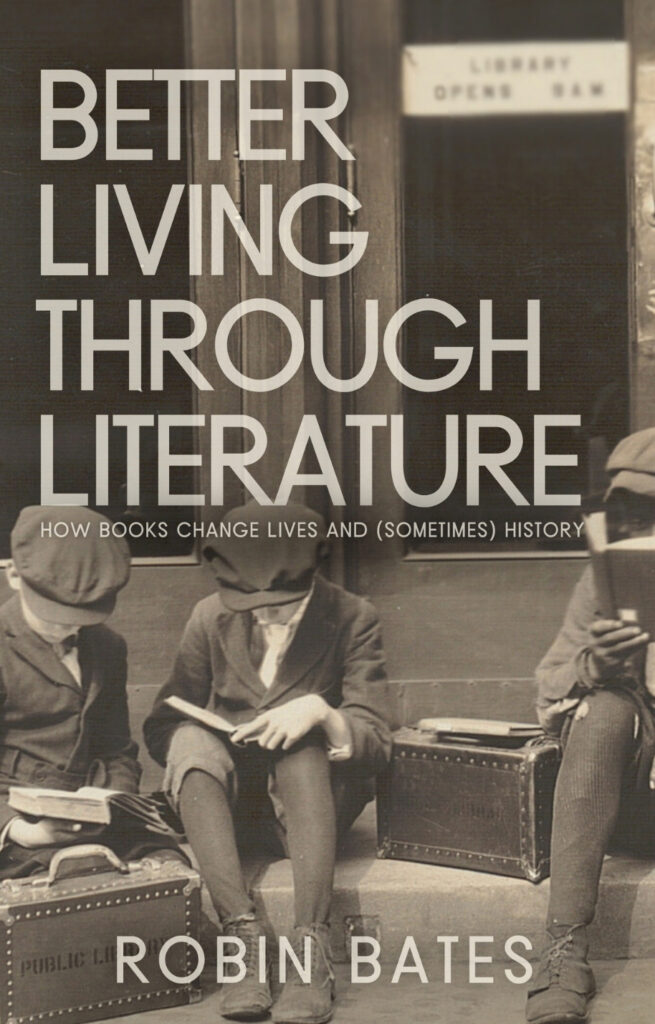
Nevertheless, although my own thinking has taken a decidedly utilitarian direction, close reading is still at the core of my practice. I contend that, if one begins by playing close attention to the text, powerful and potentially life-changing insights emerge. As my book Better Living through Literature is filled with examples, both my own and those of my students, I’ll only mention one here.
When I realized, after losing my oldest son, that Beowulf has powerful insights into the grieving process, I subjected the work to close reading. I saw the hero’s underwater contest with Grendel’s Mother as a meticulous psychological description of someone responding to debilitating grief, with no detail offered up by the text as too small to overlook. It was important to me that the lake was frozen on the surface but hot underneath—an image of repressed rage—and that one must dive directly into the anguish rather than shy away from it. (We learn that a deer fleeing from hounds would rather be torn apart on the shore than enter the dark waters.) It’s important as well that Beowulf’s normal ways of battling monsters don’t work on Grendel’s Mother, that he must draw on a primal power (a sword forged by giants before the flood) if he is not to be buried under the weight of his grief or succumb to the knife that the monster is stabbing at his heart.
In short, I went into the work convinced that a close reading would provide me with the guidance I needed. I came to see my own grieving process as a necessary journey that would take me through dark realms before I could see daylight again. As a result, I resolved to follow the grieving wherever it led rather than fight it.
Perhaps New Criticism lionizing the text to the exclusion of all else was a necessary stage if we were to take the words on the page as seriously as we would come to. Perhaps the same defense can be offered up for Deconstruction’s “il n’y pas hors-texte”(there is nothing outside the text). But once sufficient attention was being paid, we could go further than New Critics and deconstructionists were willing to go. In the world beyond the text, we could make our close attention pay off in tangible ways.
My advice to literature teachers, then, is to communicate a “why” when one is teaching close reading. The implied answer when I was in college—a beautiful work is so amazing that surely you want to see and understand its complexity—wasn’t enough for me (although it was for others). But I’m not offering up literature’s functionality as the ultimate answer. Those interested in practicality often prefer more direct routes than literature, which while it tells the truth tells it slant. For me, the magic lies in the balance between the delight we take in beauty and its practical application. Thinkers have been negotiating this balance for millennia, including Aristotle, Horace, Sir Philip Sidney, Percy Shelley, Matthew Arnold, Bertolt Brecht, W.E.B. Du Bois, Wayne Booth, Martha Nussbaum, and countless others.
Above all, I should mention John Stuart Mill, the great utilitarian who, as president of St. Andrew’s University, required all students to take literature classes and who may be the individual most responsible for Winant and me getting to teach close reading in the first place. “Who does not,” he said to the faculty and students who gathered for his inauguration, “feel himself a better man after a course of Dante, or of Wordsworth, or, I will add, of Lucretius or the Georgics, or after brooding over Gray’s “Elegy [Written in a Country Churchyard]” or Shelley’s “Hymn to Intellectual Beauty?” Such a course of study, he contended, lifts us above “the miserable smallness of mere self” and “brings home to us all those aspects of life which take hold of our nature on its unselfish side, and lead us to identify our joy and grief with the good or ill of the system of which we form a part.”
Imagine providing young people with the opportunity to find refuge from the world’s slings and arrows while simultaneously furnishing them with tools for better handling them.
And having fun in the process.