Note: If you wish to receive, via e-mail, (1) my weekly newsletter or (2) daily copies of these posts, write to me at rrbates1951@gmail.com. Comments may also be sent to this address. I promise not to share your e-mail with anyone. To unsubscribe, write here as well.
Tuesday
I’m revisiting an old Barbara Kingsolver interview because, in addition to providing insight into one of my favorite contemporary authors, it also has a series of questions that all literature lovers will benefit from answering. Along with Kingsolver’s responses, I’m providing some of my own. If any of you write back, I’ll share your answers as well. Here are the questions:
–Earliest reading memory
–Favorite book growing up
–The book that changed me as a teenager
–The writer who changed my mind
–The book that made me want to be a writer
–The book or author I came back to
–The book I reread
–the book I enjoyed as a teenager but would never read again
— The book I discovered later in life
–The book I am currently reading
–My comfort read
My earliest reading memory
For Kingsolver, it was encountering the word “orange” when reading a newspaper over her father’s shoulder, at which point “my brain flooded with the thrills of colour and taste. I was hooked, forever.”
For myself, I remember being enchanted by the fact that, by simply changing the first letter of a word, you could change the word (as in “cat” to “hat”). I was four or five at the time and I can still remember where I was standing when, in my excitement, I explained this to a grown-up.
My favorite book growing up
For Kingsolver, it was Katharine Lee Bates’s fairytale collection Once Upon a Time, which scared her senseless. As she notes,
This collection was no holds barred, with fully grotesque illustrations: two-headed giants, stolen babies. Toads and Diamonds, featuring a curse that made toads crawl out of a girl’s mouth instead of words. I credit this book with launching me into adult literature at the age of 12.
I’ve written numerous times about the book that saved my childhood was The Hobbit and Lord of the Rings, which I encountered in fourth or fifth grade. Tolkien’s vast “world building” fantasy taught me that the imagination has no limits.
The book that changed me as a teenager
Kingsolver says she was embarrassed to be cast as Juliet in 10th grade English and so clowned around. As a punishment, she had to “copy out sonnets until I was truly sorry,” which prompted her to fall for language, meter and Shakespeare. To this day she thanks her teacher.
I was really upset at having to attend a military high school (the only good school in the area), but having a teacher who had us read the entire Iliad aloud cushioned the blow. I had always loved Greek myths and, for the first time in my life, an English class was assigning reading I cared about.
The writer who changed my mind
For Kingsolver, this was Dorris Lessing, especially her Children of Violence novels. Kingsolver explains that she “suddenly had new eyes for racism, sexism, southern Africa and my own segregated town in Kentucky. Also, new eyes for what literary fiction can be and do in the world.” One sees in Kingsolver’s own novels a determination to make the world a better place.
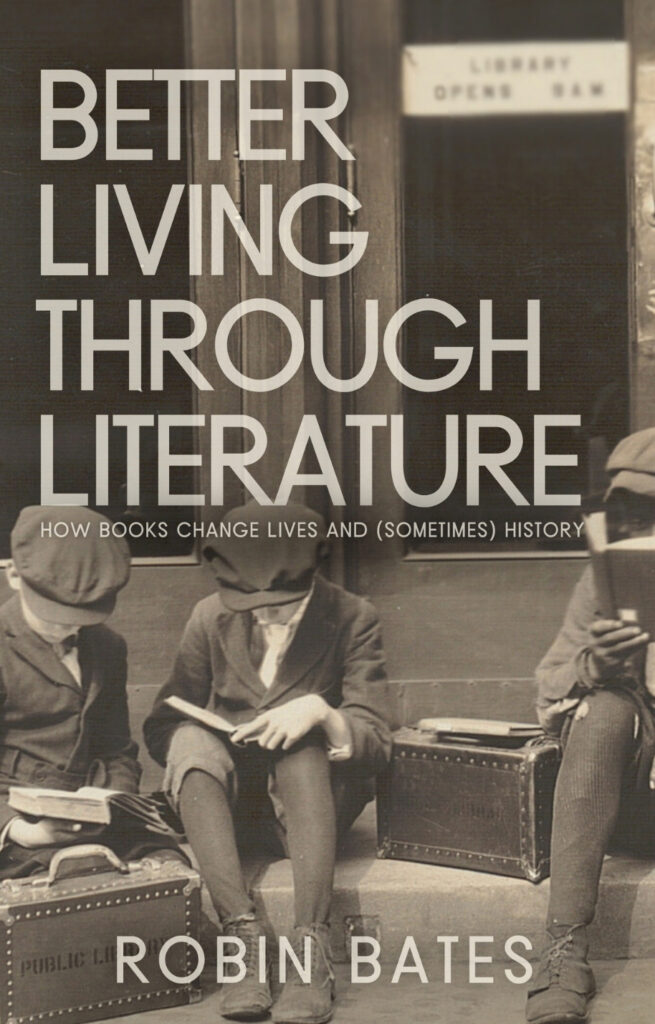
In my book Better Living through Literature I express gratitude to the two novels that gave 11-year-old me a firm foundation as my parents joined black parents to fight for integration in segregated Tennessee: Huckleberry Finn and To Kill a Mockingbird. While I saw racism all around me, these books let me know that good people did not think this way.
The book that made me want to be a writer
Kingsolver names John Steinbeck’s Cannery Row, which she describes as a funny, beautiful novel about an odd little scramble of not-important people.” She thought, “I could try to write a book like that,” and she went on to produce her first novel, The Bean Trees.
When I was in high school, the fiction writer I imitated was Albert Camus, especially his allegorical short stories. They seemed at once mysterious and filled with deep import. I stopped writing fiction when I got to college, however.
The book or author I came back to
Kingsolver names Charles Dickens, which comes as no surprise since Demon Copperhead owes its structure and many of its characters to David Copperfield. About Dickens Kingsolver writes,
I liked him well enough as a younger reader but didn’t appreciate his genius. The craft is so solid, you don’t see the director backstage manipulating plot and point of view. Now, as a novelist, I’m back there with him asking after every scene, “How the heck did you pull that off?”
I find myself choosing Dickens as well. I too found him pleasant enough but now am dazzled by his depth. Another work, which as a teenager I read in a French abridged version, is Victor Hugo’s Les Misérables. As with Dickens, I enjoyed it at the time but now, upon rereading, I now rank it up there with War and Peace in its sweeping portrayal of the human condition.
I’ll return to the rest of the questions in tomorrow’s post.