Note: If you wish to receive, via e-mail, (1) my weekly newsletter or (2) daily copies of these posts, notify me at rrbates1951@gmail.com and indicate which you would like. I promise not to share your e-mail address with anyone. To unsubscribe, send me a follow-up email.
Friday
This upcoming week, as our two sons and five grandchildren visit us, I will be reposting essays from this past year that stand out for me. In this first one, I thank Kate Atkinson, whose novels I have fallen in love with, for giving me special insight into this blog and my literary project generally. If you’re interested in what I’m all about (and it’s okay if you’re not), this is a good essay to read.
Reposted from January 26, 2024, slightly amended
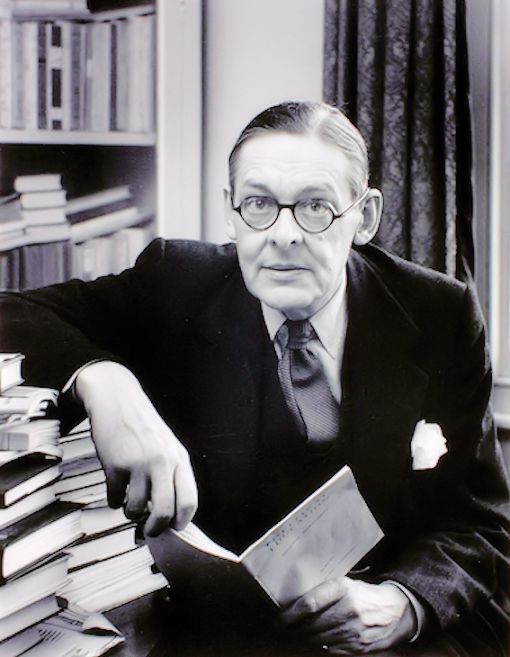
I owe to novelist Kate Atkinson a major self-insight, one that I touched on in Tuesday’s post and that I elaborate on today. This blog, which I launched on April, 2009 and have been maintaining faithfully six days a week ever since (for one exhausting spell, it was seven days a week), is not unlike the Modernist project that T.S. Eliot describes in The Waste Land. I too use cultural and poetic fragments to “shore up against my ruins.”
I hope you’ll indulge me as I engage in a bit of navel-gazing. To see myself as doing anything remotely like what Eliot does in The Waste Land catches me off guard as the poet’s signature poem has frustrated me ever since I encountered it in a Carleton College survey class. Despite great lines like “April is the cruelest month” and “I will show you fear in a handful of dust,” it utterly baffled me and made me feel stupid.
And it wasn’t only Eliot that baffled me. A lot of poetry from this era struck me as inaccessible. For me to conclude that Better Living through Beowulf is a Modernist project, therefore, is like Molière’s bourgeois gentleman waking up one day to discover that all his life he has been speaking in prose:
MONSIEUR JOURDAIN: Oh, really? So when I say: Nicole bring me my slippers and fetch my nightcap,” is that prose?
PHILOSOPHY MASTER: Most clearly.
MONSIEUR JOURDAIN: Well, what do you know about that! These forty years now I’ve been speaking in prose without knowing it!
I can’t explain the rationale behind Modernism in a short space but suffice it to say that it was characterized by intense experimentation, with poets prepared to reject what people normally thought of as poetry. The reason lies in the changing landscape: no longer could people confidently assert, as they had in the 19th century, that one day great minds would formulate theories that explained whole fields (think Marx, Darwin, and Freud). Instead, everything seemed to be fragmented. As a short piece in Poetry Foundation reports, figures like Gertrude Stein explored the possibilities of creating literary works that “broke with conventional syntactical and referential practices” while Ezra Pound’s guiding star was to “make it new” and “break the pentameter.” The essay notes that Waste Land became the “archetypical Modernist text, rife with allusions, linguistic fragments, and mixed registers and languages.”
Many people were angry at the Modernist movement, feeling that it was taking poetry away from them. Where, they wondered, were the regular rhythms, the rhyming, the clear themes? Not that earlier poetry was necessarily self-explanatory, but Modernist poets seemed to introduce new levels of obscurity. Or that’s how it seemed to me. As a scholar specializing in the 18thcentury—famous for the Age of Reason—I was accustomed to more direct discourse.
Once, when discussing this with my St. Mary’s colleague Bruce Wilson–a brilliant literary mind who taught courses on “Dante and Eliot” and “Yeats and Japanese Noh Theatre”–I told him that Modernism was the one period that I just didn’t get. He replied that the 18th century was that way for him.
Nor is he alone. In the semi-autobiographical novel The Bell Jar, Sylvia Plath’s protagonist explains that the 18th century literature requirement is what kept her from majoring in English:
There were lots of requirements, and I didn’t have half of them. One of the requirements was a course in the eighteenth century. I hated the very idea of the eighteenth century, with all those smug men writing tight little couplets and being so dead keen on reason. So I’d skipped it. They let you do that in honours, you were much freer. I had been so free I’d spent most of my time on Dylan Thomas.
I wouldn’t characterize Dryden and Pope, the foremost practitioners of the heroic couplet, as smug, but I get Plath’s point. They are nowhere near as elliptical and confessional as she is in her poetry. I myself prefer their poetry, which explains further my shock at discovering my kinship with Eliot.
How is my blog a Modernist project? In my early days as a scholar, I sought to come up with a universal theory about literature’s impact upon audiences. Knowing that novels, plays, and poems had shaped my own life in profound ways, I thought I could use the emerging fields of reception theory and reader response theory to provide significant answers to the question, “Why literature?” I soon came to realize, however, that there are far too many variants at play, variants involving both multiple definitions of literature and multiple responses from audiences, to arrive at anything comprehensive.
Blogging provided an Eliot-like solution, however. If, on a daily basis, I recorded ways that this or that work—let’s call them fragments of the larger field—were shoring up my life, then I was partially answering the question I had set out to answer. Even if I couldn’t generalize, I could offer personal testimony.
I’m sounding almost confessional when I say this, not unlike a confessional poet such as, say, Sylvia Plath. And while I hastily add that I’m interested in a wide variety of responses, not only my own, a daily blog is still a fairly random and haphazard way to explore literary impact. Whatever is happening, from one day to the next, prompts me to search for relevant literary works.
Which is to say, I am responding to people using literature as Eliot responded to his confusing, chaotic world, only I do so as a scholar rather than as a poet. Suspicious of tidy generalizations, Modernists grabbed whatever was around them. A character in Kate Atkinson’s God in Ruins refers to the process as “scraps from her ragbag because words were all that were left now.” Eliot sometimes appears to throw literary passages, like spaghetti, at the wall to see what will stick. In any event, we all of us seem to be preforming a kind of bricolage, which is to say attempting to create something out of anything that comes to hand.
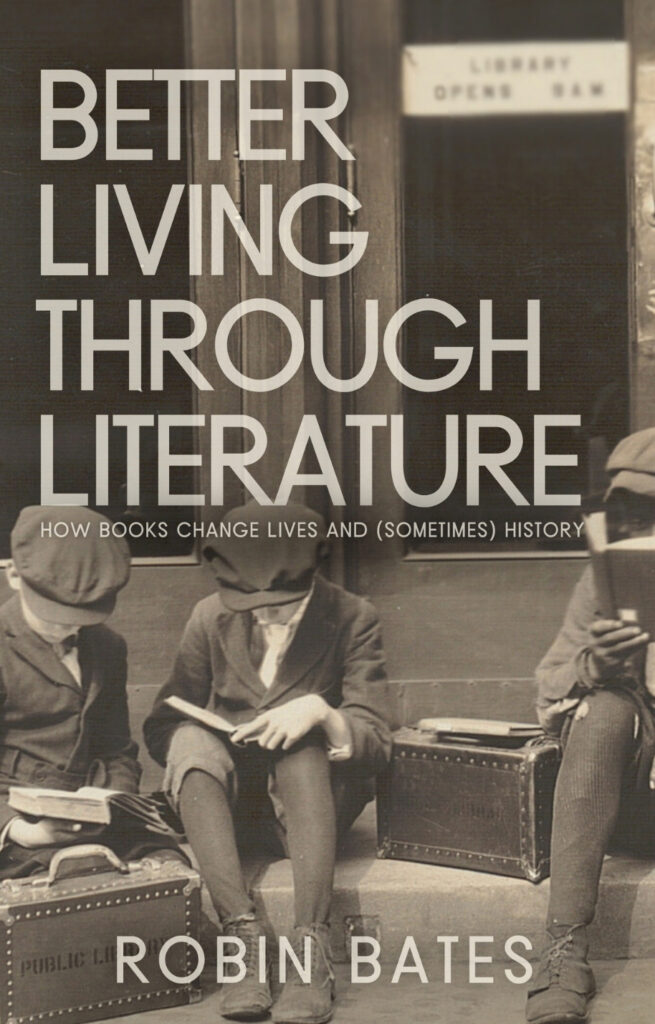
I tried to be more systematic in my other large-scale attempt to explore literary impact, which was to write a book on the subject. Predictably, however, Better Living through Literature: How Books Change Lives and (Sometimes) History is no more successful that my other efforts at arriving at a unified theory. Instead, it settles for surveying what major thinkers throughout history have said on the subject. In the end, I hope that readers will at least get a sense of the possibilities.
To be sure, many of the thinkers–even when they are disagreeing with each other–don’t have my level of doubt. Aristotle, for instance, seems certain that everyone shares his own cathartic experience when watching Oedipus Rex, and Sir Philip Sidney is absolutely convinced that works like The Aeneid will cause people to become more virtuous. But if I have not been able to achieve their level of certainty—that’s why I don’t settle on just one of them—I hope my readers will be able to choose the ones that speak most directly to them.
As for myself, my two favorite theorists are Percy Shelley, who believes that great literature causes historical shifts (albeit sometimes slowly), and Wayne Booth, who says that it changes individuals. Others may find a guide in Plato or Matthew Arnold or W.E.B. Du Bois or Rachel Blau DuPlessis. In the end, perhaps we can do no other than adopt the explanations that resonate with us most.
Which is largely how the Modernists saw things.