Note: If you wish to receive, via e-mail, (1) my weekly newsletter or (2) daily copies of these posts, write to me at rrbates1951@gmail.com. Comments may also be sent to this address. I promise not to share your e-mail with anyone. To unsubscribe, write here as well.
Sunday
For this week following Christmas, I am reposting my favorite essays from 2025.
Reprinted from Aug. 9, 2025, slightly amended
I am no theologian and so can’t speak systematically about what God is, but my mind still grapples with the question. Carl Sagan once observed that there are more stars in the universe than there are grains of sand on earth, and while that couldn’t possibly be true, it does help get at the immensity of what we are talking about. Just as the universe is not only bigger than we think but bigger than we can think, so God is bigger than even that.
But if this is so, how can we imagine that God cares about us? After all, compared to the universe, we are so infinitesimally tiny as to practically not exist. “Not one sparrow will fall to earth without your father’s care,” Jesus assures us in Matthew 10:29, which means that the impossibly large and the impossibly small are somehow bound together. How can this be?
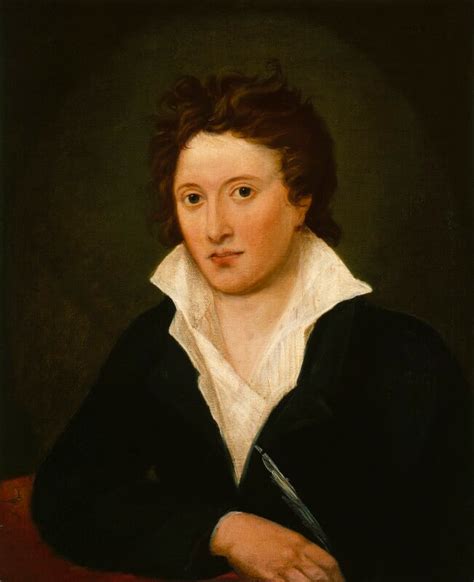
Percy Bysshe Shelley comes as close to resolving this conundrum for me as anyone. Although Shelley was famously kicked out of Oxford for co-authoring a pamphlet entitled “The Necessity of Atheism,” in his poem Adonais he talks of “the One Spirit,” which could just as well be called God. In Shelley’s eyes, the One Spirit
Sweeps through the dull dense world; compelling there
All new successions to the forms they wear;
Torturing th’ unwilling dross, that checks its flight,
To its own likeness, as each mass may bear;
And bursting in its beauty and its might
From trees and beasts and men into the heaven’s light.
If one sees creation as the process of the One Spirit blowing through matter—“torturing th’ unwilling dross”—so that new forms are created, then one has an image of how large and small interact. Shelley says that this Power “wields the world with never wearied love,/ Sustains it from beneath, and kindles it above.”
Dante articulates a version of this vision in the Divine Comedy, beginning with humans who are locked in the hell of self but ending with the celestial rose of Paradiso, where the poet is able to envision, through specially granted insight, the whole universe being driven by “the love that moves the sun and the stars.” Reflecting the astronomy of his day, Dante gets only as far as Saturn and the fixed stars—those we can see with the naked eye—but that’s vast enough to get his point across.
I had a vision of the One Spirit at work during our church’s Adult Forum this past year, which had nature as its focus. As different experts talked about different dimensions of the natural world and our natural bodies, each astounding in its creative complexity, I thought of the God of Genesis looking at creation and seeing that it was good. I felt the same as one of my reading groups discussed Richard Power’s The Overstory and then, this past week, Zoë Schlanger’s The Light Eaters: How the Unseen World of Plant Intelligence Offers a New Understanding of Life on Earth. What formerly I had seen as a “green smudge” (Schlanger’s phrase) now seems infused with, well, the One Spirit.
Since Adonais is a poem about the death of a great poet, Shelley focuses on how the One Spirit produces beauty. In lines that we had engraved on our eldest son’s grave, Shelley writes,
He is made one with Nature. There is heard
His voice in all her music, from the moan
Of thunder to the song of night’s sweet bird.
He is a presence to be felt and known
In darkness and in light, from herb and stone…
In other words, Keats is a particular sensitive receiver of the One Spirit; he is dross that comes as close as dross ever can to capturing the beauty and enchantment of that Spirit. Our interactions with nature are heightened by his poems like “Ode to a Nightinggale,” just as they are by, say, the Hudson Valley painters or Beethoven in his Pastoral Symphony.
As he mourns Keats, Shelley is somewhat consoled by the idea that his friend is being reunited with this energy source: “He is a portion of the loveliness/ Which once he made more lovely.” If this is true, then there is no final death because we are all part of the eternal Spirit. “The One remains, the many change and pass;/ Heaven’s light forever shines, earth’s shadows fly,” Shelley writes, and then elsewhere,
The splendors of the firmament of time
May be eclipsed, but are extinguished not;
Like stars to their appointed height they climb,
And death is a low mist which cannot blot
The brightness it may veil.
Shelley, in short, comes close to answering the question that has triggered this post. The Book of Job does so as well. When Job expresses his anguished sense that he has been abandoned by God, God responds with a version of Shelley’s One Spirit: while not catering specifically to the individual tragedies of infinitesimally small beings, God points out that He/She is nevertheless present in our lives. Somewhat sarcastically God asks Job,
Where were you when I laid the foundation of the earth?
Tell me, if you have understanding.
Who determined its measurements—surely you know!
Or who stretched the line upon it?
On what were its bases sunk,
or who laid its cornerstone,
when the morning stars sang together
and all the sons of God shouted for joy?
While I didn’t think of either Shelley or Job when we lost Justin, I remember thinking of God in these terms. I didn’t blame God because I didn’t think that God interacts with us as one individual to another. Rather, I saw God as presenting me with a Spirit I could embrace. If I opened myself to its light, even at the darkest of times, I could move beyond perpetual gloom.
I couldn’t do this all at once, nor could Shelley. The early parts of Adonais are filled with his despair at Keats’s death. But he has faith that a greater force—one manifesting itself as love and beauty—is at work in our lives. That faith gave me something to rally around.