Wednesday
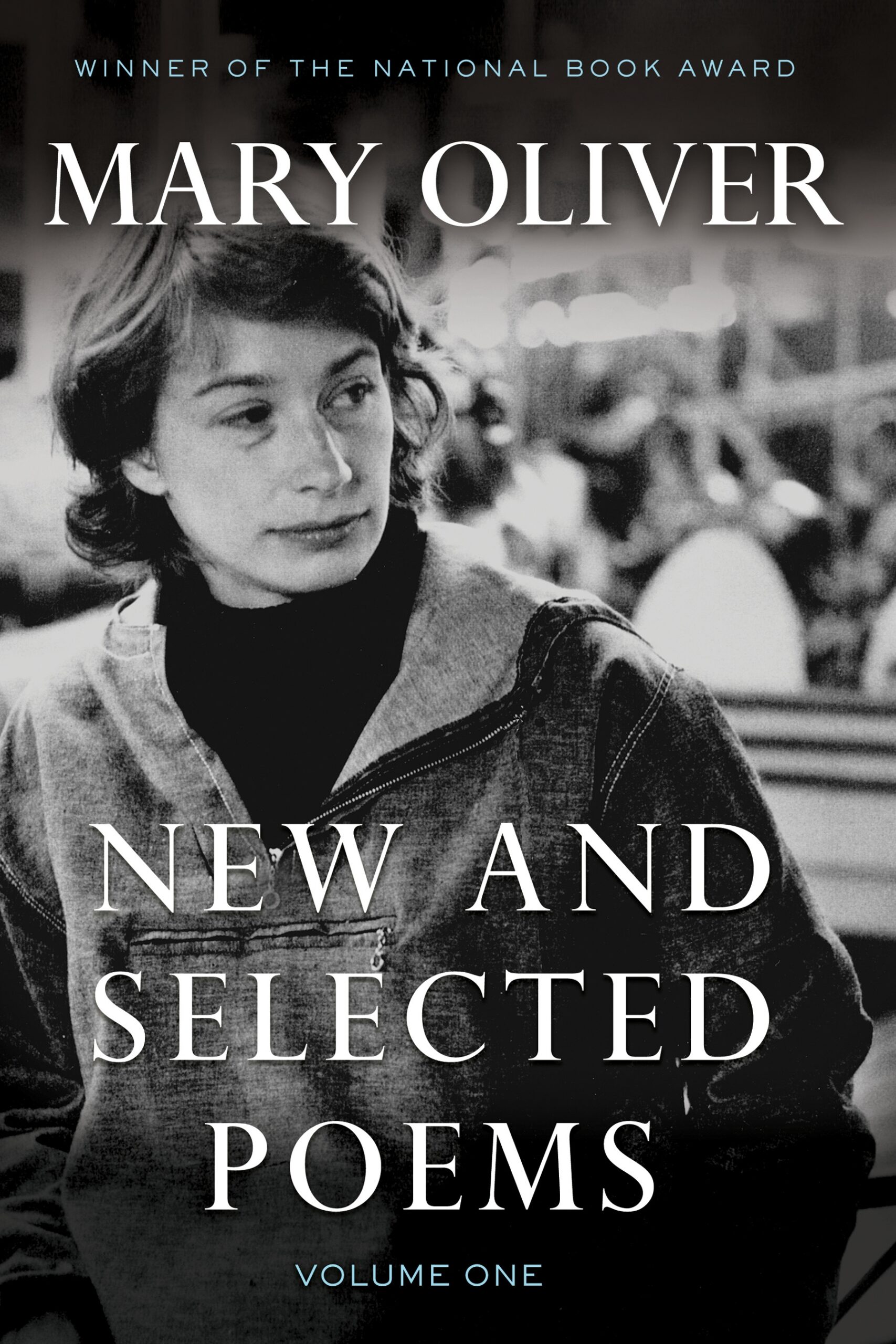
Hillary Kelly of the Atlantic recently penned a “defense” of Mary Oliver, a poet I have taught frequently, blogged about many times, and once dined with. If you like her poetry, perhaps you didn’t know she needed defending.
Apparently it’s her very popularity that motivates some of her detractors. As Kelly notes, she is “today’s still-reigning poet laureate of Pinterest”:
Her juiciest bits of guidance bounce around on social media like Mel Robbins quotes and are sold on mugs and T-shirts. There’s the burgundy corduroy cap that reads LET THE SOFT ANIMAL OF YOUR BODY LOVE WHAT IT LOVES and the bumper sticker (from the official Mary Oliver Shop) emblazoned with JOY IS NOT MADE TO BE A CRUMB.
Kelly also quotes a review by David Orr, who
snidely remarked of Oliver’s poetry, “One can only say that no animals appear to have been harmed in the making of it”; he also declared, “There’s a bunch of talk about using poetry to overcome personal challenges (if it worked as self-help, you’d see more poets driving BMWs).”
It’s this last point that I want to address given the utilitarian bent of my blog. I like Kelly’s response to Orr:
But poetry, like any other writing, is allowed to work toward a goal—so long as it doesn’t lose its structural integrity. Perhaps the problem isn’t that poetry fails to help one overcome challenges, but that its reputation doesn’t give it enough credit for that very thing.
Once having staked out this position, Kelly follows up with, “Even after allowing that poetry can of course offer advice, the question of whether Oliver’s advice is any good is worth debating.” If the advice is facile, then the answer would be “no,” and Kelly provides a couple of examples. For instance:
I quibble with her notion that one could easily give up worrying: SSRI-usage rates are too high for that to feel possible. And I wonder what she means, exactly, by “good” when she says, “You do not have to be good,” in “Wild Geese”—her next line likens it to walking “on your knees for a hundred miles through the desert repenting,” but surely the matter of goodness involves a more complicated definition than just self-flagellation. Other lines seem so undoubtedly true that it’s no wonder they’ve ended up on apparel. She ends her poem “When Death Comes” with, “I don’t want to end up simply having visited this world.” Do any of us? If poetry is, at least partly, the art of minute observation, Oliver’s work might come off as trite when it expounds so universally.
After this “quibbling,” however, Kelly then proceeds with her defense. If appearing on coffee mugs were enough to dismiss a poet, she says, then what are we to do with John Keats’s “a thing of beauty is a joy forever.” For that matter, what about Eliot’s “I will show you fear in a handful of dust” or Pope’s “A little learning is a dangerous thing” or the hundreds of memorable quotes from Shakespeare? “The medium has always been delightfully co-opted this way,” Kelly observes before adding,
when a line of poetry zooms off from the rest of its body, it can’t lift up the whole of the genre with it—and poetry, with its quiet place in the literary firmament, would probably like all the boosterism it can get.
The real question, Kelly goes on to say, is whether Oliver’s advice is “hard-earned,” which I see connected with the question of structural integrity. Do her insights grow organically out of her exploring? Before addressing this, however, I want to expand on the issue of poetry offering advice.
Kelly notes that “there is an (often unspoken) assertion that poetry ought not to give advice, that it should exult in the ambiguous.” She adds that poetry, “perhaps more than any other writing genre, is unfairly assigned a value that is in direct opposition to its usefulness.”
I take up the issue in my book, noting how the New Critics in the 1950s and 1960s were fond of quoting W. H. Auden’s “poetry makes nothing happen,” William Carlos Williams’s “it is difficult/ to get the news from poems,” and even Oscar Wilde’s “All art is quite useless.” In response I write,
By cordoning off life from literature, they ceded too much ground. By seeing poetry as only existential or spiritual, not pragmatic, they underestimated the many down-to-earth ways people use poems and stories to enhance their lives.
Referencing a recent documentary on Oliver, Kelly contends that her poetry is indeed hard-earned, beginning with a difficult childhood. The story arcs found in her poems remind me of George Herbert while her project is similar to Henry David Thoreau’s. Like Herbert, she too struggles through bleak moments before breaking through and like Thoreau she is intent on finding what makes life worth living. Kelly concludes,
Oliver’s poetry was not an act of ease; instead, she rebelled against the way that life presses our head down, away from the wonders of the world. Her advice, for all of its lucidity, is not uncomplicated or effortless. It’s to do something so difficult that most people don’t even attempt it: to notice when we’ve wandered away from how we want to live and to nudge ourselves back. “There are things you cannot reach. But,” she writes, “you can reach out to them, and all day long.”
In my years of teaching Oliver’s Pulitzer-award winning American Primitive in Intro to Lit, I discovered that Oliver does this and more. For instance, she proved very good at reaching my students struggling with depression, which she suffered from as well. Here’s from a post where I shared a student’s essay on “A Poem for the Blue Heron”:
When we are hunkered down in our misery, my student said, we need to tend to whatever little fire we have. In the poem, the blue heron is wading in “the cold ponds of November,” pecking around for meager gatherings with its gray hunched shoulders. It feels itself hardening, like the ice, in the cold. For some reason it has decided not to fly south, perhaps because a warmer and easier life seems a bit complicated, what with its swirling clouds.
Or at least, that’s how the south appears to one who has been conditioned to ratchet down expectations: “Not everything is possible; some things are impossible.”
But although one may only hunker down at the onslaught of winter, there’s something noble about the decision not to die. If the cold wind of depression “shoulder[s] against/the black, wet/bones of the trees,” we need to tend to what little fire we have. I sometimes find myself in awe of those students who suffer from depression (there seem to be an increasing number of them) and yet manage to hang tough.
In the poem, the poet gathers whatever comes to hand when she is in her black periods. Drawing inspiration from her fellow sufferer in the marsh, she has found a cave she can hide in and live. She lights fire after fire after fire.
In “Cold Poem,” another depression poem (discussed here), she talks about what is to be learned from the dark times:
In the season of snow,
in the immeasurable cold,
we grow cruel but honest…
When my best friend was dying in a Bronx hospital, I turned to Oliver’s “University Hospital, Boston”: .
I look into your eyes
which are sometimes green and sometimes gray,
and sometimes full of humor, but often not,
and tell myself, you are better,
because my life without you would be
a place of parched and broken trees.
When we lost our environmental literature professor, I turned to “In Blackwater Woods,” reading the concluding stanzas at the memorial service.
But where Oliver most showed her worth to me was the night after my own son died and I awoke at 2 am confronting the absolute horror of it all. Two lines, including another with the image of a broken tree, came unbidden to my mind and I hung on to them as to a life raft. Appearing in “The Lost Children” (although I didn’t realize that at the time) they were “pain picked him up and held him in her gray jaw” (about a desperate father) and “when loss leans like a broken tree.” Poetry, of course, was not enough for the occasion but it was all I had.
The documentary compares Oliver to Emily Dickinson and that seems right. In both Massachusetts poets one finds moments of wild ecstasy, moments of dark depression, and moments of spiritual revelation. As Kelly puts it, like Dickinson Oliver “set herself apart from the world in order to make better sense of it on paper.”