Poetic Advice for Those Feeling Exhausted

Irish poet and priest John O’Donohue

Note: If you wish to receive, via e-mail, (1) my weekly newsletter or (2) daily copies of these posts, write to me at rrbates1951@gmail.com. Comments may also be sent to this address. I promise not to share your e-mail with anyone. To unsubscribe, write here as well.

Tuesday

People who live under authoritarian regimes risk becoming exhausted and dispirited, which is in fact what authoritarian leaders want. In response to Donald Trump’s assaults on American democracy, various political commentators have been counseling their audiences to pay attention to their emotional well-being. I’ve heard MSNBC’s Ali Velshi advise us to step away from television news from time to time, including his own show, and the spirited blogger Jeff Tiedrich does the same. At the end of his daily off-color rants about rightwing extremists and those who enable them, Tiedrich always adds the following caution: 

this is going to be my closing message for the foreseeable future: practice self-care. do what you need to do to keep sane. if that means you need to disengage with my daily posts for a while, I get it. this community of ours will still be here when you return.

If you do step away, here’s some poetic advice about what to do next. Irish poet and Catholic priest John O’Donohue first describes the exhaustion and then the process of entering what he calls “empty time” or “slow time.” “You have traveled too fast over false ground;” he tells us. “Now your soul has come to take you back.”

Reconnecting includes being “excessively gentle with yourself” and staying clear “of those vexed in spirit.” In the end, he assures us, “you will return to yourself,/ Having learned a new respect for your heart.”

In the dark days of the American Revolution, Thomas Payne famously wrote, “These are the times that try men’s souls.” One must care for this soul, however, if one wants to draw upon its power. O’Donohue tells us how to do so in the form of a poem that is also a blessing. 

For One Who Is Exhausted, a Blessing
By John O’Donohue

When the rhythm of the heart becomes hectic,
Time takes on the strain until it breaks;
Then all the unattended stress falls in
On the mind like an endless, increasing weight.

The light in the mind becomes dim.
Things you could take in your stride before
Now become laborsome events of will.

Weariness invades your spirit.
Gravity begins falling inside you,
Dragging down every bone.

The tide you never valued has gone out.
And you are marooned on unsure ground.
Something within you has closed down;
And you cannot push yourself back to life.

You have been forced to enter empty time.
The desire that drove you has relinquished.
There is nothing else to do now but rest
And patiently learn to receive the self
You have forsaken in the race of days.

At first your thinking will darken
And sadness take over like listless weather.
The flow of unwept tears will frighten you.

You have traveled too fast over false ground;
Now your soul has come to take you back.

Take refuge in your senses, open up
To all the small miracles you rushed through.

Become inclined to watch the way of rain
When it falls slow and free.

Imitate the habit of twilight,
Taking time to open the well of color
That fostered the brightness of day.

Draw alongside the silence of stone
Until its calmness can claim you.
Be excessively gentle with yourself.

Stay clear of those vexed in spirit.
Learn to linger around someone of ease
Who feels they have all the time in the world.

Gradually, you will return to yourself,
Having learned a new respect for your heart
And the joy that dwells far within slow time

Don’t let Trumpism rob you of joy. Of course, it’s proper to be vigilant, but we can stay centered as we step up to the challenges.

Posted in Uncategorized | Tagged , , , , | Comments closed

Racial Profiling in LA? Call in Brecht

Bertolt Brecht

Note: If you wish to receive, via e-mail, (1) my weekly newsletter or (2) daily copies of these posts, write to me at rrbates1951@gmail.com. Comments may also be sent to this address. I promise not to share your e-mail with anyone. To unsubscribe, write here as well.

Monday

Lost in all of last week’s news was the Supreme Court approving racial profiling in armed ICE raids in the Los Angeles area. Apparently the six rightwing justices approve detaining people based solely on the fact that they speak Spanish or are day laborers waiting outside Home Depot. 

The fourth amendment of the Constitution, in case you need reminding, protects individuals “from unreasonable searches and seizures by the government.”

For a while now the Supreme Court has been using the so-called Shadow Docket to overturn intricately reasoned decisions of lower courts. It doesn’t have to explain, just declare, “Because I said so.” In this instance, however, Justice Kavanagh felt so sure of his position that he provided an explanation, which revealed his inability to see the world from anything other than his position of white, upper-class privilege. 

Essentially he claimed that those who are innocent have nothing to fear because “the questioning in those circumstances is typically brief, and those individuals may promptly go free after making clear to the immigration officers that they are U.S. citizens or otherwise legally in the United States.” As he sees it, even if some innocent people are abused in the process, it’s worth it because most Latinos are undocumented people seeking to evade the police. As an opinion writer for Yahoo News observed, “Kavanaugh glosses over the interests of millions of Latino U.S. citizens and legal residents who do not want to risk getting gang-tackled on their way to work.”

The ruling brings to mind Bertolt Brecht’s play The Exception and the Rule, about a merchant who must cross a desert to make his fortune. In the process, we watch the mixed relationship he has with his guide, which culminates in his killing the man after mistaking a helpful gesture as a hostile move. Although the porter has offered him some of their dwindling water supplies, he thinks he is being attacked and shoots.

There is a trial and, although it is agreed that the porter was not in fact attacking the merchant, the merchant is still found to be innocent. The judge rules, “In the circumstances as established, it was inevitable that he should believe himself threatened.” 

Think about that for a moment. The circumstances in this society are such that lower class people are assumed to be hostile. The rule is that they are a threat, the exception is that they are not. Therefore, if mistakes are made, they can be excused.

Isn’t this our situation at present? It is assumed by ICE that anyone who has brown skin and speaks Spanish is here illegally. If they can produce papers, then they are the exception.

And because they are the exception, if ICE agents get it wrong and rough up or imprison a citizen or someone with papers, they are not accountable. After all, “in the circumstances as established, it was inevitable that they would make a mistake.”

When Kavanah says that all they must do is “mak[e] clear to the immigration officials,” I think of the Manuel Muñoz short story I recently wrote about. When an old man is asked why he used to flee the authorities even though he had papers, he laughs:

You think anybody ever believed me? You think they believe you just because you say something? You think all you have to do is say you have papers? Here, my father said, thrusting his hands out as if in offering. Here, my papers.

Brecht’s play, which was intended to awaken workers to society’s double standard, ends with the actors telling their audience to resist normalizing the situation:

There ends
The story of a journey
You have heard and you have seen.
You saw the normal, that which happens every day.
But please, we say to you now:
Even when ordinary, find it strange
Even when familiar, find it ineplicable
Even when quite normal, it must astound you
Even when the rule, recognize it as an abuse
And wherever you have recognized abuse
Put it right!

One person intent on calling out the Kavanagh’s attempt at normalization is Supreme Court Sonia Sotomayor, who protested is the most powerful way available to her,

We should not have to live in a country where the Government can seize anyone who looks Latino, speaks Spanish, and appears to work a low wage job. Rather than stand idly by while our constitutional freedoms are lost, I dissent.”

Not that the rightwing justices care.

Posted in Uncategorized | Tagged , , , , , | Comments closed

Touched by a Presence with No Hands

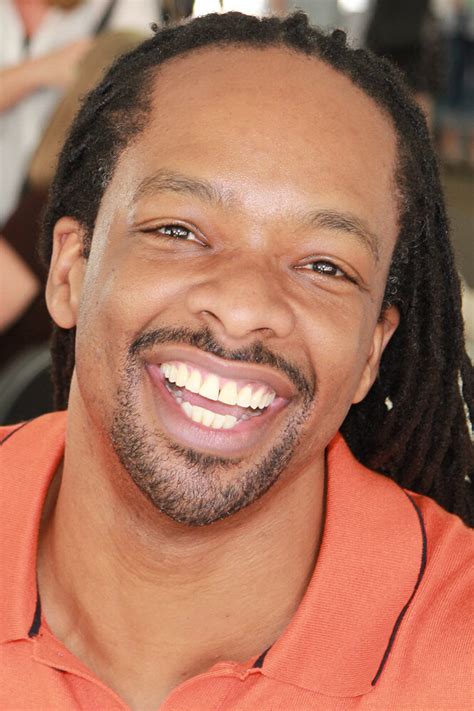
Poet Jericho Brown

Note: If you wish to receive, via e-mail, (1) my weekly newsletter or (2) daily copies of these posts, write to me at rrbates1951@gmail.com. Comments may also be sent to this address. I promise not to share your e-mail with anyone. To unsubscribe, write here as well.

Sunday

In a recent sermon, our curate Kelly Moody introduced me to the poetry of Jericho Brown, a poet steeped in the Bible whose collection The Tradition won the 2020 Pulitzer Prize for Poetry. Our desire to get closer to God, to experience the numinous, she found captured in a passage from Brown’s poem “I Know What I Love”:

I wanted what anyone with an ear wants– 
to be touched, 
and touched by a presence that has no hands

Kelly said that the passage “describes the universal longing and fear that we all have as humans to come closer to the holy.” She noted that the longing is particularly strong in contemporary society, where we’ve “become accustomed to everyday terrors in our culture as though they are acceptable: racism, gender-based violence, school shootings, the realities of death, and the like.”

Kelly detects a prophetic strain to Brown’s poetry, which may be linked to his religious upbringing in an African American church. According to Britannica, during services poems when he was growing up, poems by Maya Angelou, Nikki Giovanni, and other Black writers were read alongside Biblical passages. Brown also says that these church services

put me in contact with the fact that words can have a powerful effect on emotions. That the well said thing could very well lead to shouting and clapping and crying.

Unfortunately, Brown’s church did not accept his homosexuality, and many of his poems capture the separateness he feels in this culture as a gay Black man. Kelly quoted from the poem “Stake”—which invokes images of being tethered to a stake or staked on a cross–and describes what it is like to be a “they,” not a “we”:

I am a they in most of America,
Someone feels lost in the forest of we, 
so he can’t imagine a single tree. 
He can’t bear it. 
A cross. A crucifixion.

In turning to Brown, Kelly was responding to Jeremiah 23:23-28, where the Lord tells the prophet,

Am I a God who is only close at hand? No, I am far away at the same time.

And further on: 

Is not my word like fire, says the Lord, and like a hammer that breaks a rock in pieces?

When Kelly described Brown, like Jeremiah, using prophetic language, she meant “poetic imagery and experiential language that draws us in, deepening our understanding of God’s intimate presence in a world.”

Although we may long for such intimacy, however, it can also be unsettling. Kelly said that sometimes we “would rather imagine God as far away, like a clockmaker, keeping some heavenly peace in another dimension, safely uninvolved in our worldly kingdoms.” By contrast, the prophetic tradition believes that we must be made uncomfortable if we are to remain engaged with God.” After all, God’s word is “like fire and like a hammer that breaks a rock in pieces.” Prophets, she noted “are people who come so close to God, and God comes so close to them, that they know what is most important.”

And that, she said “is the invitation to all of us this morning: to come close, and to be transformed into people who can bear the nearness of God in a world that would rather keep God at arm’s length.” 

After the sermon, I borrowed Brown’s Tradition from Kelly and looked up the poems she had cited. In “I Know What I Love,” I could see Brown engaging in the same back and forth with Love that Kelly described with God. After all, Love, like God, comes to us on its own terms, pulling us out of our comfort zones. Brown notes that it can enter at inconvenient times, and that, furthermore,

It can hurt me if it 
Means to…because 
That’s what in love
Means.

Here’s the poem:

I Know What Love Is
By Jericho Brown 

It comes from the earth.
It is green with deceit.
Sometimes what I love 
Shows up at three 
In the morning and 
Rushes in to turn me
Upside down. Some-
Times what I love just
Doesn’t show up at all.  
It can hurt me if it 
Means to…because 
That’s what in love
Means. What I love 
Understands itself 
As properly scarce.  
It knows I can’t need 
What I don’t go without.  
Some nights I hold 
My breath. I turn as in
Go bad. When I die 
A man or a woman will
Clean up the mess 
A body makes. They’ll
Talk about gas prices
And the current drought 
As they prepare the blue-
Black cadaver that still,
As the dead do, groans:
I wanted what anyone 
With an ear wants— 
To be touched and 
Touched by a presence
That has no hands.

Love for Brown is foundational, rooted in the earth. But for all its promise, it is also “green with deceit,” which I interpret as attached to unreliable bodies. (In his poem “Fern Hill, Dylan Thomas writes about how “Time held me green and dying.”) Some of what Brown says about Love is more about the lover than about Love itself: when he says it is “properly scarce,” this just means that we find it difficult to be fully open to it at all times. I read the lines, “It knows I can’t need/ What I don’t go without,” as Love’s sarcastic refusal to show up on demand (as in, “You can’t really need me if you think this is how love works”).

To emphasize what is at stake, Brown turns to thoughts of his death at the end of poem, along with how unimportant it will seem to other people. Our lives may be transient but our longing for Love’s touch— “a presence”—is transcendent.

Back to Kelly’s sermon, where she proceeded to talk about the nature of such transcendence. “No kind of suffering, or failure, or terror,” she said, “can divide us from what is holy. And by our baptism into Christ’s death and resurrection, we are transformed into people who can bear the nearness of God, too—people who do not make peace with the everyday terrors of this world, but will not normalize or avoid them, either.” She also quoted Biblical scholar Walter Brugemann, who wrote that “prayer is the refusal to accept things as they are.” 

Kelly concluded, 

Prayer empowers us to name our longing to be touched by a presence that has no hands, to name the everyday terrors around us, and to come closer to both our longings and our fears with renewed faith that we will meet God there. 

Brown has said that “poems are like prayers,” adding that, as prayers, “they’re also like chants and spells.” And while he doesn’t use a religious framework to explain poetry’s power in the following quotation, he is essentially saying that poetry can connect us with our inner divinity:

I think poetry evolved to save us from ourselves. It questions our understanding of what it means to be human and, in the process, deepens our humanity. History teaches us — and the daily news reminds us — how easily we forget what it means to be human. Probably no other art form is better than poetry at getting us directly inside another’s mind, experience, perspective. The ability to imagine someone else’s inner life is where compassion begins. 

Amen.

Posted in Uncategorized | Tagged , , , , , | Comments closed

Early Reading Memories

Note: If you wish to receive, via e-mail, (1) my weekly newsletter or (2) daily copies of these posts, write to me at rrbates1951@gmail.com. Comments may also be sent to this address. I promise not to share your e-mail with anyone. To unsubscribe, write here as well.

Friday

I am giving over my Friday blog posts to a memoir I am writing on “My Life through Literature.” Today’s essay is the second in the series. The first can be found here.

We returned to the States when I turned two, and although my parents tried to keep my French going—including reading the books they had picked up in Paris—the language didn’t stick and I would have to relearn it the hard way when I turned 13. We spent a year in Evanston close to my grandmother as my father wrote his dissertation, with my brother Jonathan arriving in August of 1954. A couple of weeks after the birth we headed for Sewanee, Tennessee, where my father had landed a one-year post at the University of the South at Sewanee.

Located 2000 feet up on the western edge of the Cumberland Plateau, Sewanee is breathtakingly beautiful. Nevertheless, we came only because my father hadn’t received any other offers. Or do be precise, he had received an offer from the University of California, Riverside, but thanks to former California Sen. Richard Nixon he would have had to sign a loyalty oath to get the job. So Sewanee it was.

Although my father would be offered a position in the Carleton French Department the following year, the Sewanee position had opened up and he opted to stay. An ardent birdwatcher, he had fallen in love with the mountain environment and had bonded with Stratton Buck, a Flaubert scholar and head of the French Department. As a result, I would grow up in the segregated south rather than in liberal Northfield, Minnesota. Stratton, who served as a father figure, became my father’s staunch defender when his advocacy of integration landed him in hot water with the administration. 

I am still amazed at some of the works that he taught in those early years, including a special seminar for seniors on Proust’s In Search of Lost Time. I, of course, was oblivious to this. The book I remember was The Cat in the Hat.

Doctor Seuss’s classic was somewhat controversial at the time for the way that it acknowledged that children have anarchic alter egos that would take great satisfaction in trashing a house. (Thing One and Thing Two anticipate Max and the monsters in Where the Wild Things Are). Because of my determination to be a good little boy, I was horrified—and yet nevertheless fascinated—by the devastation the characters unleash. Torn in two directions, I ultimately came down on the side of the fish, functioning as the book’s superego. “They should not be here when your mother is out!” he warns continually, and I remember sharing the general panic when the mother is spotted returning. In my memory I can vividly see the glimpse we are given of her red dress and a stylish shoe striding purposefully towards the house. Given the intense anxiety I experienced at the mayhem, the Cat’s special pickup machine came as an intense relief.

The book triggers another memory as well. I distinctly recall standing on the long porch that fronted our three-story wooden apartment building and excitedly explaining to an adult how, by simply changing the first letter of a word, you could create a whole new word (I think I used the example of “cat” to “hat”). This must have been one of those cognitive leaps described by child psychologist Jean Piaget where a child suddenly sees a larger system at work. The fact that I so vividly remember my excitement indicates the importance of the moment. 

Another book I remember from those years, which is very self-revealing when I explore why I loved it so much, is Little Bobo and His Blue Jacket, from the Little Golden Book series that one could purchase in supermarkets. Bobo is an elephant whose mother makes him a blue jacket, which he proudly shows off to his animal friends. Unfortunately he slips in the mud while he’s strutting around and they all laugh at him. To add insult to injury, the coat shrinks when it is being washed—an old monkey washerwoman mishears the mother’s instructions—so that it no longer fits. After a brief moment of sadness, resilient Bobo thinks that maybe the coat will fit one of his friends (those who have laughed at him). Big Brother Hippo is determined to wear it and, in the process of pushing his large arms into the sleeves—he can barely move–he inadvertently stretches it so that Bobo can don it again. Happy ending.

What lessons did I take away? One was not to strut your stuff because it makes you vulnerable to the mockery of others. Another is that, instead of acknowledging your own hurt, you should be selfless and help others. If you do so, you will be rewarded.

I’m not sure which comes first, the book or the character trait—I’m sure they feed off each other—but I grew up fearful of drawing attention to myself (no strutting) and believing it was a good thing to ignore one’s hurt. In other words, I’ve always been a bit repressed, a theme I will return to regularly in these pages.

Other cherished books from these early days were Ruth Krauss’s The Carrot Seed (illustrated by Crockett Johnson) and her collaborations with Maurice Sendak (A Hole Is to Dig and A Very Special House); Eve Titus’s Anatole series; and Kay Thompson’s Eloise.

Then there were the Dick, Jane and Sally series that we had in school and that helped reinforce in me the sense that a white middle class family—woman at home, father at work–was the social norm. It certainly coincided with my own experience of family: my mother stayed at home with the children (David arrived in 1956, Sam in 1960), cleaned the house, and cooked the meals, while my father came home for a sit-down supper at six. After dinner he read to us on the couch in the living room while my mother washed up. 

All parents should read regularly to their children (also share the housework, but that’s another story), but I’m pretty sure my father had an extra motive: by revisiting the books he loved as a child, he reconnected with that childhood. He was obsessed with what he called “the desecration of innocence,” and as I look back at his history I can understand why. At 18 this thin, short-sighted, sensitive, introverted, and very bookish boy was thrust into what Ken Burns’s describes as “the worst war ever,” at one point witnessing firsthand the bodies stacked up in Dachau. If (as my mother frequently informed me) he was enthralled with me when I was born, it was because I was an embodiment of the innocence that he longed for. Reading to me and then later to my brothers allowed him to return to his own innocence.

I think I owe my name in part to his desire to have a relationship with me such as Christopher Robin has with Pooh. Because of that desire, he wouldn’t read to us the final chapter of House on Pooh Corner, which hints that Christopher Robin will be leaving Pooh as he enters grows up. “Pooh, promise you won’t forget about me, ever. Not even when I’m a hundred,” he says, as well as, “Pooh, whatever happens you will understand, won’t you?” By the same token, my father hated the ending of Peter Pan when Wendy grows up. Part of him wanted to be the boy who never aged. 

This desire of his proved to be a double-edged sword as far as I was concerned, however. I’ll talk more about this as my memoir proceeds but it meant that, to be the innocent he wanted me to be, in certain ways I deliberately tried not to grow up. I tried to shut down awareness of the dark things going on in the world and cultivated a certain cluelessness. This became more difficult when I hit middle school, but I still avoided the profanity and sex talk of the other boys and I tried to persuade myself that I didn’t like rock music (I felt guilty for my secret love of the Beatles).

It was a little easier to play the perpetual innocent because, throughout my childhood, we did not have a television. As a result, we could be more easily cloistered in my father’s childhood books. Every night each of us got a chapter and then, when we were in bed, a poem. I’m not sure when I was introduced to certain books (with the exception of Narnia and Lord of the Rings, which I’ll talk about later), but my inner landscape was peopled by Ratty, Mole, Toad and Badger from Wind in the Willows; Lewis Carroll’s Alice; George MacDonald’s Princess and Curdie; E. Nesbit’s Bastable family;  Jim and Long John Silver; Peter and Wendy; the Borrowers; Maria and the professor from Mistress Masham’s Repose; the boys from Cecil Day-Lewis’s Otterbury Incident; a vast array of characters from the Oz books (especially Dorothy, Tip, and the Shaggy Man); Andersen’s Little Mermaid (although I was traumatized by the ending); Tom Sawyer; Penrod; the five little Peppers; Mowgli and the wolves; Charlotte and Wilbur, Phileas Fogg and Passepartout; Alcott’s Little Men (but not Little Women), and the three musketeers.

The poems my father read us included lyrics by Dorothy Alcott, Robert Louis Stevenson, Walter de la Mare, Alfred Noyes, A.A. Milne, James Whitcomb Riley, Ogden Nash, Edward Lear, Lewis Carroll and countless others. We also read Lucy Fitch Perkins’s twin books (The Scottish Twins was my favorite); V.M. Hillyer’s A Child’s History of the World; and J. Walker McSpadden’s How They Carried the Mail. Most of these we still own.

Above all I loved the works of fantasy. Perhaps we were a bit like the Bronte family, who in their childhood buried themselves in their invented world of Gondal. Through our bookish upbringing, it was as though we had entered a magic portal that separated us from the rest of our society. E.D. Hirsch may talk about the importance of cultural literacy in holding a society together, but the common referents for the world in which I grew up were Father Knows Best, Leave It to Beaver, The Flintstones, The Beverly Hillbillies, Get Smart, and The Ed Sullivan Show, not Alice in Wonderland and The Jungle Books.

I don’t regret this upbringing—in fact I’m grateful for it—but it does mean that I’ve often felt out of sync with those around me. I’ve often felt naïve and vulnerable to people who know more about the broader world than I do. Some of the problems caused will become clearer as my memoir proceeds.

Posted in Uncategorized | Tagged , , , , , , | Comments closed

Anti-Vaxxers, Today’s Modest Proposers

Jonathan Swift, author of “A Modest Proposal”

Note: If you wish to receive, via e-mail, (1) my weekly newsletter or (2) daily copies of these posts, write to me at rrbates1951@gmail.com. Comments may also be sent to this address. I promise not to share your e-mail with anyone. To unsubscribe, write here as well.

Thursday

Satirists owe an immense debt to Jonathan Swift and Charles Dickens, two of the English language’s finest practitioners of the art. I had this thought when satirist Alexandra Petri attacked Florida Surgeon General Joseph Lapado for eliminating childhood vaccination requirements. The Atlantic writer was particularly struck by a pious declaration that is reminiscent of the self-righteous workshop trustees in Oliver Twist:  “Who am I as a government or anyone else, who am I as a man standing here now, to tell you what you should put in your body? Who am I to tell you what your child should put in [their] body? I don’t have that right.”

Or as Petri put it, “Sorry. We decided there were too many children.”

I don’t exaggerate when I say that Lapado sounds like a Dickens villain. The men responsible for the welfare of children in Oliver Twist are as intent as Lapado on keeping healthy substances out of children’s bodies:

The parish authorities magnanimously and humanely resolved, that Oliver should be “farmed,” or, in other words, that he should be dispatched to a branch-workhouse some three miles off, where twenty or thirty other juvenile offenders against the poor-laws, rolled about the floor all day, without the inconvenience of too much food or too much clothing, under the parental superintendence of an elderly female, who received the culprits at and for the consideration of sevenpence-halfpenny per small head per week. Sevenpence-halfpenny’s worth per week is a good round diet for a child; a great deal may be got for sevenpence-halfpenny, quite enough to overload its stomach, and make it uncomfortable.

Further on, in a passage that could also be applied to those Republicans determined to deprive impoverished children of school lunches and food stamps, we see the results of governmental neglect:

Everybody knows the story of another experimental philosopher who had a great theory about a horse being able to live without eating, and who demonstrated it so well, that he had got his own horse down to a straw a day, and would unquestionably have rendered him a very spirited and rampacious animal on nothing at all, if he had not died, four-and-twenty hours before he was to have had his first comfortable bait of air. Unfortunately for the experimental philosophy of the female to whose protecting care Oliver Twist was delivered over, a similar result usually attended the operation of her system; for at the very moment when the child had contrived to exist upon the smallest possible portion of the weakest possible food, it did perversely happen in eight and a half cases out of ten, either that it sickened from want and cold, or fell into the fire from neglect, or got half-smothered by accident; in any one of which cases, the miserable little being was usually summoned into another world, and there gathered to the fathers it had never known in this.

“Too many children,” of course, also brings to mind Swift’s “Modest Proposal.” Petri, a new mother herself, sets forth the case against children:

Their hands are too small. Sometimes they are sticky, and no one knows why. They say they’re eating their dinner, but you can see that they are just pushing it around on their plate. They come up to you on the sidewalk and tell you their whole life story for 10 minutes, wearing face paint from a birthday party three days ago. Some afternoons they announce that they are sharks, but they are obviously not sharks. They do this over and over again.

Here are the Modest Proposer’s concerns:

It is a melancholy object to those, who walk through this great town, or travel in the country, when they see the streets, the roads, and cabin doors crowded with beggars of the female sex, followed by three, four, or six children, all in rags, and importuning every passenger for an alms. These mothers, instead of being able to work for their honest livelihood, are forced to employ all their time in strolling to beg sustenance for their helpless infants who, as they grow up, either turn thieves for want of work, or leave their dear native country, to fight for the Pretender in Spain, or sell themselves to the Barbadoes.

As I’m sure you know, the Proposer’s notorious solution is to start stewing, roasting, baking and boiling one-year-olds (“and I make no doubt that [they] will equally serve in a fricassee, or a ragout”). It is a testimony to Swift’s skills as a parodist that many initially missed his satiric point and thought he was serious.

After observing that the Florida Surgeon General’s advocacy for bodily autonomy comes as a shock given the state’s six week abortion ban— “this is America, where you can do anything with your body unless there’s a uterus in it”– Petri notes that Florida “is the first state to take the courageous step toward decluttering itself of excess children” (italics mine). 

The satirist turns momentarily serious at this point, although here too she employs heavy sarcasm:

If we lose herd immunity, we will bring back diseases that had formerly been eliminated, and some children who would otherwise have been protected will perish. But no price is too high to pay in this pointless war against decades of lifesaving science. Confusingly, this effort is being taken up at the same time that people are Very Concerned [Elon Musk] about dropping birth rates, but it makes sense when you understand that they don’t like the children we currently have. They want us to make other ones instead. 

Then comes the satiric clincher:

This is certainly one possible response to the epidemic of mass shootings: unleash another epidemic on our elementary schools. If I had to guess what kind of shot we would make sure schoolchildren got, I would have guessed wrong. I am always guessing wrong. I am always guessing that we want children to live.

At least Swift’s Modest Proposer is no hypocrite when it comes to decluttering. He’s open about not wanting children to live.

Posted in Uncategorized | Tagged , , , , , , , | Comments closed

Dickinson, Crane, and the Epstein Affair

Epstein and Trump

Note: If you wish to receive, via e-mail, (1) my weekly newsletter or (2) daily copies of these posts, write to me at rrbates1951@gmail.com. Comments may also be sent to this address. I promise not to share your e-mail with anyone. To unsubscribe, write here as well.

Wednesday

The always illuminating Greg Olear of the Substack blog Prevail recently wondered whether the full truth of the Epstein affair will ever be known. While a Stephen Crane poem has him feeling pessimistic, it is countered by an Emily Dickinson poem that gives him hope.

We certainly have enough cause to be pessimistic: there are too many powerful people involved, beginning with Donald Trump. Olear points out that

there have been no consequences, zero, for the enablers of Jeffrey Epstein and Ghislaine Maxwell. Two presidents, a prince, a prime minister, a governor, a famous attorney, a Hollywood director, Cabinet members past and present, Silicon Valley billionaires, retail moguls, financiers, bankers, scientists, modeling agents, professors at top universities: We know who they are, anyone with an internet connection knows, but Pam Bondi’s Department of Justice (so-called) will not even deign to produce a list of their names, let alone prosecute any of them.

Crane’s poem doesn’t mention the problem of cover-ups because the poet is talking of truth-seeking more generally. Unfortunately, it’s all too relevant in this case. As Olear glumly notes, we may never know the full extent of what Epstein, Maxwell, and those involved did because “sometimes a darkness is so great that no source of light has the requisite wattage to illuminate it.” Here’s the poem:

Truth
By Stephen Crane

“Truth,” said a traveler,
“Is a rock, a mighty fortress;
Often have I been to it,
Even to its highest tower,
From whence the world looks black.”

“Truth,” said a traveler,
“Is a breath, a wind,
A shadow, a phantom;
Long have I pursued it,
But never have I touched
The hem of its garment.

And I believed the second traveler;
For truth was to me
A breath, a wind,
A shadow, a phantom,
And never had I touched
The hem of its garment.

Then, however, Olear turns to Dickinson and imagines that, perhaps, “the whole truth can be known.” Maybe it takes time for “a truth this abominable, this awful, this diabolically evil” to reveal itself and for people to digest it:

Tell all the Truth but tell it slant—
Success in Circuit lies
Too bright for our infirm Delight
The Truth’s superb surprise

As Lightning to the Children eased
With explanation kind
The Truth must dazzle gradually
Or every man be blind—

Olear asks,

Are we, as a nation, finally ready to believe the survivors? Will each individual candle generate the light needed to penetrate the abysmal Epsteinian darkness? Have the facts dazzled gradually enough that we are no longer in danger of being blinded by them? Can we, at last, grab hold of the hem of the garment and unveil the Truth?

Fortunately there are relentless people, some of them Republicans, intent on such unveiling. The jury, as they say, is still out.

Posted in Uncategorized | Tagged , , , , , , | Comments closed

Samuel Beckett’s Tennis Advice

Samuel Beckett

Note: If you wish to receive, via e-mail, (1) my weekly newsletter or (2) daily copies of these posts, write to me at rrbates1951@gmail.com. Comments may also be sent to this address. I promise not to share your e-mail with anyone. To unsubscribe, write here as well.

Tuesday

The last of the year’s four great tennis tournaments ended this past weekend, and we were fortunate to be treated to sublime performances by the top players in the game. The epic rivalry between Jannik Sinner and Carlos Alcaraz has, as commentator John McEnroe observed, consoled us to losing “the big three” of Roger Federer, Rafael Nadal, and Novak Djokovic. (Djokovic, while still competing, can no longer hold his own against the world’s best.) In the Alcaraz-Sinner match, the players couldn’t rely on errors from the other but had to go all out on every point. When mistakes were made, it was often because anything less than a perfect shot would be insufficient. One doesn’t often see this.

The one finalist this weekend still without a championship to her name was the American player Amanda Anisimova, who hits with remarkable power but could not match the power + variety of Aryna Sabalenka. Although Anisimova acquitted herself much better than she did in the Wimbledon finals, where she suffered a humiliating double bagel (6-0, 6-0), she still lost in straight sets. Because she bounced back to reach the U.S. Open finals, however, a Samuel Beckett quote applies especially to her. 

Beckett was a tennis fan (I learned this from Thomas Swick in a Literary Hub tennis article for Literary Hub), so maybe it makes special sense that the Swiss tennis player Stan Wawrinka would have the following Beckett quote passage tattooed on his arm. 

Ever tried. Ever failed. No matter. Try again. Fail again. Fail better. (Worstward Ho!)

Anisimova failed better this time.

Wawrinka himself had a very un-Beckett turn in his career. After toiling for years in Federer’s shadow, he suddenly stunned the tennis world by wrestling titles away from Nadal and Djokovic, one of the few to do so in the Big Three era. In other words, we can look back at two instances where he didn’t fail.

Wawrinka is the exception, however. Most athletes can look forward only to final failure, which means that Beckett usually gets the last word. In Waiting for Godot, his best known and most accessible work, Vladimir and Estragon never get what they are waiting for. At the end of the play, a messenger boy may tell them, “Mr. Godot told me to tell you that he won’t come this evening but surely tomorrow,” but the “surely” gives away the game. It’s like the Minnesota Vikings awaiting a Super Bowl win.

There’s another Beckett line that may be even more applicable to those who play sports. It’s from Beckett’s novel The Unnamable, a fragmented monologue of someone grappling with identity, existence, and even basic syntax. It ends with a pages-long sentence, which itself ends with: 

where I am, I don’t know, I’ll never know, in the silence you don’t know, you must go on, I can’t go on, I’ll go on.

Forget about confidently striding across the finish line, as Alcaraz and Sabalenka did over the weekend. For most of us it’s a slog just to survive.

An earlier line in Unnamable can also be applied to tennis, which is one of the loneliest sports, comparable to boxing. There are no teammates to bolster you so that, in the end, there is nothing to cushion you against a bad performance. At the highest levels, every mistake is magnified, and if you start spiraling into a 6-0, 6-0 defeat, you may experience a particular kinship with Beckett’s narrator when he declares, “I am of course alone. Alone. That is soon said.” Or for that matter with Coleridge’s Ancient Mariner when he intones,

Alone, alone, all, all alone
Alone on a wide, wide sea.

To be sure, we can fend off Beckett’s Theater of the Absurd pessimism by recalling that it’s the journey, not the destination, that is the point. For all the stress on winning, it’s good to recall the lovely moments along the way. After I’ve played a tennis match, I dwell less on the outcome and more on recalling my best shots, which are often brought out by the heat of competition.

Maybe we don’t need Godot to show up.

Posted in Uncategorized | Tagged , , , , , , , , , , , | Comments closed

Le Guin and the Power of Affirmation

Ursula K. Le Guin

Note: If you wish to receive, via e-mail, (1) my weekly newsletter or (2) daily copies of these posts, write to me at rrbates1951@gmail.com. Comments may also be sent to this address. I promise not to share your e-mail with anyone. To unsubscribe, write here as well.

Monday

Eleven months ago—while Joe Biden was still president—I turned to the Ursula K. Le Guin short story “Things” to better understand why certain North Carolina victims of Hurricane Helene rejected the governmental efforts to aid them. As I noted at the time, 

MAGA thugs have been threatening workers from FEMA (the Federal Emergency Management Agency) in their rescue and clean-up efforts after the two hurricanes. Meanwhile Marjorie Taylor Green—she of “Jewish space lasers” fame—has informed us that Democrats are sending the hurricanes to devastate Trump areas.

In her end-of-days narrative, which bears certain resemblances to Nevil Shute’s 1957 apocalyptic novel On the Beach, Le Guin imagines hysteria seizing the population. We never learn what the impending apocalypse entails, just how the island population reacts to it. With the exception of the protagonist and a woman friend, everyone becomes either a “Rager” or a “Weeper,” either destroying “things” or passively retreating into lamentation.

The brick builder Lif, however, has a different response, which I thought of the other day after encountering an essay by fascism expert Tim Snyder. The historian wrote that, although the president’s attacks on American democracy represent a dire threat, even small actions can start opening up cracks in the assault, leading to its eventual and inevitable collapse. As he put it, “every strike, every protest, every act of organization, every act of kindness and solidarity are also actions for, for a future in which the United States continues to exist.”

We have our own Ragers and Weepers amongst those rooting for a democratic future. Democratic Ragers are not necessarily attacking optimists like Lif, as the Ragers in story threaten to, but they are subject to panic. Meanwhile our Weepers include the “Eeyore Democrats” that I’ve described in a past post.

Lif responds to the end-of-the-world threat by building a brick causeway into the sea, which may seem as pointless as the small acts of protest, kindness, and solidarity that Snyder mentions. Lif escapes the wrath of the Ragers because they think he’s just throwing the bricks away:

Next day he went on carrying bricks down, load after load, and if the Ragers watched him they thought him busy on their own kind of work. The slope of the beach out to deep water was gradual, so that he could keep building without ever working above water. He had started at low tide so that his work would never be laid bare. At high tide it was hard, dumping the bricks and trying to lay them in rough courses with the whole sea boiling in his face and thundering over his head, but he kept at it. Towards evening he brought down long iron rods and braced what he had built, for a crosscurrent tended to undermine his causeway about eight feet from its beginning. He made sure that even the tips of the rods were underwater at low tide, so that no Rager might suspect an affirmation was being made.

So what hope for this affirmation? Optimism in the face of Trumpism can seem similarly hopeless. The situation in the story is certainly desperate:

By God! said Lif, thinking of his underwater road across the sea that went for a hundred and twenty feet, and the sea that went on ten thousand miles from the end of it–I’ll swim there! Now then, don’t cry, dear heart. Would I leave you and the little rat here by yourselves?

And so they venture out:

As they went on the buffeting of the waves got stronger. The tide was coming in. The outer breakers wet their clothes, chilled their flesh, drenched their hair and faces. They reached the end of his long work. There lay the beach a little way behind them, the sand dark under the cliff over which stood the silent, paling sky. Around them was wild water and foam. Ahead of them was the unresting water, the great abyss, the gap.

 A breaker hit them on its way to the shore and they staggered; the baby, waked by the sea’s hard slip, cried, a little wail in the long, cold hissing mutter of the sea always saying the same thing. 

If you’ve marched in anti-Trump rallies and tried contacting your red-state legislators, perhaps you’ve experienced a version of the woman’s reaction:

Oh, I can’t! cried the mother, but she gripped the man’s hand more firmly and came on at his side.

Then the unexpected happens although Le Guin deliberately keeps it vague:

Lifting his head to take the last step from what he had done towards no shore, he saw the shape riding the western water, the leaping light, the white flicker like a swallow’s breast catching the break of day. It seemed as if voices rang over the sea’s voice. What is it? he said, but her head was bowed to her baby, trying to soothe the little wail that challenged the vast babbling of the sea. He stood still and saw the whiteness of the sail, the dancing light above the waves, dancing on towards them and towards the greater light that grew behind them.

And then:

Wait, the call came from the form that rode the grey waves and danced on the foam, Wait! The voices rang very sweet, and as the sail leaned white above him he saw the faces and the reaching arms, and heard them say to him, Come, come on the ship, come with us to the Islands.

Hold on, he said softly to the woman, and they took the last step.

Le Guin’s point with this ambiguous ending is that we can only do what we can do, joining our hands and stepping forth into the unknown. After that, who knows? The image of them in a broiling sea reminds me of one of Dickinson’s most beloved poems. After first comparing hope to a bird—“that thing with feathers”—the poet turns to other analogies:

And sweetest – in the Gale – is heard –
And sore must be the storm –
That could abash the little Bird
That kept so many warm –

I’ve heard it in the chillest land –
And on the strangest Sea –
Yet – never – in Extremity,
It asked a crumb – of me.

Sore indeed is the storm. Soldier on.

Posted in Uncategorized | Tagged , , , , | Comments closed

The Universe in a Clay Jug

Note: If you wish to receive, via e-mail, (1) my weekly newsletter or (2) daily copies of these posts, write to me at rrbates1951@gmail.com. Comments may also be sent to this address. I promise not to share your e-mail with anyone. To unsubscribe, write here as well.

Sunday

This week’s Old Testament reading features Jeremiah employing a somewhat strange analogy that goes in a different direction than I anticipate. The passage sent me scanning my mind for literary works featuring pottery.

Jeremiah (18:1-11) begins with a situation that every potter can relate to:

The word that came to Jeremiah from the Lord: “Come, go down to the potter’s house, and there I will let you hear my words.” So I went down to the potter’s house, and there he was working at his wheel. The vessel he was making of clay was spoiled in the potter’s hand, and he reworked it into another vessel, as seemed good to him.

I thought of a scene from A.S. Byatt’s The Children’s Book, which features a gifted potter and his apprentice. At one point this apprentice invites into the workshop one of the daughters of the family that has taken him in. First we encounter Dorothy watching Philip at work:

Philip was at the wheel, his wet hands inside the moving, growing clay wall of a pot. Dorothy stood in the doorway and watched him. She touched the tips of her own fingers with other fingers, trying to imagine, in her skin, how this work would feel. It was precise, and extraordinary. Philip came to the end of turning, finished his rim, smoothed the sides with a wooden baton, and lifted the bat from the wheel. He said to Dorothy “Hello, then,” without turning round. She hadn’t been sure he knew she was there.

“Would you like to make a pot?”

Dorothy said she would. Philip found a smock for her, and ceded his seat at the wheel. He took a ball of clay, and slapped it on the wheel, and centered it for her. “Now,” he said, “pressi down, so, with both hands—use your thumbs—and feel it come up.

Then we get a reenactment of Jeremiah’s scenario:

Dorothy pressed. The clay was wet and clammy and dead, and yet it had a motion of its own, a response, a kind of life. The wheel turned, the clay turned, Dorothy held her fingers steady inside the red-brown cylinder which rose, with narrowing walls, to the rhythm of the turning. Dorothy was delighted. And then, suddenly, something went wrong—the rhythm faltered, the clay walls frilled, slipped and collapsed inwards, and where there had been a tube there was a flailing blob. Dorothy turned to Philip to ask what she had done wrong. She was half-laughing, half-crying. Philip was laughing. He said “That always happens.”

Jeremiah’s analogy shocks because the Lord threatens to do to Israel what Dorothy does to the pot, only deliberately in God’s case:

Then the word of the Lord came to me: Can I not do with you, O house of Israel, just as this potter has done? says the Lord. Just like the clay in the potter’s hand, so are you in my hand, O house of Israel. At one moment I may declare concerning a nation or a kingdom, that I will pluck up and break down and destroy it, but if that nation, concerning which I have spoken, turns from its evil, I will change my mind about the disaster that I intended to bring on it. And at another moment I may declare concerning a nation or a kingdom that I will build and plant it, but if it does evil in my sight, not listening to my voice, then I will change my mind about the good that I had intended to do to it. Now, therefore, say to the people of Judah and the inhabitants of Jerusalem: Thus says the Lord: Look, I am a potter shaping evil against you and devising a plan against you. Turn now, all of you from your evil way, and amend your ways and your doings.

So I guess God is telling Israel that either it will get its act together or it will end up as a flailing blob. On the positive side, those who turn from evil will end up as a beautiful pot.

Imagine this pot as the one described by the 15th century Indian mystic Kabir, an important poet to both Hindus and Muslims. In this lyric a simple clay jug contains the mysteries of creation: 

Inside This Clay Jug
By Kabir
Trans. by Robert Bly

Inside this clay jug
there are canyons and
pine mountains,
and the maker of canyons
and pine mountains!

All seven oceans are inside,
and hundreds of millions of stars.

The acid that tests gold is here,
and the one who judges jewels.

And the music
that comes from the strings
that no one touches,
and the source of all water.

If you want the truth, I will tell you the truth:
Friend, listen: the God whom I love is inside.

For Jeremiah, a clay pot works as a symbol of Israel, which God can shape or destroy. For Kabir, each of us is that pot. Inside us is mysterious music, the source of all water, and “the God whom I love.”

Posted in Uncategorized | Tagged , , , , , | Comments closed

  • Sign up for my weekly newsletter