Wednesday
I bring your attention to an essay that expresses something I have long thought. In writing about Donald Trump’s response to Stephen Colbert’s final appearance on CBS’s Late Show, Editorial Board’s John Stoehr reflects that Trump, for all his power, is “the loneliest, most miserable man in America.” As such, he hated Colbert’s joy.
In making his case, Stoehr cites a Robert Hayden poem and also references Shakespeare’s Richard III.
Trump pressured CBS to fire Colbert and then, following the final show, posted a putdown that doubled as a self-description. Colbert, Trump wrote,
is finally finished at CBS. Amazing that he lasted so long! No talent, no ratings, no life. He was like a dead person. You could take any person off of the street and they would be better than this total jerk. Thank goodness he’s finally gone!
Colbert, of course, has always refused to be dragged down to Trump’s level, and I learned from Stoehr that he once quoted the first stanza of the following Hayden poem:
We must not be frightened nor cajoled
into accepting evil as deliverance from evil.
We must go on struggling to be human,
though monsters of abstraction
police and threaten us.
Reclaim now, now renew the vision of
a human world where godliness
is possible and man
is neither gook nigger honkey wop nor kike
but man
permitted to be man.
The major monsters of abstraction currently threatening us are race-based, but Hayden generalizes beyond African Americans to include Vietnamese, whites, Italians and Jews. His poetry was criticized by Black activists in the late 1960s, who engaged in their own abstracting (some even called him an Uncle Tom), but today we are facing white fascism’s far more lethal abstractions. To counter them, Hayden tells us, we must hold on to a vision of humanity “where godliness is possible.”
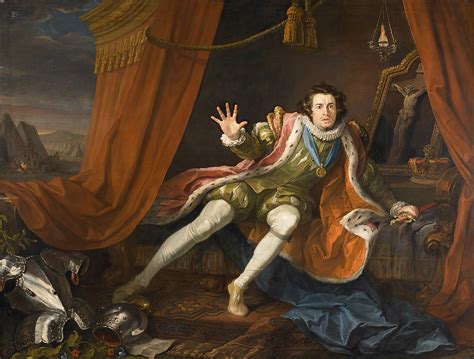
Stephen Greenblatt’s 2018 book about Shakespeare’s tyrants helps Stoehr understand Trump’s loneliness. The eminent Shakespearean, writing with Trump in mind, has this to say about Richard III:
What excites [the tyrant] is the joy of domination. He is a bully. Easily enraged, he strikes out at anyone who stands in his way. He enjoys seeing others cringe, tremble, or wince with pain. He is gifted at detecting weakness and deft at mockery and insult. These skills attract followers who are drawn to the same cruel delight, even if they cannot have it to his unmatched degree. Though they know that he is dangerous, the followers help him advance to his goal, which is the possession of supreme power.
His possession of power includes the domination of women, but he despises them far more than desires them. Sexual conquest excites him, but only for the endlessly reiterated proof that he can have anything he likes. He knows that those he grabs hate him. For that matter, once he has succeeded in seizing the control that so attracts him, in politics as in sex, he knows that virtually everyone hates him. At first that knowledge energizes him, making him feverishly alert to rivals and conspiracies. But it soon begins to eat away at him and exhaust him.
Sooner or later, he is brought down. He dies unloved and unlamented. He leaves behind only wreckage. It would have been better had Richard never been born.
Alone and panicking as his enemies close in, Richard calls out, “A horse, a horse, my kingdom for a horse.” By this point in the play, however, he has alienated practically everyone and there is no one to come to his aid.