Tuesday
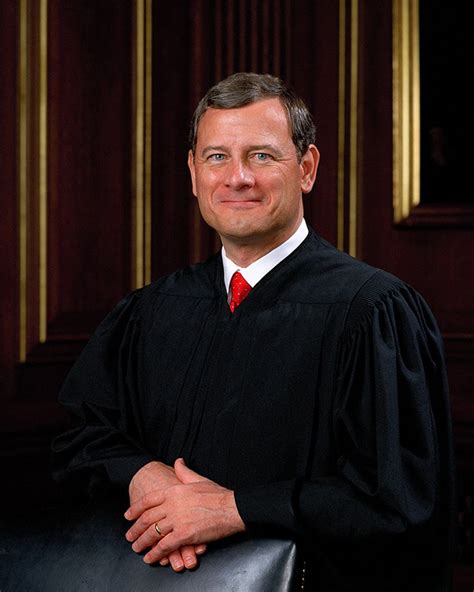
Writing for the satiric website McSweeney’s, Mark Paglia smartly and wittily takes down Chief Justice Don Roberts, the man largely responsible for shielding Donald Trump from responsibility, for attempting to return America to the Jim Crow and back-alley abortion era, and for unleashing big money and irresponsible corporations on America. Entitled “Excerpts from Chief Justice John Roberts’ High School English Essays,” the article imagines how a teenage Roberts would respond to literary classics. Here are some of my favorites:
— Rather than tilting at a windmill, the proper procedure would be for Don Quixote to file suit to abolish all windmills, ideally in the Fifth Circuit.
— Huck shows great disrespect for the Court’s precedent in Dred Scott when aiding the fugitive Jim, presumably due to liberal indoctrination by the Widow Douglas.
— Simply wearing a small red letter A is no great burden, and it would infringe upon the free speech of the rest of the town were Hester Prynne not to wear it.
–The Narrative of the Life of Frederick Douglass relates only his own views on slavery; we cannot properly assess the merits of his book without giving equal time to his slave owner.
— It is the prerogative of the government of Oceania to determine each day whether Eurasia or East Asia is the enemy, and congressional approval would unjustly constrain Big Brother.
— Iago says that he has no reason for hating Othello, and it would be wrong of us to impute any racist anti-Moor motivation on his part.
— Despite The Jungle’s focus on the possibility of rats or the occasional factory worker winding up in a hot dog, the true horror would be higher meat prices due to an overprotective nanny state.
— Packing Bertha Mason into the attic of Thornfield Hall while allowing Jane Eyre to use the rest of the house is permissible because it is based on restricting her proto-feminist hysteria, not her Creole racial identity.
— By being such a miser, Scrooge saves enough money to cure Tiny Tim of the diseases caused by Scrooge not paying his father enough in wages, demonstrating that privatized health care and non-union labor are self-correcting.
The piece concludes with Roberts presenting a doctor’s note that excuses him from reading The Narrative of Sojourner Truth. The reason: “It could cause acute psychological distress and fainting spells.”
In this spirit, I could imagine this teenage Roberts
–arguing for the entail that makes Mr. Collins heir to the Bennet estate;
–defending the workhouse policies that starve and beat Oliver Twist and then make him a child apprentice to an undertaker;
–endorsing the 18th century pamphleteer’s modest proposal for preventing the children of the poor people of Ireland from being a burthen to their parents or country and for making them beneficial to the public;
–contending that it is no big deal for the Baron to cut off a lock of Belinda’s hair (“rape?!! puleez!”);
–arguing that Anna Karenina and Tess of the d’Urbervilles deserve what they get; and
—declaring that no one has the right to subpoena Humbert Humbert’s diary.
To get serious about the Chief Justice, Roberts infuriates me the way that Blifil in Henry Fielding’s Tom Jones does—which is to say, he is sanctimoniously self-righteous and oh-so-innocent, even as he presides over the worst Supreme Court since the 1857 Roger Taney court. Here he is complaining about the criticism:
I think [people] view us as purely political actors, which I don’t think is an accurate understanding of what we do. Certainly, those aspects are open to debate and people should talk about them, but we’re not simply part of the political process and there’s a reason for that and I’m not sure people grasp that as much as is appropriate.
Blifil claims to look with more sorrow than anger at the accusations directed against him. When Squire Allworthy’s landlady defends Tom, Blifil responds “with one of those grinning sneers with which the devil marks his best beloved.” “As for my character,” he says, “I perceive, by some hints she hath thrown out, he [Tom] hath been very free with it, but I forgive him.”
Recent evidence has come to light that, for all his lofty talk, Roberts has been striving to dismantle the Voting Rights Act ever since he clerked for rightwing justice William Rehnquist and served in Ronald Reagan’s Department of Justice. As an article in Slate puts it, “The justice bent the law to meet his will,” and with SCOTUS’s Louisiana v. Callais decision—which will allow legislatures to oust African American legislators from office throughout the south, he has finally succeeded.