Thursday
Mark Zuckerberg as Grendel? The comparison came to mind after hearing Aaron Sorkin talk about his new movie The Social Reckoning.
The film looks at the damage Facebook has done to America, including its role in the January 6 assault on the Capitol. It also celebrates a courageous whistleblower, Frances Haugen, a member of Facebook’s Civic Integrity team. At first idealistic, she came to realize that the company was willing to harm vulnerable users, including teenagers, in its relentless pursuit of profit.
Discussing what drives Zuckerberg in a conversation with MSNOW’s Nicolle Wallace, Sorkin speculated that the Facebook head has never gotten over his feelings that he was denied access to the the cool kids’ table. “So he invents his own cool kids’ table,” the director said, “and he’s going to be the mayor of that.”
Sorkin noted that the same dynamic is operative with Trump. “I feel much of America is suffering from this syndrome,” he opined and then wondered whether Zuckerberg and Trump might have been better people had George Clooney and Brad Pitt invited them to sleepovers.
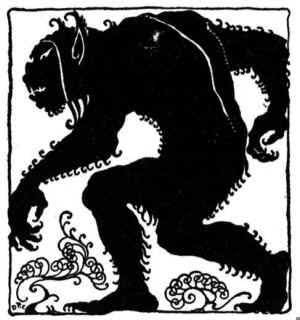
Grendel also rages over being excluded from the cool kids’ table. When Hrothgar and his warriors are celebrating their victories in the king’s newly built mead hall, we learn that success and prosperity come with a price:
Then a powerful demon, a prowler through the dark,
nursed a hard grievance. It harrowed him
to hear the din of the loud banquet
every day in the hall, the harp being struck
and the clear song of a skilled poet
In my Beowulf book I talk in detail about the corrosive effects of murderous resentment. In Anglo-Saxon society, a warrior who felt that he had not received his fair share of gold rings could turn against his fellows—perhaps in a drinking session involving boasting and PTSD—with bloodshed the result. Although Denmark, as the regional superpower, doesn’t worry about outside threats, Hrothgar is powerless to prevent this internal violence.
There are multiple Grendels in the poem. Beer-guzzling Unferth, who sits at the king’s right hand, is affronted when Beowulf shows up offering to save the day:
Beowulf’s coming,
his sea-braving, made him sick with envy:
he could not brook or abide the fact
that anyone else alive under heaven
might enjoy greater regard than he did:
And then there is Hrothulf, the king’s nephew and designated regent should Hrothgar die before his sons come of age. The Queen knows he is ambitious and tries to appeal to his sense of honor and obligation to forestall any coup attempts. Her words are directed to Hrothgar, who is considering making Beowulf his heir, but she means for Hrothulf to hear them:
I am certain of Hrothulf.
He is noble and will use the young ones well.
He will not let you down. Should you die before him,
he will treat our children truly and fairly.
He will honor, I am sure, our two sons,
repay them in kind when he recollects
all the good things we gave him once,
the favour and respect he found in his childhood.”
Wealhtheow here might just as well a member of Denmarks Civic Integrity team, making Francia Haugen-type appeals to Hrothulf’s better angels. An early Zuckerberg. Hrothulf does indeed go after Hrothgar’s sons when he becomes regent, killing one and attempting to kill the other. (The action happens outside the poem, so we know this from other sources.) The surviving son gets revenge but, in the turmoil, the great mead hall burns down.
Beowulf stands up to Grendel with firmness and strength. Because no one did this to Zuckerberg, our own great hall–beginning with the Capitol–has been tottering.